

- UN Committee Adopts Rohingya Resolution With 128 Votes |
- Cyclone ‘Akvan’ likely to cross Andhra–Odisha Coast Friday |
- Assam’s Citizenship Crisis: The Politics of Expulsion |
- How Biofertilisers Help African Farmers Adapt to Climate Change |
- COP31’s Just Transition Paradox: Where Are Critical Minerals in Talks? |
Bangladesh urges repatriation as UN backs Rohingya justice
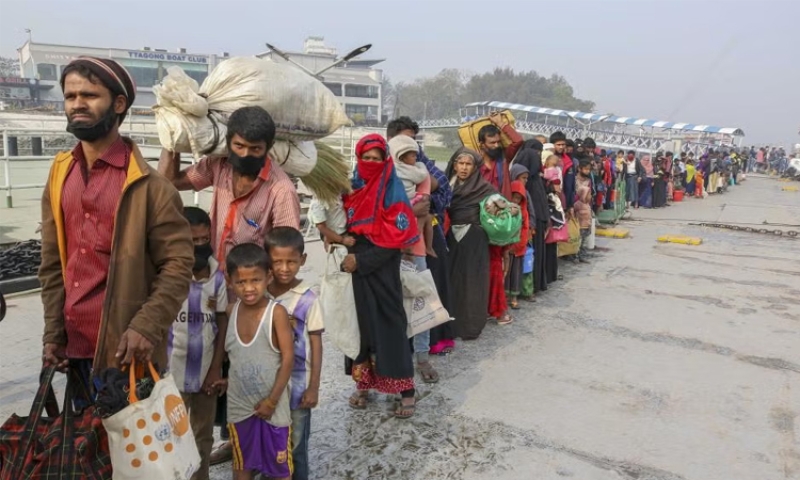
Bangladesh has urged the international community to intensify efforts for the early, safe and dignified repatriation of Rohingya refugees as the United Nations General Assembly adopted a resolution on Myanmar's human rights situation with overwhelming support.
The Organisation of Islamic Cooperation (OIC) and European Union (EU)-led annual Third Committee resolution, titled "Situation of human rights of Rohingya Muslims and other minorities in Myanmar", was adopted in New York on Wednesday with 128 votes in favour, six against and 33 abstentions, according to a message received here this morning.
Delivering Bangladesh's statement ahead of the adoption, Charg‚ d'Affaires of Bangladesh to the United Nations Ambassador Shanchita Haque underscored the urgency of finding a sustainable solution to the protracted Rohingya crisis.
She said that despite nine years having passed since the mass displacement of Rohingya from Myanmar, no meaningful progress had been achieved towards their repatriation.
The prolonged displacement continued to impose enormous social, economic, environmental and security burdens on Bangladesh, particularly on the communities hosting the refugees, she observed.
Ambassador Haque stressed that the international community must demonstrate stronger political commitment and translate its repeated expressions of concern into concrete action to create conditions conducive to the voluntary, safe, dignified and early return of Rohingya to their homeland.
She emphasised that the Rohingya crisis originated in Myanmar and that a lasting solution must also be found in Myanmar.
The Bangladesh representative called for strengthened collective efforts by the international community and regional stakeholders to ensure effective implementation of the resolution and address the root causes of the crisis.
She also highlighted the significance of the forthcoming judgment of the International Court of Justice (ICJ) in The Gambia v. Myanmar, describing it as a potentially important milestone in advancing justice and accountability for atrocities committed against the Rohingya population.
The resolution expressed serious concern over grave human rights violations and abuses against Rohingya Muslims and other minorities by the Myanmar military and the Arakan Army.
It called for an immediate end to violence, unhindered humanitarian access to affected populations and effective measures to ensure justice and accountability for serious human rights violations.
The resolution also underscored the importance of adequate and sustained international humanitarian assistance, including funding for the 2026 Joint Response Plan, to address the growing needs of displaced Rohingya and affected communities.
It emphasised the need to safeguard the political rights of Rohingya, including their voting rights, and create conditions necessary for their voluntary, safe, dignified and early repatriation to Myanmar.
The resolution's adoption reflected broad international support for addressing the Rohingya crisis and maintaining international attention on the human rights situation in Myanmar.
Meanwhile, the United States requested a vote on the resolution, citing its reference to the International Criminal Court (ICC).
In its explanation of vote, Washington clarified that its position was consistent with its general policy regarding references to the ICC in United Nations resolutions.
The US delegation, however, stressed that its position on human rights violations in Myanmar remained unchanged.
It also commended Bangladesh for its generosity in providing shelter to more than 1.2 million forcibly displaced Rohingya for over a decade.
Bangladesh has repeatedly called upon the international community to intensify diplomatic efforts to ensure the safe return of Rohingya refugees, warning that their prolonged displacement presents growing humanitarian, socioeconomic and security challenges.
The latest UN resolution comes amid continuing instability and violence in Myanmar's Rakhine State, where conditions remain unfavourable for the safe and sustainable return of displaced Rohingya, reports BSS.