

- First cruise ship crosses Strait of Hormuz since war began |
- MDBs stress co-op support global stability amid uncertainty |
- PM opens first Hajj flight, visits Ashkona camp |
- River ports asked to hoist cautionary signal No 1 |
- Oil prices drop 9% & Wall Street rallies to a record after Iran reopens Hormuz |
Nearly 900 Rohingya Dead or Missing in Sea Crossings
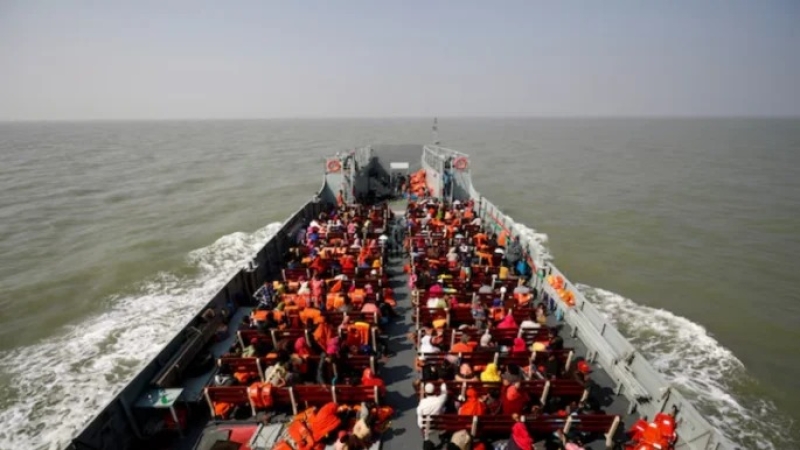
A view of a navy vessel in the Bay of Bengal, carrying Rohingya refugees to the Bhasan Char island in Noakhali district, Bangladesh, 29 December, 2020.
Nearly 900 Rohingya refugees were reported dead or missing in the Andaman Sea and the Bay of Bengal in 2025, marking the deadliest year on record for the perilous route, the UN refugee agency said on Friday.
Out of an estimated 6,500 Rohingya who attempted the journey last year, more than one in seven did not survive or remain unaccounted for. This represents the highest mortality rate globally for refugee and migrant sea crossings.
The dangerous voyages have continued into 2026, with over 2,800 Rohingya attempting the journey by mid-April. In recent years, women and children have made up more than half of those undertaking the crossings.
Officials said such journeys reflect extreme desperation, as families risk their lives on overcrowded and unseaworthy boats in search of safety and better opportunities.
The crisis is rooted in long-standing violence and persecution in Myanmar, along with harsh conditions in overcrowded refugee camps in Bangladesh. Many Rohingya attempt to reach countries such as Malaysia, Indonesia and Thailand.
Earlier this week, around 250 people were reported missing after a boat carrying Rohingya refugees and Bangladeshi nationals capsized in the Andaman Sea after departing from Teknaf.
Aid agencies warned that funding shortages are worsening conditions for the roughly one million Rohingya refugees living in Bangladesh, increasing the pressure to flee.
The UN refugee agency has sought $200 million this year to support Rohingya populations in Cox’s Bazar and Bhasan Char, but the appeal remains only about one-third funded.
Across the region, more than 1.3 million Rohingya refugees and asylum seekers remain displaced, including around 1.2 million in Bangladesh.