

- PM invites Chinese cos to expand value chains into Bangladesh |
- Powerful Quakes Rock Venezuela, Heavy Toll Feared |
- PM invites Chinese companies to expand value chains into Bangladesh |
- Banks get Tk 75,903cr liquidity support till June 6: Khosru |
- PM, Kazakh Counterpart Agree to Boost Bilateral Ties |
Begum Khaleda Zia, Uncompromising Leader of Bangladesh, Dies
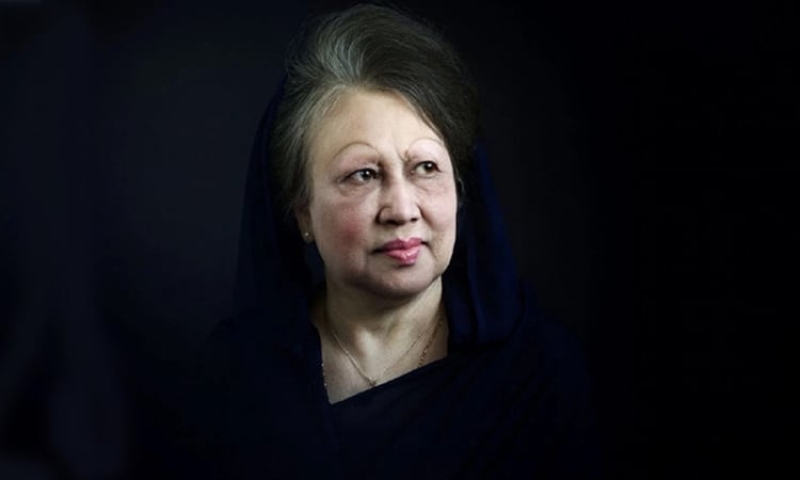
BNP Chairperson and former Prime Minister Begum Khaleda Zia. Photo : Collected
BNP Chairperson and former prime minister Begum Khaleda Zia, widely known as an uncompromising leader in Bangladesh’s struggle for democracy, passed away early this morning while undergoing treatment at Evercare Hospital in Dhaka. She was 80.
“Our beloved Deshnetri Begum Khaleda Zia passed away around 6:00am, shortly after Fajr prayers,” BNP Secretary General Mirza Fakhrul Islam Alamgir told reporters outside the hospital.
The three-time former prime minister had been suffering from multiple health complications, including heart, lung, liver and kidney ailments, diabetes, arthritis and eye-related problems. She had a permanent pacemaker and had previously undergone heart stenting. In recent weeks, she was battling infections in her heart and lungs, along with pneumonia, following her admission to the hospital on November 23.
After returning from London on May 6, where she received advanced medical treatment, Khaleda Zia had been undergoing regular check-ups at Evercare Hospital.
Khaleda Zia was a central figure in Bangladesh’s modern political history. She became the country’s first female prime minister in 1991 after the restoration of democracy, assuming office through a national election that marked the end of military-backed rule. Her tenure is credited with reintroducing the parliamentary system of government and institutionalising the caretaker government system to ensure free, fair and credible elections.
Born in Dinajpur in 1945, Khaleda Zia began her education at Dinajpur Missionary School and later completed her matriculation from Dinajpur Girls’ School. She married Ziaur Rahman in 1960, who later emerged as a key leader of the Liberation War in 1971 and went on to become president of Bangladesh.
Following the assassination of Ziaur Rahman in 1981, the Bangladesh Nationalist Party faced a leadership vacuum. Though previously uninvolved in politics, Khaleda Zia stepped forward, becoming the party’s vice-chairperson in 1984 and later its chairperson, a position she held for decades.
Under her leadership, the BNP spearheaded movements against the autocratic rule of Hussain Muhammad Ershad. Despite repeated detentions and restrictions on her movement, she remained at the forefront of the pro-democracy struggle, earning the reputation of an “uncompromising leader.”
Khaleda Zia served as prime minister three times and won every parliamentary seat she contested across multiple elections. Even during years of illness and incarceration from 2018 onward, she remained a towering presence in national politics.
She is survived by her elder son, Tarique Rahman, and a large number of relatives, party leaders and admirers. Her younger son, Arafat Rahman Koko, passed away earlier in Malaysia.
With her death, Bangladesh loses one of its most influential and resilient political leaders—an enduring symbol of democratic resistance and political resolve.