

- Tarique leaves for 300 feet area from airport |
- BNP top leaders welcome Tarique Rahman on homecoming |
- Flight carrying Tarique, family lands in Dhaka |
- Red bus with ‘Bangladesh first’ slogan ready at Dhaka airport for Tarique |
- Flight carrying Tarique, family lands at Dhaka Airport |
Tarique Rahman: A true reformist and visionary leader
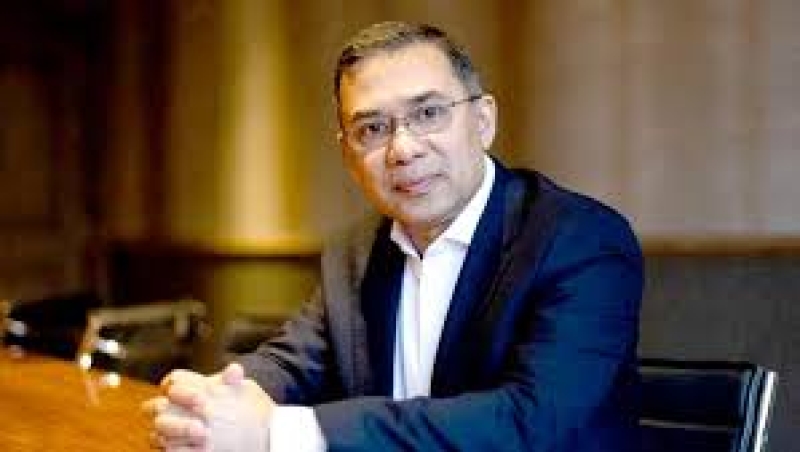
The mass uprising of July-August (2024) not only led to the downfall of the fascist Awami League government, but also brought a profound transformation in the collective psyche of the people of this country. That powerful mass movement revived the mental strength of the countrymen that had been crushed under Sheikh Hasina's 16 years of authoritarian rule.
After the ousted Prime Minister Sheikh Hasina fled to India on August 5, calls for reform intensified. But, BNP's acting Chairman Tarique Rahman's war for Bangladesh's real change was a bit long. No one can deny his role in creating today's reform-oriented environment.
It was Tarique Rahman who first thought of reducing quota in government jobs to just 5 percent from 55 percent in 2014 while the students first waged movement for revising quota system in 2018. On July 15, 2014 in London, the BNP acting chairman in a function said: "I thought quota system should be reduced to 5 percent for paving the way for meritorious students in government jobs". Even though, the theme of reform what is being heard and discussed after fleeing of Sheikh Hasina, it was earlier enunciated and elaborated by BNP which was basically brainchild of Tarique Rahman.
For more than a decade, the BNP has been vocal in demanding structural reforms of the state. Millions of cases, attacks, torture, enforced disappearances, and killings could not deter the BNP leadership from their demand for reform. Instead, time and again, its leaders have presented reform proposals before the people. To realize the core ideals of the Liberation War - democracy, equality, human dignity, and social justice - the party announced 'Vision 2030' in 2017, a 27-point agenda in 2022, and a 31-point agenda in 2023. Significantly, almost all the major reform demands being discussed today are prevalent in the BNP's 31 points.
Tarique Rahman envisions a reformed Bangladesh through the 31-point outline, focusing on strong democratic institutions, economic justice (especially for farmers, IT, and capital markets), environmental sustainability (green recovery, river restoration), judicial independence, and addressing public welfare through policies like women-led food security programs, emphasizing accountability and citizen participation.
Tarique Rahman didn't speak about vengeance or retaliation, rather advocated for an inclusive, discrimination-free, and harmonious state system. His commitments include reinstating the caretaker government system to restore democracy and voting rights, establishing a balance of power between the Prime Minister and the President, introducing a bicameral legislature, and ensuring the rule of law. He focused on prohibiting the same individual from serving the nation more than two consecutive terms as Prime Minister to prevent the concentration of power.
The 31-point outline also proposed the formation of different commissions, including the 'Constitution Commission', 'National Reconciliation Commission', 'Judicial Commission', 'Administrative Reform Commission', 'Media Commission' and 'Economic Reform Commission' which was made by the current caretaker government.
It also includes plans to amend the existing 'Chief Election Commission and Other Election Commissioners Appointment Act-2011, RPO, Political Party Registration Act' and to form an independent, impartial and effective Election Commission.
In addition to the existing parliamentary system, the BNP also proposed introducing an upper chamber legislative assembly comprising eminent citizens of the country, veteran academics, professionals, political scientists, sociologists and people with administrative experience.
The party suggested balancing the executive powers of the Prime Minister and the Cabinet and ensuring proper coordination regarding the powers and responsibilities of the Executive, Legislative and the Judiciary.
BNP also promised to annul all black laws, including the ICT Act-2007, Anti-Terrorism Act-2009, Special Powers Act, Digital Security Act-2018 and all other laws that help snatch basic human rights.
The party also planned to introduce health cards for all by ensuring universal health care, remove anarchy in the education sector and increase allocation for the health and education sectors, taking measures for ensuring fair prices of agriculture products and giving farmers different facilities, developing agriculture, fisheries and livestock sectors and giving incentives to export-oriented agro-processing industries.
Tarique Rahman also recently presented an 'Eight Development Plan' to expose a clear political-economic vision for Bangladesh to differentiate the BNP's agenda from the other governments.
During a week-long series of events titled "Plan for Rebuilding the Nation" held at the Krishibid Institution Bangladesh (KIB) auditorium in Farmgate, Dhaka, Tarique Rahman presented these plans to the party's main, front, and associate organizations. The plans cover critical areas including agriculture, employment, education, health, sports, and social safety nets.
In his development plan, he emphasized farmers and agricultures. The best thing is that he could understand that Bangladesh couldn't be developed neglecting farmers and agricultures. To ensure the development of the agricultural sector, he wanted to introduce "Farmer's Cards" to ensure fair prices of agri products, providing government assistance, easy loans.
He announced taking nationwide employment initiatives, introducing demand-driven modern education, modernization of technical and vocational institutions and providing international standard certifications to prepare youths for high-paying jobs at home and abroad.
The BNP acting chairman dreamed of building a healthy Bangladesh, recruiting approximately 100,000 new health workers nationwide (80% of whom will be women), guaranteeing primary healthcare in metropolitan and district levels, deploying health workers to villages for disease detection and awareness, supplying free primary care medicines and low-cost medicines for cancer, stroke, and diabetes and free distribution of locally manufactured vaccines.
Tarique Rahman spoke of welfare for religious leaders, preservation of rivers, canals, and the environment, sports development and women's empowerment and "Family Cards".
So, the most encouraging is the goodwill shown by BNP's de facto top leader and Acting Chairman, Tarique Rahman, toward genuine reform of the state's institutional structure. Alongside promoting his party's 31-point agenda and Eight Development Plans, he has expressed a strong desire to implement these reforms to maintain peace, harmony, and stability in Bangladesh. His recent statements and actions have clearly demonstrated the height of his leadership qualities. In particular, his firm political stance before and after August 5 has helped guide Bangladesh towards stability.
In Tarique Rahman's words: "We want to ensure that in our future Bangladesh, there will be no scope for any individual - even the Prime Minister - to abuse power and become authoritarian." At the same time, he has reiterated the need for reforms in various sectors, including improving people's livelihoods, ensuring media freedom, amending Article 70 of the Constitution, establishing a separate secretariat for the Supreme Court, and appointing an Ombudsman. His statements have been widely praised.
Tarique Rahman's narrative is clear that politics is not merely about attaining power, but about doing the welfare of the people. In this way, the legacy of his father, Shaheed President Ziaur Rahman, is reflected in him. By understanding and responding to the aspirations of the people, his politics has paved the way for him to become immensely popular, like his father. So far, he has not lost his way in the new political settlement. In the days ahead as well, Tarique Rahman and his party, the BNP, will not lose their way - this is now the new dream of Bangladesh, reports BSS.