

- UN Assembly Urges Decisive Action to Resolve Israel-Palestine Conflict |
- Sediment-borne fertility transforms northern Bangladesh |
- 3 Armed Forces Chiefs, Jamaat Ameer visit Khaleda Zia at Hospital |
- Army, Navy, Air Chiefs Visit Khaleda Zia at Dhaka Hospital |
- EU, BDRCS, IFRC Partner to Strengthen Recovery of July Uprising Survivors |
Khaleda Zia Remains Key to Democratic Transition
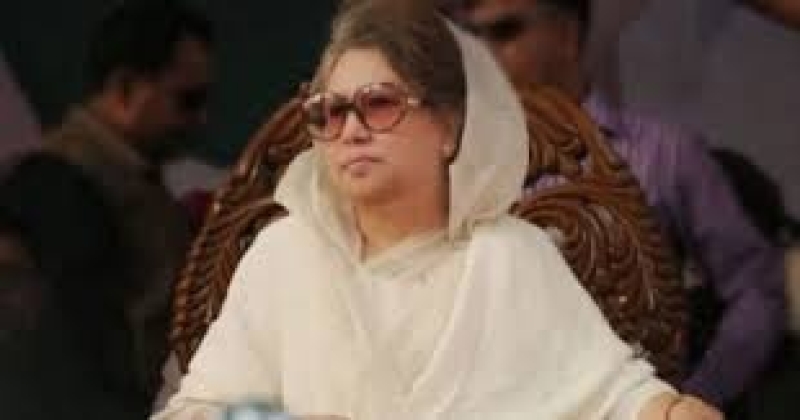
A woman alone stood against the oppression, torture, humiliation and persecution of the state apparatus. Carrying the grief of losing her husband and the emptiness left by the death of her younger son, she fought relentlessly against all conspirators. She is none other than BNP Chairperson and former Prime Minister Begum Khaleda Zia.
The struggle was long, the pain was immense, and at times even Begum Khaleda Zia felt exhausted. Yet she never retreated. She did not break, did not give up, did not lose patience. As a beacon of immense courage, she crushed all suffering beneath her feet and stood firm as a unified symbol of Bangladesh.
Today, that uncompromising leader is passing through the most difficult phase of her life. Suffering from lung infection and multiple complications, she is undergoing treatment at Evercare Hospital in Dhaka. Various ailments have settled in her body over her 80 years of life, making her condition extremely critical. As her health deteriorated in recent days, she was shifted to the ICU-equivalent High Dependency Unit (HDU). Millions across the country now anxiously pray for her recovery.
Speaking to the media on Tuesday afternoon, her personal physician Dr AZM Zahid Hossain said, "Khaleda Zia is able to receive treatment - or one could say she is able to maintain the treatment. Based on the medical board's decision and her physical condition, a decision will be made regarding taking her abroad."
Political analysts said Begum Khaleda Zia's good health is crucial for the country at this moment as in this period of democratic transition, she remains indispensable. Her sacrifices for restoring democracy and for the nation are of immense significance, they added.
They noted that despite her illness, the thoughts and guidance of such an experienced leader as the BNP Chairperson are very important in the post-uprising political landscape. Analysts said the country may suffer in her absence, as the former prime minister now stands above party politics.
Recently, while seeking prayers for her recovery, Chief Adviser Professor Dr. Muhammad Yunus said, "In this era of democratic transition, Khaleda Zia is an extraordinary source of inspiration for the nation."
When asked how important her recovery is in the current national context, Dhaka University's retired professor and political analyst Dr. Mahbub Ullah told BSS, "Begum Khaleda Zia has dedicated her entire life to the country and its people. In the struggle to restore democracy, she was brutally tortured by fascist rulers. The torture was so severe that she became seriously ill and her life is now at risk. She risked her life but never compromised with injustice. That is why every patriotic political party and people from all walks of life have expressed gratitude and respect for her. This is nothing short of genuine love for a political guardian."
Mahbub Ullah added, "After her release from jail, Khaleda Zia played the role of a guide in national politics. As an elder and guardian of the nation, many of her silent contributions have been evident. Her very presence is a major source of inspiration for the democracy we aspire to. All political parties have respected her guardianship. This guardian-like character will keep her immortal. Her glorious place in history is already assured."
It was a difficult period for the BNP, the party founded by Shaheed President Ziaur Rahman., when the country was under the military rule of Ershad. The nation was in deep crisis. Despite her initial reluctance, Khaleda Zia had to enter politics-first as a worker and later to lead the party. Her four-decade political journey began there. Through courageous leadership in the anti-Ershad movement, she emerged as an uncompromising national leader. Only eight years after entering politics, she became the country's first elected female Prime Minister.
She went through many ups and downs: sometimes as head of government, sometimes as Leader of the Opposition-always active on the streets. Her painful imprisonment during the 1/11 regime and later under the Awami League government remains one of the major tragedies in Bangladesh's political history. Her commitments to democracy, independence, and sovereignty are recalled with deep respect by political analysts.
Historian and political analyst Siddiqur Rahman described Khaleda Zia as a symbol of political unity in the present context, saying, "Her uncompromising struggle has made her an indispensable political figure and guardian of the country at this moment. Her role in defending independence, sovereignty, and democracy has made her essential. Her presence is essentially needed now. To BNP's workers she is the 'symbol of unity'. To democracy-loving citizens, she is a unique personality."
Attempts to remove her from politics were made at various times. But her immense popularity thwarted every conspiracy. Analysts warned that given her grave illness and absence from the political field, the country may again face risks.
Khaleda Zia has remained largely inactive in BNP politics since 2018 due to imprisonment in corruption cases and subsequent illness. Under Sheikh Hasina's authoritarian rule, BNP under Khaleda's leadership fought for years. She herself paid the price, just like countless activists. Despite her critical health, she was kept imprisoned for a long time. Many believe her current life-threatening illness worsened due to the autocratic government's conspiracy. Analysts say that even in illness and physical absence, she remains the emotional center of her supporters.
Wishing her swift recovery, political analyst Dr. Dilara Chowdhury said, "Khaleda Zia has fought for democracy and sovereignty with political wisdom for so many years. She suffered deeply-endured jail and heard many harsh words. But she never retaliated. Even in adversity, she did not leave the country."
Dilara Chowdhury added, "Khaleda Zia has always said, 'This country is mine. I will never leave it. I will stay with my people.' For this, she has reached a position where all political groups, regardless of ideology, see her as a 'guardian' figure. People look to her for guidance. Her recovery is extremely important for the nation."
BNP Secretary General Mirza Fakhrul Islam Alamgir, with a heavy voice, said the party and the nation await her recovery. "Our Chairperson has waged an uncompromising struggle for democracy, voting rights, and political freedom. She is the symbol of hope for the people of this country. She is the strongest emblem of democracy. Our leader Begum Khaleda Zia is now critically ill in the hospital. We all raise our hands in prayer for her recovery. Surely she will return to us soon," he said.
BNP Standing Committee member Dr. Khandaker Mosharraf Hossain said, "She has always been uncompromising in her struggle to protect democracy, independence and sovereignty. Her role has always been crucial in democratic progress and safeguarding national interests. Her recovery is essential for political stability and democratic continuity."
BNP Standing Committee member Dr. Abdul Moyeen Khan said Khaleda Zia is the voice of millions of protesting people, reports BSS.
"She established her place in politics through street movements and by entering through the front door of struggle. She sacrificed her life for the democratic and economic rights of the deprived. She never deviated from principles. That is why people lovingly call her the 'Uncompromising Leader' (Aposh-hin Netri).'" he said.
He added, "She never believed in politics of vengeance. She always forgives others' mistakes. These qualities elevated her above partisan politics-she is now a statesperson. We eagerly await her recovery."
Another Standing Committee member, Gayeshwar Chandra Roy, said, "In the struggle for democracy, Khaleda Zia is today at death's door. She is our aspiration. The whole of Bangladesh-across parties and opinions-is united in her name. If she recovers, democracy will return, and the dream of the Liberation War will be fulfilled."
In a Facebook post, National Citizen Party (NCP) Convener Nahid Islam wrote that Khaleda Zia is a remarkable inspiration in Bangladesh's democratic struggle. "She has played an unwavering role in defending independence, sovereignty and national interests for decades. Despite relentless persecution, false cases and political vengeance by a fascist regime, her steadfastness remains a shining example."
He added, "From the 1990 mass uprising to anti-autocracy movements and later struggles to restore democracy, her firmness, patriotism and leadership profoundly shaped national life. Generations view her as a symbol of courage, resilience and democratic values."
Mojibur Rahman Monju, Chairman of Amar Bangladesh (AB) Party, said, "Begum Khaleda Zia represents an important chapter in Bangladesh's democratic politics. Despite immense pressure and difficult realities, her courage and uncompromising leadership will remain a shining part of political history. Her recovery is vital not only for her party but for the country's political environment, democratic progress, and preservation of human values. In a transitional context, the presence of an experienced leader like her is crucial for national interest."