

- Climate talks start in Antalya, after wrangle over agenda items |
- 8 Die of Dengue as 1,595 More Are Hospitalised |
- Hasina to Face Execution Process if She Returns: Prosecutor |
- US to become 1st nation to fully shun a UNHR Council review |
- Govt Sees No Legal Hurdle to Hasina’s Return: Adviser |
Government Seeks Hasina’s Return Under Extradition Treaty
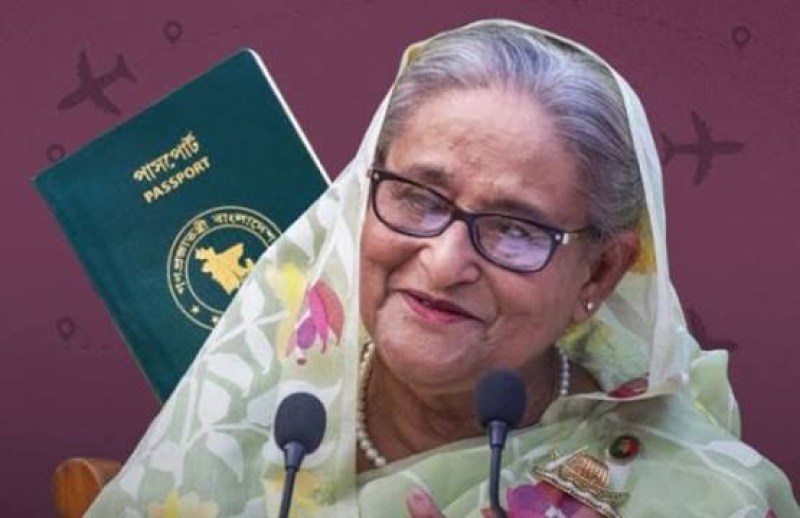
The government wants former prime minister Sheikh Hasina to be brought back to Bangladesh as a convicted fugitive through the extradition treaty with India, rather than through an ordinary passport application.
Hasina was ousted from power amid the July 2024 mass uprising and subsequently took refuge in India. She has reportedly announced plans to return to Bangladesh in December. Reports that she has sought a new passport and national identity card (NID) have triggered widespread debate in the country's political arena.
Government officials have questioned the validity of the reported request, arguing that an ordinary passport application would not be an effective route for someone convicted and sentenced to death. They say the government intends to bring her back through legal and diplomatic channels under the Bangladesh-India extradition treaty so that the sentence can be enforced.
Hasina was ousted on August 5, 2024, and left for India that day. In November last year, the International Crimes Tribunal sentenced her to death in a case involving crimes against humanity committed during the July uprising.
An international news report published on Sunday said Hasina had sought a new passport and NID to facilitate her return. According to the report, lawyers from London-based legal chambers Matrix Chambers sent a letter to the Bangladesh High Commission in New Delhi on her behalf, requesting the issuance of the documents.
Home Minister Salahuddin Ahmed said the government was checking whether the reported application was genuine and whether it had any legal basis.
Speaking at a press briefing at the Home Ministry on Monday, he said he had also heard about the reported request but had not yet been able to verify it. The Foreign Ministry and the Law Ministry were examining the matter, including whether the application had been properly submitted and whether Hasina had the legal right to make such a request.
He said the relevant ministries would examine the legal details before taking any steps.
The minister added that Bangladesh had already sent requests through diplomatic channels under the extradition treaty, asking the country where Hasina is staying to return her in accordance with the law.
Foreign Affairs State Minister Humayun Kabir described the reported passport and NID request as ridiculous. He said Bangladesh did not issue passports to terrorists and instead wanted to bring fugitives back under extradition arrangements so that they could face their sentences.
Kabir said Hasina had fled the country and could not use a new passport as a means of staging a return. If she genuinely wanted to come back, he said, there was a specific legal procedure.
He urged her to ask the Indian government to hand her over to Bangladesh under the bilateral extradition treaty so that she could appear before the court and serve her sentence. He made the remarks while responding to journalists at the Foreign Ministry on Monday afternoon.
The state minister also questioned the legal, ethical and moral basis of the request made by the UK-based legal firm. He said the firm should know who its client was and should observe professional and ethical boundaries.
He further said an ordinary passport application would not be effective in the case of a fugitive convicted of serious crimes. The government would pursue legal and diplomatic channels under the extradition treaty to bring Hasina back and place her before the law.
Questions Over the Authenticity of the Request
The email sent by the Bangladesh mission in New Delhi was forwarded to the Foreign Ministry. However, diplomatic sources in Dhaka said there was no way to establish from the email alone that the request had actually been made by Hasina.
They said the email sent by Matrix Chambers did not contain any document or proof showing that Hasina had authorised the firm to act on her behalf. Such authorisation is generally required when a legal firm submits a request for a client.
Prime Minister Tarique Rahman's Deputy Press Secretary Mohammad Sujauddaula also described reports that Hasina had personally applied for a passport and NID as misleading.
In a Facebook post on Monday afternoon, he said the Bangladesh High Commission in New Delhi had received an email from Matrix Chambers requesting the issuance of a passport and NID in Hasina's name. However, the email did not include any proof of her authorisation.
Citing a conversation with Saidur Rahman, press minister at the Bangladesh High Commission in New Delhi, Sujauddaula said the mission had forwarded the email to the Foreign Ministry for examination.
He wrote that there was no way to establish whether the request had actually been made on Hasina's behalf. He also said headlines suggesting that Hasina herself had submitted an application for a new passport or NID were misleading and could create confusion among the public.
The email from Matrix Chambers, addressed to Acting High Commissioner Preeti Rahman, reportedly stated that Hasina's existing Bangladeshi passport and NID had been cancelled by the interim government and other authorities. The firm requested the necessary arrangements for issuing new documents to its client.
Explaining the passport application procedure, Sujauddaula said applicants must generally submit their own applications. Under Bangladesh's regular e-passport system, applicants complete an online form and then appear in person at a passport office or a Bangladeshi diplomatic mission abroad to provide photographs, fingerprints and iris scans.
He said reports by international news organisations had not mentioned any submission of an application form or biometric information by Hasina. Therefore, he described the email from Matrix Chambers as a request for necessary arrangements rather than a formal passport application.
'People Have Not Forgotten the Bloodshed'
BNP Acting Secretary General Ruhul Kabir Rizvi said Hasina had shown no remorse over the deaths during the July uprising despite wanting to return to Bangladesh.
He questioned whether the families of those killed during the uprising would welcome her back, referring to reports of people being shot from helicopters and children being killed by gunfire.
Rizvi said people had not forgotten the sacrifices of Abu Sayeed, Mugdho and others who lost their lives during the movement. He also referred to the deaths of young people, children, rickshaw pullers and workers.
Drawing a comparison with the cases filed against BNP Chairperson Khaleda Zia, Rizvi said the then government had repeatedly argued that courts and the law operated independently. He questioned why Hasina was now seeking assistance from abroad rather than facing the judicial process.
He also said former Indian prime minister Indira Gandhi had apologised after imposing a state of emergency, whereas Hasina had not shown remorse. Rizvi alleged that Hasina wanted to return to power and resume the previous style of governance. These remarks reflected the BNP leader's political position on the issue.
'Political Stunt'
Chief Prosecutor of the International Crimes Tribunal Mohammad Aminul Islam described the reported passport and NID request as a political stunt.
He said Hasina would not return to Bangladesh and that the reported request was intended to create a political narrative. Asked for further details, he said the prosecution would explain the matter at a formal press conference on Tuesday, including why Hasina would not be eligible for a passport and why the government could not simply restore her previous documents.
Prime Minister's Political Assistant Rashed Khan also described the request as political manoeuvring.
He said there was no precedent for a government issuing a passport and NID to a fugitive convicted of crimes. According to him, Hasina would not return in December and the reported request was intended to provide an explanation for her possible failure to return.
Khan said the government had already fulfilled its responsibility by requesting Hasina's return through diplomatic channels. He argued that India now had a responsibility to hand her over under the bilateral arrangement.
He also said that if Hasina returned, she would have to face the judicial process. Khan maintained that she would not return in December and suggested that the passport issue could later be used to claim that the government had prevented her return by refusing to issue the documents.
Jamaat Calls for Legal Steps to Bring Hasina Back
Bangladesh Jamaat-e-Islami has urged the government to take visible steps to bring Hasina back through legal channels and ensure that she faces justice.
In a video message on Monday, the party's Assistant Secretary General and Central Publicity and Media Department Secretary, Advocate Ehsanul Mahbub Zubair, said Hasina was unlikely to return voluntarily.
He said her reported move to seek a new passport while staying in India was not a genuine effort to return. Rather, he alleged, it was intended to reassure party leaders and activists, retain her leadership within the Awami League and mislead the public.
Zubair urged the government to use the Bangladesh-India extradition treaty and, if necessary, seek assistance from international legal organisations, the United Nations and Interpol to bring Hasina back and enforce the court's verdict.
'She Must Return as a Convicted Criminal'
Former interim government adviser Professor Asif Nazrul said Hasina's reported request for a passport suggested that she believed conditions in Bangladesh would allow her to return and face trial.
In a Facebook post titled 'Hasina's Mistake' on Monday afternoon, he said the problem was that she had already been convicted. The Bangladesh government had requested her extradition from India as a convicted person, he added.
Nazrul argued that someone whose extradition had been sought as a convicted criminal could not return through the issuance of a new passport. She would have to be brought back in that capacity, and a passport was not necessary for the process.
He said the Indian government could arrest her and hand her over to Bangladesh. He also argued that the reported passport request could strengthen Bangladesh's position in discussions with India, as the government could point to it as an indication that Hasina believed she could return and face the judicial process.
Nazrul added that the government could use the development to counter claims that the trial was politically motivated. He ended his post by saying that Hasina was unlikely to return and was putting her party's ordinary leaders and activists at risk by creating expectations of her return.
Former interim government adviser and National Citizen Party (NCP) Senior Joint Member Secretary Asif Mahmud Shojib Bhuyain also commented on the issue in a Facebook post.
He wrote: "You don't need a passport, Apa. You have to come in a cage, not by plane. And that is ready."
Awami League Says Hasina Will Return
Awami League Joint General Secretary AFM Bahauddin Nasim, whose party's activities are currently banned, said Hasina would return to Bangladesh and meet the people.
He said the party had repeatedly stated that its leader would return in accordance with the law. Nasim described obtaining a passport and NID as a fundamental right of a Bangladeshi citizen and said the request had been made through legal procedures.
Asked whether Hasina would return even if she did not receive the documents, Nasim said she had repeatedly announced her intention to return and would do so at an appropriate time. He said a specific date would be announced when the time was right.
Complex Legal and Diplomatic Questions
Analysts say Hasina's return or extradition involves a complex combination of international law, bilateral diplomatic relations, judicial procedures and regional geopolitics. The issue is not simply a matter of her personal decision to return or the government's effort to bring a former prime minister back to face trial.
The interim government had previously sent diplomatic requests to India seeking Hasina's return. India did not provide a formal response to those requests, although it said it was monitoring the matter.
In December 2024, Bangladesh's Foreign Ministry sent a note verbale to India's Foreign Ministry requesting her return for judicial proceedings. Home Minister Salahuddin Ahmed has also said that several requests were sent through diplomatic channels under the extradition treaty.
Law Minister Md Asaduzzaman said on Sunday that the government was working through legal and established procedures to bring Hasina back. He said Bangladesh had requested her handover under the extradition treaty and would place her under the jurisdiction of the law through due process if India handed her over.
Responding to questions about India's position and reports that Hasina was being treated as a state guest rather than a detainee, the law minister said Bangladesh regarded her as a person convicted by its tribunal. He said the trial had taken place in an open court and rejected suggestions that it had been conducted behind closed doors.
He also referred to the deaths and injuries during the July 2024 uprising, saying the government believed the judicial process had been conducted transparently.
Legal Framework for Extradition
The legal framework for the extradition of fugitives between Bangladesh and India includes Bangladesh's Extradition Act, 1974, and the bilateral extradition treaty signed in 2013.
Under Section 4 of the 1974 law, the government may, through a gazette notification, designate a foreign state as a country covered by the legislation. Section 15 allows the government to seek the return of a fugitive from another country through diplomatic channels.
Bangladesh and India formally signed their extradition treaty on January 28, 2013. The agreement was amended in 2016.
Under the treaty, extradition generally applies to offences punishable by imprisonment of at least one year in both countries. The agreement also contains provisions allowing extradition requests to be refused in certain circumstances.
One such provision concerns political offences. If an offence is considered political in nature, extradition may be refused. However, serious offences such as murder, kidnapping and sabotage are not treated as political offences under the treaty's relevant provisions.
The agreement also states that neither country is obliged to surrender its own nationals to the other. A request may also be rejected on grounds relating to the interests of justice, the seriousness of the allegations or insufficient evidence.
The government's stated position is that it wants Hasina returned through the extradition process. However, the legal provisions, India's response and the diplomatic circumstances mean that the process could involve significant complications.