

- Dhaka Tops Global Pollution List with Hazardous Air |
- Country Observes Martyred Army Day Today |
- 100 CSOs rally against Trump’s trade tactics, urge access to drugs |
- BNP believes in multiparty democracy, not revenge: Moyeen Khan |
- Bangladesh reaffirms commitment to revitalise SAARC process |
People’s Quest for Dignity, Equality and Justice Prevails
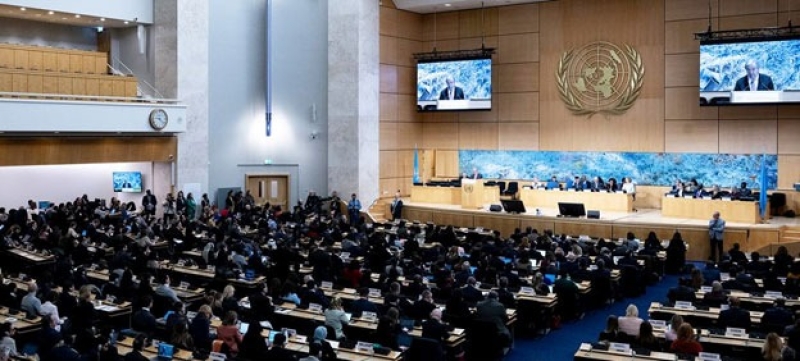
UN Secretary-General António Guterres speaks at the opening of the 61st session of the Human Rights Council at the Palais des Nations, in Geneva. Meanwhile, Volker Turk, UN High Commissioner for Human Rights, addresses (below) at the opening of the High-level segment of the Human Rights Council.
A fierce competition for power, control, and resources is unfolding on the world stage at an intensity unseen for the past 80 years. People feel unmoored, anxious, and insecure. Global power is shifting, and the consequences remain unclear, prompting some to signal the end of the world order as we know it.
But there is another world order, one built from the ground up and unshakeable: the pursuit of dignity, equality, and justice. This quest is innate to humanity – the drive to be free, to be heard, and to have basic needs met. It counterbalances autocratic trends and the use of force to settle disputes, which is becoming increasingly normalized.
Mass civilian suffering continues across Sudan, Gaza, Ukraine, and Myanmar. In Sudan, accountability is needed for war crimes committed by the Rapid Support Forces in El Fasher. In Gaza, Palestinians face violence, hunger, and disease amid concerns over ethnic cleansing. In Ukraine, four years after the Russian invasion, civilian casualties are high and attacks on critical infrastructure continue. Myanmar remains mired in conflict following a military coup, deepening despair.
Journalists, aid workers, and health personnel are increasingly targeted worldwide, violating international law. States must persistently object to these crimes, denounce violations consistently, and pursue accountability without exception.
Meanwhile, people are mobilizing from the ground up. Women and youth lead movements demanding fair pay, bodily autonomy, self-determination, and the right to vote. Communities show solidarity, protesting war and injustice far from home. Human rights are a practical force for good, directly challenging those who cling to power. They are universal, timeless, and indestructible.
Throughout history, people have fought for freedom and equality – from the Haitian revolution, the American and French revolutions, and the abolitionist movement, to women’s suffrage, decolonization, labor rights, LGBT rights, and climate justice. Human rights are the thread connecting these movements.
To strengthen this momentum, we need bolder, coordinated action: call out international law violations, enhance accountability through the International Criminal Court and national prosecutions, and build coalitions that uphold equality, dignity, and justice. A Global Alliance for Human Rights is being formed to unite states, businesses, cities, philanthropists, scientists, artists, philosophers, and civil society in defending every person’s rights, every time, everywhere.
The power of people working together remains stronger than any autocrat, tech tycoon, or supremacist agenda. Grassroots solidarity ensures that the pursuit of justice, equality, and human dignity continues unshaken.