

- Remittance surges to $2.68 billion in 29 days of November |
- Probe body says Hasina had 'green signal' for BDR Carnage |
- BDR mutiny was conspiracy to destabilise BD: Inquiry chief |
- Teesta Bundh ‘renovation’ in Rangpur turns into a 'sand bonanza' |
- সমুদ্র থেকে লাইটার জাহাজে লাফিয়ে উঠলো ৩ মণ ইলিশ |
Africa Seeks Fair Share From Critical Mineral Boom
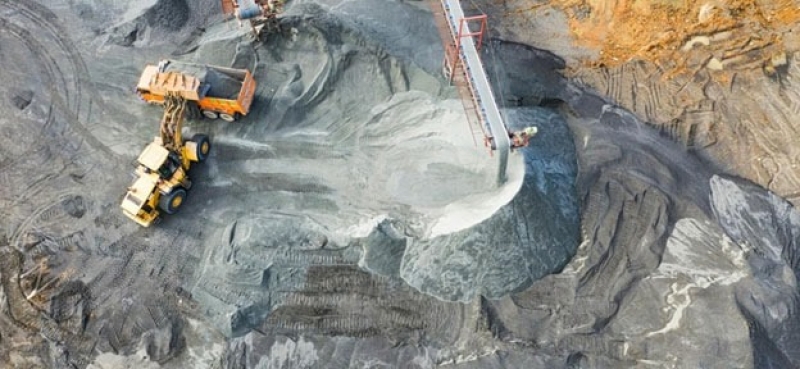
Open-pit mine Archives.
Although Africa holds more than 30 per cent of the world’s critical green minerals — including cobalt, lithium, manganese and rare earth elements vital for building batteries, wind turbines and solar panels — this has not translated into prosperity for the continent.
At the Africa Climate Summit 2025 held in Addis Ababa in September 2025, leaders and experts explored how Africa could benefit more from its resources.
Under the theme “Accelerating renewable energy, nature-based solutions, e-mobility, and scaling up climate finance,” the Summit sought ways to build a resilient and prosperous future for Africa. The key question, however, was whether Africa would continue exporting its raw materials for others to profit, or seize this moment to drive its own transformation.
Speaking at the Summit, the Executive Secretary of the UN Economic Commission for Africa (ECA), Claver Gatete, called for a united African front to strategically leverage these resources.
“We cannot afford to repeat the exploitative patterns of the past,” he said. “Africa must industrialise using its own resources, creating jobs and sustainable growth for our people.”
The global race towards net-zero has fuelled surging demand for minerals used in batteries, solar panels and wind turbines — resources for which Africa is a major supplier.
Mr Gatete emphasised the need for African governments to invest in local processing, value addition and stronger regional cooperation, rather than exporting raw minerals.
Risks and opportunities
The Summit highlighted both opportunities and risks. On one hand, critical minerals could generate billions in revenue, accelerate clean industrialisation and help Africa achieve the SDGs. On the other, unchecked extraction would fail to benefit Africans and worsen inequality and environmental degradation.
Mr Gatete called for building continental capacity to process, refine and manufacture components such as batteries within Africa. He cited the ECA–Afreximbank Battery and Electric Vehicle (BEV) value chain initiative, launched in the DRC and Zambia, which aims to establish special economic zones (SEZs) for producing electric-vehicle battery precursors and components — a concrete step towards shifting “from resource extraction to technological innovation and prioritisation of local value addition.”
To drive this agenda further, participants stressed the importance of the African Continental Free Trade Area (AfCFTA) in developing integrated regional value chains, reducing external dependence and unlocking economies of scale. They also called for continental unity to avoid fragmented national policies that could weaken Africa’s bargaining position.
To address these challenges, ECA proposed forming an African Critical Minerals Alliance to harmonise regulations, negotiate stronger trade deals and promote intra-African collaboration.
“Unity is our strength,” Mr Gatete reminded participants. “By working together, African countries can ensure that green minerals become a foundation for prosperity, not another lost opportunity.”
Africa’s climate-finance gap was also discussed, with leaders renewing calls for increased international climate finance, debt relief and technology transfer. They agreed on the importance of private-sector investment to strengthen regional value chains, expand local processing capacity and build essential infrastructure.
The Africa Climate Summit 2025 concluded with the adoption of the Addis Ababa Declaration, reaffirming a commitment to place sustainability, equity and local development at the centre of mineral exploitation. The message was clear: Africa holds the key to the global green transition. The challenge now is transforming that potential into lasting, inclusive prosperity for its people.