

- Bangladesh Begins Nuclear Power Era With Fuel Loading |
- With Canal Digging Tarique Revives Zia's Legacy |
- Trans Fat From Edible Oil Reuse Causing Health Risk for Millions |
- Medicinal Plant Farming Turns Lucrative as Demand Soars |
- Trump reviews peace plan; UN calls for Hormuz to reopen |
Africa’s Climate Plans Must Prioritise Animal Health Now
Credit: World Organisation for Animal Health
One would expect that this year’s wetter-than-average rainy season in parts of Africa would be viewed with relief, not fear. Yet many areas in the region sit at a knife’s edge — still recovering from years of drought and a historic famine, too much rain leads to flooding and water-borne diseases. Both varieties of extreme weather place enormous stress on livestock systems across the region, on which communities rely for sustenance and livelihoods.
Despite this, current planning around climate change tends to focus narrowly on weather patterns, overlooking the impacts on animal agriculture. Even with strong evidence that healthy animals support livelihoods while helping to reduce climate impacts, just 20 out of 176 countries mentioned animal health and welfare in their latest climate commitments (NDCs). African nations cannot afford to make this omission.
Animal health isn’t just a veterinary concern — it’s a global public good.
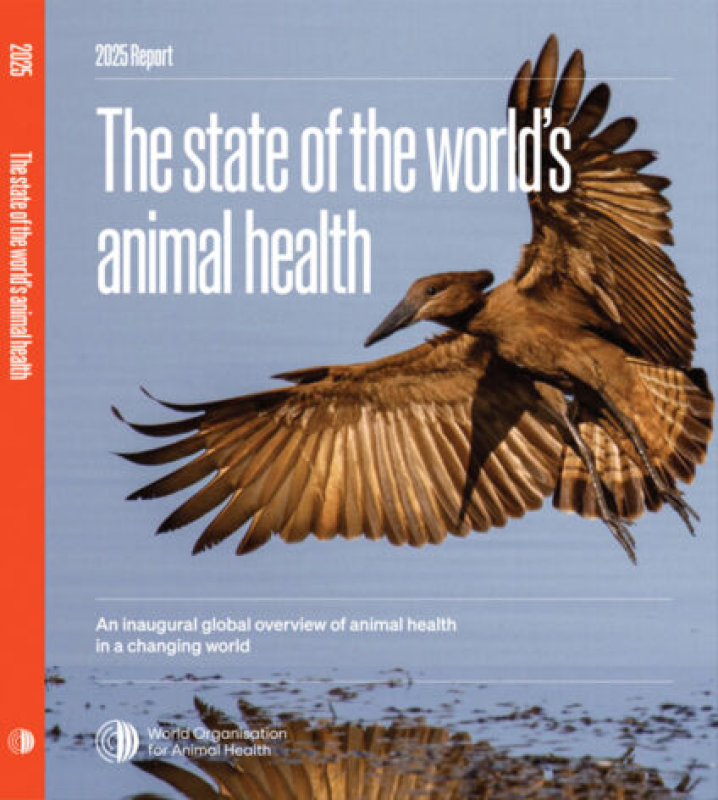
The recent State of the World’s Animal Health report found that outbreaks of avian influenza in mammals more than doubled in 2023, raising alarms about its potential spread to humans. Nearly half of the diseases now spreading into new areas have this same potential. At the same time, antimicrobial resistance poses a growing threat to human, animal, plant, and environmental health, also impacting livestock and fisheries.
Climate change accelerates these threats by changing animal disease patterns: warmer temperatures, shifting rainfall, and extreme weather events create new environments where diseases can spread more easily, jump between species, and appear in places they never did before. These challenges hit especially hard in Africa, where smallholder farmers rely on livestock for survival, and where animal illness can mean lost income, food insecurity, and greater vulnerability to climate shocks.
Governments must prioritise animal health as a matter of urgency. And there are plenty of reasons for them to do so.
Healthy animals are good news for the climate. Research shows that smart animal health and husbandry practices can reduce climate-warming emissions from livestock by up to 30 per cent. They’re also more resilient to the effects of climate change, which include more frequent and more intense heatwaves, droughts, and disease outbreaks.
Healthy animals protect human health by reducing the risk of disease spillover to humans. The risk is very real: without stronger prevention measures, zoonotic diseases could kill 12 times as many people in 2050 compared to 2020.
Fortunately, prevention is incredibly cost effective. Investing in measures to prevent zoonotic spillover would cost less than 5 per cent of the damages those diseases could inflict on society.
Healthy animals underpin prosperous communities and nations. In Africa, livestock are a major source of income and nutrition for the large majority of people living in poverty. The good news is that we know what needs to be done to keep animals healthy and well. We need to support them with balanced diets, quality veterinary care, robust disease monitoring and control, and good husbandry practices. These are all proven, affordable, and scalable strategies.
Vaccination is essential to any effective animal health strategy. Safe, effective vaccines curb the occurrence and spread of diseases, reduce the need for antimicrobials, and boost productivity sustainably. Backed by science, vaccines are among the most cost-effective tools for keeping communities across Africa and the rest of the world safe and healthy, while meeting animal health and welfare goals and building climate-resilient food systems.
Forward-thinking African nations are leading the way by adopting a One Health approach, which acknowledges that human, animal, and environmental health are deeply intertwined. Countries like Botswana, Côte d’Ivoire, Kenya, Namibia, Tanzania, and Zambia are moving away from fragmented, sector-specific responses in managing the health of humans, animals, and the environment.
In Kenya, for example, the government has integrated One Health principles into national policy by fostering collaborations between agriculture, health, and environment ministries. Kenya’s multi-sector Zoonotic Disease Unit has helped detect and control outbreaks of diseases like Rift Valley fever and anthrax before they escalated.
In Côte d’Ivoire, a One Health initiative brought together experts in wildlife, veterinary health, and public health to boost the surveillance and management of wildlife diseases, an important challenge in the country.
Some argue that the future of food should move away from animal-based systems altogether. But in many African countries, livestock remain indispensable as a main source of protein — especially in areas where an annual harvest isn’t guaranteed, or on arid lands, where growing crops isn’t feasible. The solution isn’t to abandon livestock; it’s to support farmers in keeping their animals healthy.
The climate problems are not confined to the Horn of Africa. As governments across the continent look to raise the ambition of their climate commitments, leaders must seize the opportunity to elevate animal health as a national priority and integrate it as a critical component of their national climate action plans (NDCs).
The message is clear: It’s time to recognise healthy animals as essential for both climate change mitigation and sustainable development.
Professor Appolinaire Djikeng is the Director General of the International Livestock Research Institute (ILRI); Dr. Emmanuelle Soubeyran is the Director General of the World Organisation for Animal Health (WOAH).