

- কলাপাড়া মুক্ত দিবসে এবার সাড়া নেই কার |
- One killed, two injured in attack at Ctg meeting over marriage |
- Dhaka ranks world’s third worst in air quality Saturday |
- Sylhet residents endure mosquito invasion amid dengue surge |
- Lioness brought back to Zoo cage after one hour of escape |
Fragmented Resistance: Gaza’s Political Divide and the Need for Cohesion
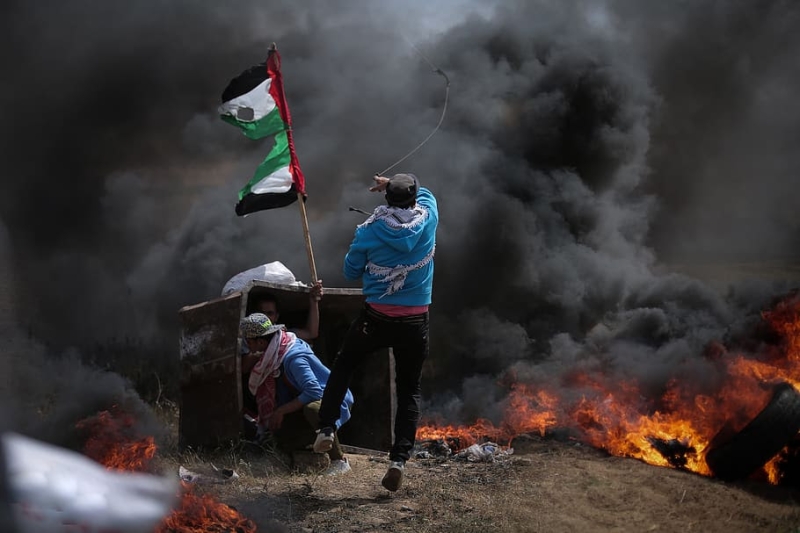
Fragmented resistance in Gaza.
By Hassanal Noor Rashid
The ongoing crisis in Gaza continues to draw international concern, with the humanitarian catastrophe driven primarily by Israeli military operations, blockade policies, and structural control over Palestinian territories. While these external pressures form the central source of suffering for the people of Gaza, internal political fragmentation has simultaneously weakened the territory’s capacity to respond to aggression. The divide between Hamas, Gaza’s de facto governing authority, and the Palestinian Liberation Organization (PLO), represented largely by Fatah in the West Bank, has produced a fractured national leadership unable to develop a unified strategy for resistance, governance, or diplomacy. Understanding this dual pressure, Israeli state actions from outside and political disunity from within, is critical to assessing Gaza’s struggle and the obstacles that impede meaningful resistance efforts.
Background: Gaza’s Political Landscape
Gaza’s political environment is shaped by a long standing rivalry between two major Palestinian factions. The PLO, dominated by Fatah, historically served as the international representative of the Palestinian people and advocated a national liberation strategy rooted in diplomacy, negotiations, and state building. Hamas, emerging later as an Islamist political and militant movement, gained popularity through its social programs and its emphasis on armed resistance.
The rift between these groups deepened after the 2006 Palestinian legislative elections, in which Hamas won a majority. The election result was followed by a violent split in 2007, leading to Hamas taking full control of Gaza while the PLO retained authority in the West Bank. Since then, the Palestinian polity has functioned as two parallel administrations with distinct ideologies, governance styles, and strategic priorities.
Efforts at reconciliation, held in Cairo, Doha, Mecca, and elsewhere, have repeatedly broken down due to disagreements over power sharing, security arrangements, and differing visions of how resistance should be conducted. This division is not merely ideological; it affects everyday governance, the distribution of resources, and the ability to present a unified diplomatic front. In moments of intense crisis, particularly during escalations with Israel, this fragmentation becomes even more visible and damaging.
Israeli Maneuvering and the Consolidation of Discord
While Gaza’s political divide has internal roots, it has also been shaped and exacerbated by Israeli policies and strategic maneuvering. Israel has historically managed Palestinian political fragmentation to its advantage, engaging selectively with one faction while isolating the other and maintaining conditions that prevent unified leadership from emerging.
For example, Israel maintains strict control over Gaza’s borders and the movement of goods, people, and essential materials. This blockade structure grants Israel indirect influence over Gaza’s governance and creates conditions in which internal competition over limited resources becomes more severe. The political isolation of Hamas, through international sanctions and refusal to engage with its leadership, further entrenches the divide by compelling Fatah to distance itself from Hamas to maintain international legitimacy.
Additionally, the broader regional dynamics, such as shifts in Egypt’s policies, the interests of Gulf states, and changing geopolitical alliances, interact with Israeli strategy in ways that deepen Palestinian political fragmentation. Whether through selective negotiations, economic pressure, or tactical military operations, Israel’s maneuvers often aggravate the existing divisions and make political unity far more difficult to achieve.
Internal Hindrances to Resistance
The internal split between Hamas and the PLO weakens Palestinian resistance in several critical ways. First, it fragments authority: each faction prioritizes its own political survival over national cohesion. This results in inconsistent strategies, militant escalation from Gaza and diplomatic appeals from the West Bank, that dilute Palestinian messaging and political legitimacy.
Second, the divide undermines effective governance. Competing bureaucracies and parallel institutions drain financial resources, weaken service delivery, and erode public trust. A population under immense pressure requires stable governance, yet factional competition often leads to conflicting policies, delays in reconstruction, and challenges in mobilizing mass support.
Third, military coordination suffers. Resistance strategies require unified command structures, clear communication, and shared objectives. The ideological and operational differences between Hamas’ military wing and PLO aligned security forces hinder any possibility of coordinated defense or negotiation strategy.
Finally, the division weakens international advocacy. Countries, organizations, and mediators struggle to engage when there is no single Palestinian leadership capable of representing a cohesive national stance.
Why Cohesion Matters
For resistance, whether political, diplomatic, or armed, to be effective, unity is essential. Cohesion would enable Palestinians to articulate a single national strategy, negotiate more effectively with regional and international actors, and present a united front against Israeli policies. A unified leadership could coordinate humanitarian assistance, reconstruction efforts, and diplomatic appeals with greater legitimacy and clarity.
Political cohesion does not require erasing ideological differences; rather, it demands a shared commitment to national goals and the institutional frameworks necessary to pursue them. Successful liberation movements historically relied on broad coalitions capable of balancing internal diversity with collective purpose. Gaza’s future similarly hinges on its ability to overcome internal divisions and form a leadership capable of navigating both external aggression and internal governance challenges. 4 December 2025
Hassanal Noor Rashid, Director of Programmes, International Movement for a Just World