

- Ocean’s ability to absorb carbon falling as CC intensifies |
- Bangladesh, Japan Sign Four MoUs and Two Grant Agreements |
- 46 Killed in Collision Between Two High-Speed Trains in Spain |
- Tarique Urges Japanese Investment in Energy, Rail, Technology |
- Tarique Seeks Japan’s Support to Diversify Bangladesh’s Exports |
The Battle for Hormuz Treasure Trove
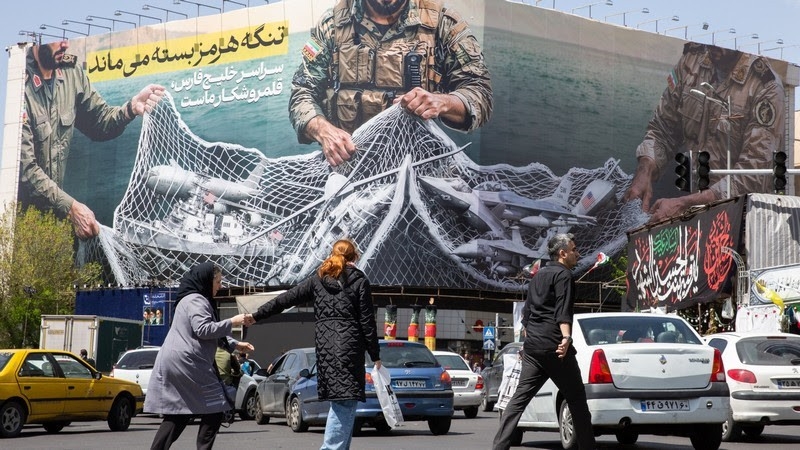
The Battle of Hormuz Treasure Trove
By L Ali Khan
The world is curious, even nervous, about how the US-Iran war will end. Many views compete for attention. Even if the US tries to get out of the war, it is caught in an escalation trap, a thesis presented by Professor Robert Pape. The US has been drawn into the war by the Israelis, who dream of building Greater Israel by weakening the region, a thesis advanced by Professor John Mearsheimer. Some commentators argue that the war would end after President Trump and the Republicans lose the 2026 midterms. Others insist that the US will simply leave the region, as it lacks the resources or the stomach to fight a prolonged war. The optimists opine that Democrats will defund the war, forcing its termination. The most explosive conjecture casts President Trump as a willful warrior who can do anything, anytime.
The US-Iran war has become a hard test of US hegemony in the region, one that requires subduing Iran, the only state left in the Gulf that opposes US dominance. This war is best understood as part of a broader US effort to control the region and the Gulf’s resources, especially as China becomes the principal beneficiary. Since Iran, on the front line, and China, in the rear, are formidable foes, the US may not win the war against Iran and may have to roll back its Gulf military bases in the worst case.
The Hormuz Treasure Trove
The Strait of Hormuz is much more than a shipping passageway from the Persian Gulf to the open seas. The Gulf waters and the eight nations surrounding the Gulf—Iran, Iraq, Saudi Arabia, United Arab Emirates, Kuwait, Qatar, Bahrain, and Oman—contain trillions of dollars in resources we can call the Hormuz Treasure Trove (HTT). These eight nations contain close to 50% of the world’s proven oil reserves; Iran and Qatar share the world’s largest natural gas field, with Qatar converting the gas into liquefied natural gas for export. The HTT also produces huge quantities of petrochemical feedstocks such as ethane and propane, sulfur for making plastics and fertilizers, helium used in semiconductor manufacturing, and minerals and marine resources. To make most of these natural and processed resources available to the rest of the world, the Strait of Hormuz is the primary and the cheapest gateway out of the treasure trove. It is also a chokepoint because no other waterway reaches or exits the Gulf.
In the years before the war, nearly 75% of crude and condensate leaving Hormuz went to China, India, Japan, and South Korea, without US permission. Washington would like to change that and exercise a veto. President Trump’s statement that he views Hormuz as “an American territory” is not a joke, but a desire to control the gateway and the Gulf resources. Control over the HTT, however, requires more than naval access to the Strait; it requires cooperation from the states that possess its resources.
Compliant Gulf States
For decades, US hegemony over the HTT has been nearly complete, except in non-cooperative Iraq under Saddam Hussein (1979-2003) and in Iran after the Islamic Revolution in 1979. A persistent pattern in US policy across administrations (deep script) has been to preserve and expand US predominance over the HTT, a priority that has become even more critical as China increasingly benefits from HTT resources.
The six Gulf States, Saudi Arabia, UAE, Kuwait, Bahrain, Qatar, and Oman, have been US allies and security partners partly out of national interest, and partly because of US pressure. These states have allowed US armed forces to build bases in their territories for troops and military equipment. Qatar serves as a forward base for US Central Command, and Bahrain hosts the Fifth Fleet. Saudi Arabia, Kuwait, and the UAE also host US bases with troops, aircraft, and missiles.
The compliant states also protect and strengthen the US dollar. Gulf states trade HTT resources in dollars, supporting the dollar and keeping their surpluses in dollar-denominated assets, including US Treasury securities. Known as the petrodollar, the pricing of Gulf commodities in dollars reinforces the dollar as the world’s premier currency, especially after the US removed gold as the dollar’s backup commodity in 1971.
Dollar-denominated trades serve US hegemony, allowing the US to freeze dollar accounts when needed, such as for economic sanctions, as the US has frozen Russian and Iranian accounts. Many international dollar transactions pass through US-linked banks and dollar-clearing systems. The US closely monitors Iraqi (and Venezuelan) dollar accounts generated through oil sales and retains the option to delay or deny dollar withdrawals. Iran defies US hegemony because it can sell, particularly to China, the principal buyer, outside the dollar clearing system.
The history of US hegemony over the HTT can therefore also be understood through its dealings with the two states that resisted compliance: Iraq and Iran.
Subduing Iraq
Iraq under Saddam Hussein (1979-2003) and Iran after the 1979 Islamic Revolution posed the greatest threat to the enforcement of US hegemony. First, the US adopted a policy of decimating both enemies by making one fight the other. In 1982, the US started supporting Saddam Hussein, a Sunni dictator in a Shia-majority Iraq, when he faced pushback in the war with Iran. To fuel the war, US policymakers exploited the Shia-Sunni and Iran-Arab binaries to cast the Iraq-Iran war as a clash of historical identities. The war, which stretched over eight years, proved fruitless, and US hegemony over the HTT remained incomplete.
In 1991, the US decided to eliminate the Iraqi threat to the HTT hegemony through direct military action. The US ambassador to Iraq gave conflicting signals to Saddam Hussein about taking Kuwait by force, as Iraq had claimed it was an integral part split off by British colonists. As Iraq invaded a “sovereign state,” a member of the United Nations, international law came into action, as it does in select cases sponsored by the US and other Western nations acting as a bloc.
With the cover of the UN Security Council authorization, Iraq was forced to withdraw from Kuwait. However, Saddam Hussein remained in power. What President George H. W. Bush could not accomplish, President George W. Bush made a priority. The 9/11 terrorist attacks provided a perfect geopolitical climate to conquer Iraq by force. To make matters worse, Saddam Hussein threatened to decouple oil sales from the dollar, compromising the dollar’s paramountcy in global trade.
In 2003, the US promoted the false claim that Saddam Hussein possessed weapons of mass destruction and was reconstituting his nuclear weapons program, and the world must not allow the most dangerous man to have weapons of mass destruction. Nuclear fear, when properly packaged, sells easily. The US orchestrated a powerful PR campaign to justify the war against Iraq.
Despite the 9/11 attacks and the campaign that Iraq had weapons of mass destruction, the UN Security Council did not authorize military action under Chapter 7 of the UN Charter. President George W. Bush nevertheless attacked Iraq, deposed Saddam Hussein, and installed a compliant Shia government. Since 2003, Iraq has had to conduct oil trades in dollars channeled through the US banking system, giving the US leverage: if Iraq misbehaves, the US can delay or freeze its assets. That threat still exists today. This is how Iraq has been compelled to subscribe to US hegemony.
Subduing Iran
After Iraq, the remaining challenge to completing US hegemony over the Gulf has been Iran, the region’s principal non-compliant state. Iran is much larger than Iraq in both size and population and spans the entire eastern Gulf border. In attacking Iran, the US offers two distinct grounds. The first concerns nuclear weapons; the second concerns the oppressive government. However, behind these stated rationales lies a broader geopolitical objective: bringing Iran into the US-centered regional order.
Iran has signed the Nuclear Non-Proliferation Treaty (NPT), which prohibits the development of nuclear weapons but allows the use of nuclear energy for peaceful purposes. The US, however, argues that NPT membership is insufficient and that Iran must provide additional assurances that it will not develop nuclear weapons. Iran provided such assurances in 2015, and the major powers, including Russia and China, became parties to those assurances, known as the Joint Comprehensive Plan of Action (JCPOA), an agreement also endorsed by the UN Security Council.
But even the JCPOA assurance has not been good enough because the non-cooperative Iranian government continues to defy the US hegemony. In 2018, the US abandoned the JCPOA, even though Iran still did not denounce the NPT. Nuclear fear in the case of Iran is more credible, since it has been developing nuclear energy for decades and the International Atomic Energy Agency (IAEA) has issued reports stating that Iran is noncompliant with safeguards obligations.
The second US rationale smells of bad faith. Iran’s constitutional structure is somewhat authoritarian, though it is more democratic than the monarchies in other Gulf states. The Iranian parliament and the President are popularly elected, though a screening mechanism prevents certain candidates from running. The Supreme Leader is not popularly elected but selected by the Assembly of Experts. This office is not hereditary. In highlighting oppression, the US is speaking to dissidents, the Western Iranian diaspora, and even to Sunnis in Iran and the region, arguing that the Shia-dominated Iranian government is oppressive and must be overthrown.
The war has failed to dislodge the Iranian constitutional system, and despite the assassination of the Supreme Leader, the system has survived and elected a new Supreme Leader.
In addition to being a non-compliant state, Iran has been cultivating relations with China, which is fast emerging as an economic superpower and a major consumer of hydrocarbon energy. Thus, the struggle over Iran cannot be separated from the geopolitical question of China’s access to the HTT resources.
The US-China Cold War
China’s rise as an economic superpower has been spectacular. In the past ten years, it has become clear to the US, Europe, Russia, and India that China is unstoppable as an economic superpower; a war with China is an invitation to self-destruction. So engaging China directly in armed conflict, whether over Taiwan or the South China Sea or the border dispute with India, will bring nothing but ruin to the world.
Ruling out a full-fledged hot war, the US has commenced a cold war with China, which will likely intensify and be peppered with proxy wars, such as those with Iran. The cold war with China aims to primarily undermine its economy by making it harder to acquire natural resources, particularly oil, which China lacks.
In the American hemisphere, the US made sure China did not control the Panama Canal, which connects the Pacific Ocean with the Atlantic Ocean. The Panama Supreme Court ousted a Hong Kong company that managed the ports on each end of the Panama Canal. Initially, the US even threatened to reclaim control of the Panama Canal. However, ousting the Chinese company from the Panama Canal has pacified Washington for now.
In early 2026, the US seized and removed President Nicolás Maduro from power to bring Venezuela, a major energy producer, under control, as he was developing close energy and commercial ties with China. Maduro has been indicted on drug-trafficking charges.
Seizing the president of a sovereign state violates international law and will likely be one of the most visible casualties of the cold war between the US and China.
Russia is another major energy source for China. Given the Ukraine-Russia war, the US has been unable to woo Russia away from China, even though the Trump administration considered the possibility; however, given the intense Russia-Europe rivalry, turning Russia against China has become unattainable. Long before the Iran war, Russia and China leveraged the Shanghai Cooperation Organization (SCO) and spearheaded the expansion of BRICS to challenge the dollar’s global primacy.
As Russia became increasingly aligned with China, the strategic significance of HTT resources in the US-China cold war grew even greater, even though the US does not rely on these resources. China imports a significant amount of energy from the Gulf states, particularly Iran. To check China, it was ideal to topple the Iranian government and install another “Shah,” as the US and Britain did in 1953 by overthrowing the democratically elected Prime Minister Muhammad Mossadegh after he nationalized Iranian oil. The US desires to turn Iran into a compliant state.
The HTT hegemony would give the US substantial leverage over energy flows to both China and India, both of which are competing to become the top economic powers and are projected to surpass the US around 2050.
Playing India and China against each other, just like Iraq and Iran, was also seriously considered under the Obama administration, which wooed India into the US orbit. However, much like Iran, India could foresee the downside of aligning with the US against China, its geographical neighbor. Frustrated with India, the US returned to warm relations with Pakistan as a possible foothold in South Asia.
Great powers cannot fight the contest over the HTT alone; both Washington and Beijing depend on regional states whose interests may or may not align neatly with either patron. Pakistan and Israel offer a contrast in the battle over the HTT.
Pakistan’s Dilemma
Pakistan, an economically weak country with a narrow export base, maintains strategic ties with China—jointly manufacturing combat aircraft like the JF-17 for export to third countries. Pakistan is also a geographic neighbor to both China and Iran and has deep cultural and linguistic ties with Iran. At the same time, Pakistan has been close to the US since its birth in 1947, though with bitter interruptions. Since the Cold War with the Soviet Union and the Soviet invasion of Afghanistan in 1979, the CIA, MI6, and the ISI (Pakistan’s intelligence agency) worked closely below the surface in ways their governments could not. It is unclear whether they still do.
In mediating between Iran and the US, Pakistan is playing a dangerous game without fully understanding the consequences. Field Marshal Asim Munir, the de jure chief of the armed forces and de facto ruler of Pakistan, has become the most prominent person in the mediation efforts, even though the civilian government also plays a supportive role.
A mediator, by definition, is neutral between disputants, which is why the parties trust the mediator. However, the realities on the ground are irreconcilable and challenge Pakistan’s neutrality. On one hand, Pakistan is closely tied to China through the China-Pakistan Economic Corridor (CPEC) and Gwadar Port, connected to China by the Karakoram Highway. On the other hand, Pakistan needs the US because it relies on loans from the IMF and the World Bank, both of which are influenced by the US.
Pakistan will be unable to mediate if the conflict escalates to one between the US and China. If either patron believes Islamabad is playing on both sides, the diplomatic and economic cost will be monumental. Losing either China or the US will be catastrophic for Pakistan. In fact, if the US-Iran war intensifies, the US will force Pakistan to close its borders with Iran to maximize economic pressure on Iran, a course of action unacceptable to China. It is uncertain how Pakistan will navigate such a bind.
Israel’s Commitment
If Pakistan is a conflicted partner, Israel provides resolute support for US hegemony. Professor Mearsheimer’s claim that Israel manipulated the US into starting a war with Iran is popular in some opinion circles. The American Israel Public Affairs Committee (AIPAC) and wealthy pro-Israel billionaires have been blamed for forcing the US-Iran war. This claim has some truth to it. However, Professor Mearsheimer underestimates the US desire for hegemony over HTT. Israel did not author US Gulf strategy. It is the partner that can fight on short notice.
Some extremists in Israel, including some in the government, dream of Greater Israel stretching to parts of Syria, Egypt, and even Saudi Arabia. This desire of the few can be stretched to argue that Israel prefers wars to weaken its neighbors so that it can expand its territory. Yet, the suggestion that the US President is at the mercy of Israeli leaders is a view that fails under the weight of US foreign policy. Jewish influence does not mean that the US government acts according to a Jewish wish list.
Nonetheless, Israel is an integral part of the US strategy to control the HTT. The US has equipped and used Israel to keep the region in line. Israeli governments have dutifully complied, ignoring the larger interests of their people. Israel has been a vocal critic of Iran and its ideological government, partly for existential reasons and partly to promote the US agenda. However, the thesis that the US was drawn into war with Iran because of Israeli advocacy is something US policymakers might cite to mitigate their own responsibility for Middle East wars. Iran’s proxies in Lebanon, Syria, Iraq, and Yemen attack Israel to weaken its role as the US proxy. Consequently, by supporting the US strategic hegemony, Israel has pursued its interests in synergy with those of its patron.
Yet neither Israel nor the other US partners can resolve the central problem: Iran has so far refused to accept the regional order that Washington seeks to preserve.
Hard Choices
After several months of military strikes, economic sanctions, and mediation, the US has been unable to achieve a victory over Iran. US policymakers might have thought that the Iranian government was an easy target if they could kill the Supreme Leader and others in charge. They assumed that because the Iranian people are dissatisfied with the government, they would rebel and welcome a US attack that dislodges the government. Once the presumed easy win did not occur, a harder victory through a protracted fight became the default option.
We must ask a simple question: now that the easy win did not happen, how will the US-Iran war end? If the war is about US hegemony over the HTT, it can end in two scenarios. First, the US leaves the region with the Strait of Hormuz under Iranian control, partly shared with Oman. Second, the US escalates the war to defeat the Iranian government by force, as it defeated Saddam Hussein in Iraq. The first scenario seems highly improbable because the US, with its most lethal armed forces, will not accept defeat, leaving the HTT for China to use without hindrance. Under this scenario, the US might also have to close its military bases located around the Gulf.
The second scenario seems more likely. Professor Robert Pape calls it the escalation trap, a somewhat problematic phrase, especially when combined with Professor Mearsheimer’s thesis that Israel forced the US’s hand into the war. The term implies that the US has fallen into a war it must escalate. Both professors, eminent in their field, convey US helplessness in both initiating and executing the war.
A more accurate explanation would be an escalation strategy, a term more consonant with US agency, under which, if one type of force does not work, the US employs another. If economic sanctions do not work, air power is used, and finally ground troops are used to close the deal. This incremental approach is rational, economical, and effective because it weakens the enemy in stages. This sequence was also used in Iraq: economic sanctions for decades, air power, and then ground troops to occupy and establish a compliant state.
If HTT hegemony is the goal, the US will escalate the war, not out of compulsion but as a rational strategy to topple the Iranian constitution, install a compliant government, and rehabilitate the military bases in the Gulf states. If Iran continues to resist compliance, US ground troops will be necessary to complete the job. If the Iranian resistance is intense and severe with assistance from China, causing US deaths, Washington might contemplate the unthinkable: deploying tactical nuclear weapons. “This cannot happen” is the response from optimists, moralists, and those who look the other way to avoid what they think is wrong.
The proposition that the US will accept defeat because it can no longer tolerate American deaths is neither new nor outlandish: that is exactly what happened in Vietnam. The US left the war without achieving its geopolitical objectives. The same could happen with Iran. However, the probability is low because, if the US loses this war, it will deal a severe blow to American hegemony not only in the region but also more broadly. No superpower relents easily, and the US is unlikely to fold its cards and hand victory to Iran and China.
Conclusion
The stated US justification for the war with Iran centers on rolling back Iran’s nuclear program. This objective enjoys international support, as evidenced by the broad endorsement of the 2015 JCPOA, ironically designed to prevent war. However, Washington’s objective to overthrow the Iranian constitutional system has very little backing in the region or globally. The US would prefer a compliant government in Iran that reinforces US hegemony over the Hormuz Treasure Trove. A broader US objective is to limit China’s unchecked access to Gulf energy while preserving the dollar’s primacy. Iran under its current political structure is unlikely to yield to the US. One thing is certain: the US-Iran war is a proxy war in the intensifying cold war between the US and China. The war ends when China retreats from the contest over the Gulf or when the US realizes it cannot turn Iran into a compliant state. It is hard to predict how long the stalemate will last.
L Ali Khan is the founder of Legal Scholar Academy LLC, has thirty-five years of experience in teaching international law, arbitration, and commercial law. 4 September 2026
Source: countercurrents.org via JUST International, Malaysia.