

- BGMEA, OCAIB move to attract Chinese investment in RMG sector |
- BSTI finds dangerously high mercury levels in 8 skin creams |
- JCD, Shibir Clashes Spread Across Dhaka Campuses |
- PM Calls for Integrated Urban Planning on Water Management |
- Bangladesh Offers Japan Gateway to $3bn Regional Market |
Bonn signals climate agenda shifting from talk to delivery
Parties have widely divergent views on financing for adaptation. Financing for developing countries
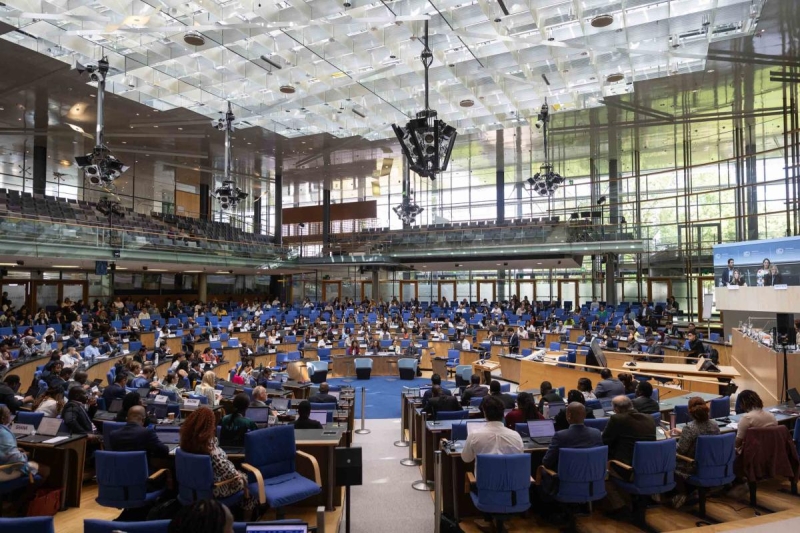
Bonn Climate Talks 2026.
BONN, Germany (18 June 2026) – The June climate talks closed today in Bonn with familiar frustration over slow-moving negotiations. But across the conference, a stronger signal broke through: countries are shifting the centre of gravity from talks to implementation.
The COP30 Presidency-led initiatives dominated discussions, including work on transitioning away from fossil fuels, ending deforestation and forest degradation, unlocking finance, and turning national climate plans into delivery. Brazil’s revamped Action Agenda helped sharpen that shift. The COP31 Presidency’s proposed global electrification goal further supports the Presidency-led initiatives amplifying real-world solutions and their focus on the Action Agenda.
Negotiations remain vital for consensus, legitimacy and legal clarity. But Bonn showed we must now move faster into delivery so those two tracks must evolve together. Presidency-led initiatives are still early and uneven, with big questions on governance, finance and accountability. Yet the signal was clear: the climate agenda is beginning to shift, however imperfectly, from talk to implementation.
Fernanda de Carvalho, Global Climate and Energy Policy Head, WWF International said: “Negotiations remain the backbone of the global climate process – but they cannot become a waiting room for implementation. Bonn showed the climate agenda is shifting from promises to delivery. That shift is welcome, but it is still slow, uneven and fragile. Presidency-led initiatives on fossil fuels, forests, finance and national climate plans now need hard edges: clear governance, real money and strong accountability.
“Governments must arrive at COP31 ready to turn this momentum into a credible delivery package – one that accelerates the transition away from fossil fuels, halts and reverses deforestation and degradation and puts finance behind the countries and communities already on the frontlines.”
The Brazilian COP30 Presidency’s role in this shift cannot be understated, says Alexandre Prado, WWF-Brazil Climate Change Leader. “Their courage to bring burning issues into the climate conversation set the scene for what we saw in Bonn. The success – or not – of these initiatives may only be evident by the next Global Stocktake. But they got us talking about real-world implementation, every day, in every way, in every meeting in Bonn, and this is something.”
As the workplan for the Intergovernmental Panel on Climate Change’s Seventh Assessment Report is finalised, countries must keep climate negotiations anchored in the pathway science points to. Shirley Matheson, WWF’s Global NDC Enhancement Lead, said, “Climate science underpins the Paris Agreement. Defending the 1.5°C temperature goal is essential to protect people and nature. Countries must keep climate negotiations grounded in science and not let politics blunt its edge.”
Meanwhile, back in the negotiating rooms, progress was limited on issues such as mitigation, adaptation finance and just transition. Deadlocks remain on difficult and the continuity of the Mitigation Work Programme. Mark Lutes, WWF UNFCCC Global Lead, said: “That means more work to be done at COP31. The COP cannot be a clean-up job for unfinished business. Countries will have to arrive in Antalya ready to land decisions that keep 1.5°C, adaptation finance, mitigation and a just transition on track.”
Climate Finance:
Marianne Lotz, WWF-Germany Climate and Energy Policy Advisor said: “While Bonn has once again seen progress stall on climate finance, it has also clarified exactly what needs to happen next. For COP31, developed countries have a clear opportunity to turn finance promises into delivery, by upholding the commitment to triple adaptation finance, setting out credible and transparent plans to meet the US$ 300 billion goal, and pledging resources for increased funds ahead of COP31. Concrete commitments in the coming months can help ensure the shift from negotiations to concrete action and delivery and support the communities on the frontlines who need it most.”
Roadmap on halting and reversing deforestation and forest degradation by 2030:
Hermine Kleymann, WWF Global Forest Policy Head, said: “The Global Stocktake has drawn a clear line: ending deforestation and degradation by 2030 is non-negotiable. Bonn showed strong support for the COP30 Forest Roadmap, but also growing impatience. The gap is no longer ambition; it is delivery. The roadmap must now confront the broken systems driving deforestation and degradation, or it risks becoming just another document What is needed now is a shift from endorsement to real ownership: a core group of governments stepping forward to drive this as an ongoing process: to test it, use it, finance it, and be held accountable through it.”
Roadmap on transitioning away from fossil fuels:
Fentje Jacobsen, WWF-Germany Director Climate and Energy said: “Bonn put the fossil fuel transition where it belongs: at the centre of the climate conversation. The COP30 Presidency’s roadmap drew strong, widespread attention from all countries and stakeholders. Now it must deliver. To build trust, the roadmap must confront the barriers, gaps and needs preventing countries from advancing on this make-or-break agenda. It must be concrete, actionable and backed by the finance and international support needed for a just, orderly and equitable transition away from fossil fuels.”
Oceans Dialogue:
Julika Tribukait, WWF-Germany Senior Policy Advisor, Oceans and Climate, said: “In Bonn, the Ocean Dialogue kept the focus where it belongs: on delivery. More than nine in ten coastal and island countries have included ocean action in their NDCs, yet once the Dialogue closed, the ocean almost vanished from the negotiating rooms. COP31 must change that. With both Presidencies putting ocean and seas high on the agenda, and the Pacific driving momentum through this year’s Pre-COP, leaders now need to turn support into action: elevate the Blue Package, embed ocean-climate action across the UNFCCC, and give it the political weight and delivery pathway it urgently needs.”
Mitigation Work Programme:
Fernanda de Carvalho, WWF Global Climate and Energy Policy Head, said: “A key issue still unresolved in Bonn is mitigation, another word for reducing emissions, one of the pillars of the Paris Agreement. The Mitigation Work Programme should continue only if improved to strengthen the connection with the GST, input into GST2 and deliver meaningful implementation outcomes. We need a formal space for a serious mitigation discussion, based on science and equity.”
Just Transition:
Tanyeli Behiç Sabuncu, WWF-Türkiye Climate & Energy Practice Manager, said: “Bonn left the Just Transition Mechanism unfinished, with no concrete outcome to guide COP31 and major differences still unresolved on its design, finance, links to the wider work programme and how the COP28 fossil fuel transition decision will be put into practice. The agreed review framework is useful, but not enough. By Antalya, countries must build common ground around a strong, inclusive mechanism –backed by finance and technology, tied to fossil fuel phase-out, and able to support the workers and communities whose futures depend on a just transition.” COP31 Presidency:
Ayşe Mine Doğan, WWF Turkiye Environmental Policy Manager, said: “As COP31 President and President of Negotiations, Türkiye and Australia must lead by example. They must strengthen their own climate commitments, align action with 1.5°C, and set out credible plans for a just, orderly and equitable transition away from fossil fuels. With strong support for workers, communities and vulnerable groups, they have a rare chance to build trust, raise ambition and show what inclusive, transparent and rights-based climate leadership looks like.”
Kesaya Baba, WWF-Australia Senior Manager COP31 Strategy and Partnerships: “Australia, as President of Negotiations, has a lot of work ahead, with very little time to do it. They must lay the groundwork to bring countries into agreement on the foundations of keeping 1.5°C within reach: the Just Transition Mechanism, the Mitigation Work Program, adaptation, accelerating implementation, and aligning finance flows with the Paris Agreement and upholding the integrity of the best available science, human rights, and the multilateral system. The Pre-COP in Fiji and Tuvalu in October is a crucial milestone, and Australia must support Pacific leadership in driving the agenda and outcomes.
Global Goal on Adaptation:
Flávia Martinelli, WWF-Brazil Climate Change Specialist, said: “Parties have widely divergent views on financing for adaptation. Financing and support for developing countries is a central debate for the climate agenda, and for the implementation of adaptive measures it is even more crucial, because such actions must be financed with public resources that do not create more debt for countries. Further work on refining the indicators is expected in 2027. Even though its implementation is voluntary, indicators will help countries to report their progress in adaptation and from this data we can understand and close the implementation gap.” - Press Centre