

- Govt Proposes 17-Member Panel for Constitution Reform |
- Energy Security Lies in in Solar Power |
- Breaking The Iron Grips of Oligarchy in Bangladesh |
- PM Unveils 12-Point Plan for Clean, Green Dhaka |
- Fuel shortage, rains hit Boro harvest in Habiganj haors |
Caring for The Elderly in Bangladesh is Inadequate
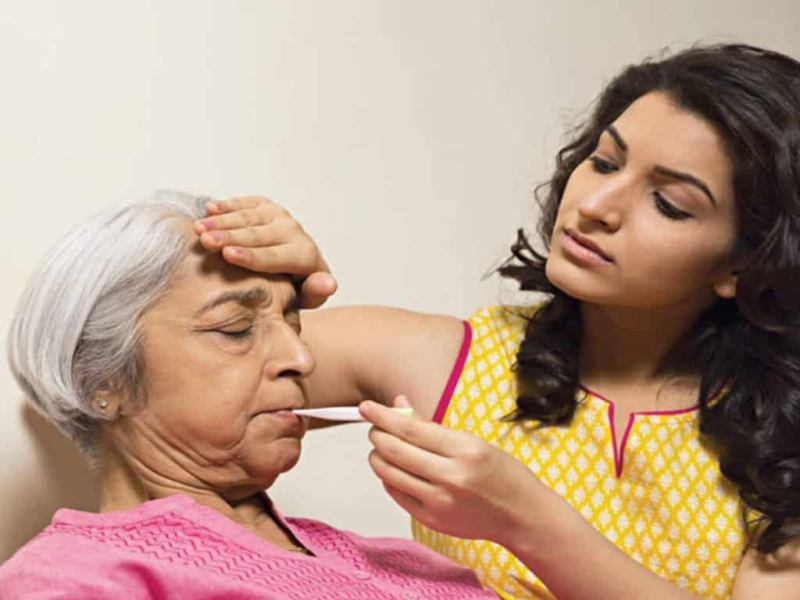
Photo collected
Every morning, 68-year-old Rahima Begum begins her day by tending the small rooftop garden at her son’s home in Dhaka. Rows of coriander, green chilli, aloe vera and flower plants fill the space, drawing her attention and care. After breakfast, she packs homemade pickles and snacks to sell to neighbours and relatives. She spends afternoons helping her granddaughter with schoolwork, while evenings often end in prayer and quiet conversation.
A few years ago, Rahima thought her life had entered a waiting room. After the death of her husband and marriages of her children, her world shrunk. She was not bedridden, nor helpless, nor dependent on constant care. Yet she felt something deeper that she was no longer needed.
"I thought old age meant I had become extra in everyone’s life," she recalls. "Now I feel I can still do many things." Her words capture a reality quietly reshaping Bangladesh.
The country is ageing. Life expectancy has gradually increased, healthcare access has improved, and the number of people aged 60 and above is steadily growing.
The challenge for Bangladesh now is whether it can learn to see its elderly citizens not as a burden to be managed, but as a human resource to be valued. Too often, ageing is viewed only through the lens of illness, loneliness and dependency. Yet old age is not simply a stage of decline. It can be a stage of wisdom, skill, memory, emotional depth, productivity and reinvention.
For generations, older people occupied a central place in family life. In joint households, they were decision-makers, storytellers, spiritual anchors and caregivers for grandchildren. Their role extended beyond affection; they held authority, memory, and purpose.
But urbanisation, migration, smaller apartments, financial stress, and changing work patterns have altered that reality.
Today, many older parents live alone in villages while their children work in Dhaka City or abroad. Others live with family in the city but spend most of the day in silence while everyone else rushes through school, office, traffic, and digital life. Some are physically present in the household, yet emotionally absent. This is not always outright neglect. More often, it is a quieter form of exclusion.
Many elderly people are fed, clothed, and housed, but they are not always engaged. Their medicines may be arranged, but their emotional and social needs remain largely invisible. And that is where one of Bangladesh’s biggest ageing challenges lies.
When people discuss elderly care, the conversation usually begins with medicine, hospital visits and physical dependency. These are important concerns, especially as older people often face diabetes, hypertension, joint pain, hearing loss, vision problems, and other chronic illnesses. But old age has another, less visible side.
Many elderly people struggle not only with physical weakness but also with boredom, loneliness, anxiety, loss of identity, and the painful fear of becoming “a burden.”
For someone who has spent decades raising children, earning for the family, teaching students, treating patients, running a business, or managing a household, retirement can feel like a sudden erasure. They do not just lose income or routine—they lose a sense of usefulness. This is why active ageing matters.
Active ageing does not mean denying the realities of age. It means helping older people remain mentally, socially, emotionally, and where possible, physically engaged. It means recognising that even after retirement, many people still have the ability and desire to contribute. One of the biggest missed opportunities here is the underuse of elderly people’s experience and skills.
There are retired schoolteachers who could mentor struggling children in neighbourhoods and villages. There are former doctors who could support health awareness campaigns or community clinics. Retired government officials could advise local organisations. Elderly homemakers can train younger women in cooking, sewing, home management or small-scale entrepreneurship. Former bankers, engineers, journalists, artists, and businesspeople still carry knowledge that could enrich society. Yet retirement often functions like a social shutdown.
The day someone leaves formal work; society tends to place them on the sidelines. Their experience is admired in theory, but rarely used in practice. This is a loss not only for the elderly themselves, but for the country as a whole.
We talks often about youth power, innovation, and productivity. But pay far less attention to senior power, the accumulated wisdom of people who have already lived through decades of social, economic, and institutional change.
Old age should not automatically mean withdrawal. In many cases, it can mean transition into mentorship, community leadership, voluntary service, creative work, spiritual engagement, and social contribution.
The real question is not whether older people can still do meaningful work. It is whether Bangladesh is willing to create space for them.
The growing number of old-age homes in Dhaka and elsewhere reflects another side of this changing landscape. Once considered a deeply uncomfortable concept in the society, elderly care homes are becoming more visible as family structures evolve. Some people still see them as a sign of abandonment. Others increasingly view them as a practical response to changing urban life and caregiving pressures.
Among the better-known names in and around Dhaka are Probin Nibash in Agargaon, run by the Bangladesh Association for the Aged and Institute of Geriatric Medicine (BAAIGM), as well as Apon Nibash Old Home in greater Dhaka. Other welfare and charitable organisations, including Dhaka Ahsania Mission, have long worked in broader social care and humanitarian services.
For some residents old age homes provide safety, routine, companionship, and better care than they might receive alone at home. For others, moving there can be emotionally painful, especially in a culture where family-based care has long been considered a moral duty. Still, these homes are increasingly trying to offer more than shelter.
Some provide prayer spaces, communal dining, reading rooms, health support, social gatherings, and recreational activities. The better ones understand an important truth: elderly care is not only about a bed, three meals, and medication. It is about dignity, companionship, routine, and emotional life.
The government has come up with support for elderly citizens, particularly through a social SafetyNet. Bangladesh’s Old Age Allowance programme, introduced in 1998, has grown over the years. In FY 2025–26, the monthly allowance was raised to Tk 650, with coverage expanded to 61 lakh people.
These are important steps. For many low-income elderly people, even modest support can mean food, medicine, or a small degree of independence. But gaps remain. The allowance is inadequate for many who need substantial support. Access to geriatric-friendly healthcare is still limited. Public infrastructure rarely considers mobility, hearing, vision, or accessibility needs.
Private initiatives have started to fill some of the space. Home nursing, elderly day-care centres, private assisted living arrangements, home-based physiotherapy, senior wellness support, and community volunteer services are slowly emerging, especially in urban areas. NGOs and social organisations have also become active in elderly health, counselling, and welfare.
Yet, the centre of elderly care in Bangladesh remains the family. What older people want is not necessarily luxury or expensive arrangements. More often, they want respect, time, conversation, and inclusion. They want to be consulted, not merely cared for. They want to remain part of family decisions, family stories, and family life.
The elderly are not a separate category living on the margins of society. They are parents, grandparents, teachers, neighbours, former workers and caregivers who built much of the world younger generations now inhabit. And if we continue to live longer, ageing is not someone else’s issue—it is every family’s future.
For Rahima Begum, old age became bearable again not because her years reversed, but because her sense of purpose returned. She now earns a little, contributes to the household, teaches her granddaughter, tends her plants, and feels visible again.
(This story has been published in the April print edition of the GreenWatch)