

- Philip Sangma arrested for aiding Hadi murder suspects escape |
- Govt Issues Notice on Visa Extension for Expatriates |
- Khamenei Warns US, Israel in First Speech as Leader |
- Protests, Walkout Mark President’s Address in Parliament |
- UNSC fails to adopt resolution for halting Middle East crisis |
US Offers $10m Reward for Iran Leader Khamenei Info
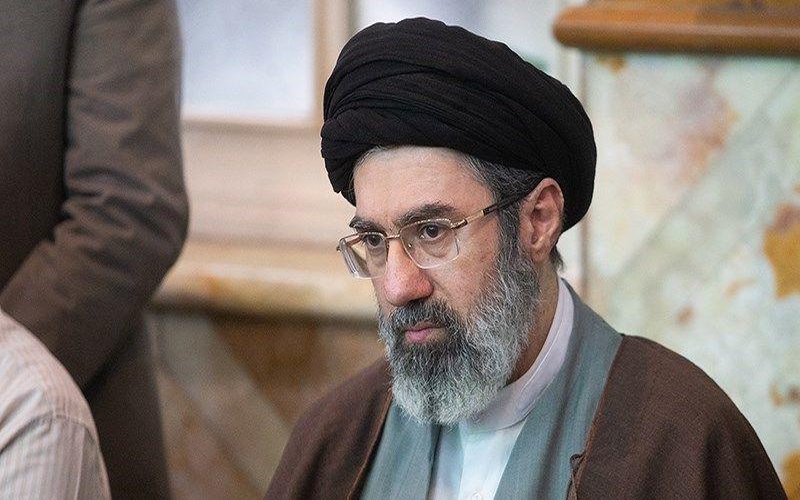
Mojtaba Khamenei
The United States has announced a reward of up to $10 million for information on Iran’s newly appointed supreme leader, Mojtaba Khamenei, as Washington intensifies pressure on Tehran amid a widening regional conflict.
The offer was made public by the United States Department of State through its Rewards for Justice programme, which is administered by the Diplomatic Security Service. The initiative seeks information on individuals linked to activities that Washington considers threats to international security.
According to programme officials, the reward also applies to information about several senior figures associated with the Islamic Revolutionary Guard Corps (IRGC), Iran’s powerful military and security force.
The announcement states that the individuals targeted are believed to command or direct elements of the IRGC involved in planning and executing operations abroad.
Authorities said people with relevant information could submit tips through encrypted channels, including a Tor-based reporting system or the Signal messaging platform. Those providing credible information may be eligible for financial compensation and possible relocation.
Among the officials named alongside Khamenei are Ali Asghar Hejazi, deputy chief of staff in the office of the supreme leader, and Ali Larijani, a senior security figure in Iran. Some of the individuals listed in the notice were represented by silhouette images due to the lack of publicly available photographs.
The move comes as military tensions between the United States, Israel and Iran continue to escalate following weeks of strikes and counterstrikes across the region.
US President Donald Trump said American forces were prepared to intensify attacks against Iranian targets, warning that upcoming operations would be “very strong” if hostilities persist.
The current conflict began on February 28 with large-scale US and Israeli airstrikes on Iranian military sites. The strikes reportedly killed Iran’s long-time supreme leader Ali Khamenei and triggered a rapid escalation across the Middle East.
Since then, the confrontation has spread beyond Iran’s borders, with missile and drone attacks reported in several Gulf states and along key maritime routes.
US Defence Secretary Pete Hegseth said American forces have struck more than 15,000 targets since the air campaign began. He added that many of Iran’s missile launch systems and drone facilities had been damaged or destroyed, weakening the country’s ability to conduct further attacks.
Officials also indicated that Mojtaba Khamenei was reportedly wounded during the initial strike on February 28, though the extent of his injuries has not been independently confirmed.
The fighting has already caused significant disruption to global energy markets. Iran’s Revolutionary Guards have attempted to block or restrict traffic through the Strait of Hormuz, a narrow waterway that carries roughly one-fifth of the world’s traded oil supplies.
The threat to shipping routes has triggered sharp fluctuations in oil prices, which briefly climbed above $100 per barrel earlier this week. Global stock markets have also reacted to fears that the conflict could disrupt energy supplies for an extended period.
Iranian authorities have warned that continued attacks on the country could lead to broader regional escalation. Officials in Tehran said they would maintain pressure on shipping through the Strait of Hormuz if military operations against Iran continue.
Analysts say the reward announcement signals Washington’s determination to increase pressure on Iran’s leadership while the conflict remains unresolved.
With military operations ongoing and diplomatic efforts yet to produce a breakthrough, the situation across the Middle East remains highly volatile, raising concerns about further escalation and its impact on global security and energy markets.