

- Dhaka becomes world’s most polluted city Thursday morning |
- How Santa Marta Finally Made Fossil Fuel Phase-Out Discussable |
- China's ties with Bangladesh doesn't target any third party: Chinese FM |
- Four-day DC Conference ends |
- Inflation Climbs to 9.04% in April on War Impact |
Trump Slaps Tariffs on Iran Partners as Protest Toll Climbs
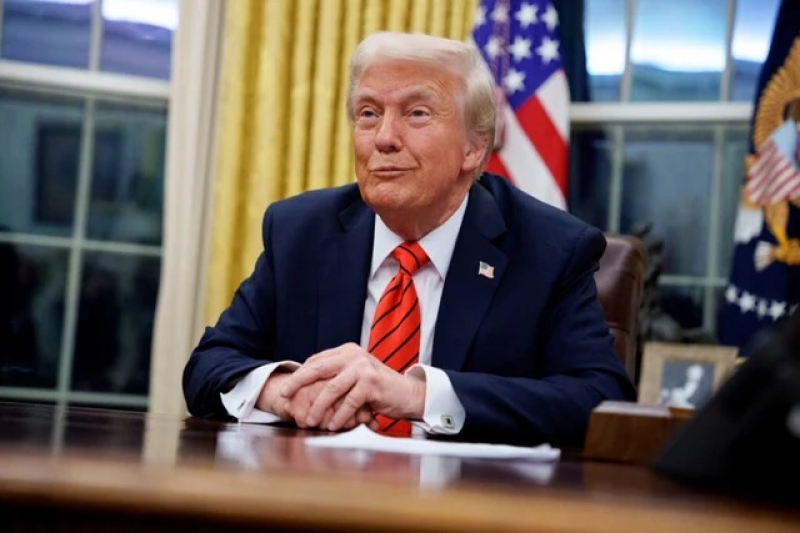
US President Donald Trump
US President Donald Trump has announced a 25 percent tariff on any country trading with Iran, sharply escalating pressure on Tehran as a rights group reported that at least 648 people have been killed in a sweeping crackdown on nationwide protests.
In a social media post on Monday, Trump said the new tariffs would take effect “immediately” against Iran’s trading partners that also conduct business with the United States. Calling the decision final, he offered no details on which countries would be directly affected.
“This Order is final and conclusive,” Trump wrote.
According to economic data, Iran’s main trading partners include China, Turkey, the United Arab Emirates and Iraq.
The move comes as Iran grapples with more than two weeks of mass demonstrations, triggered by economic grievances but rapidly evolving into one of the most serious challenges to the Islamic republic since the 1979 revolution. Protesters have continued to mobilise despite a near-total internet shutdown and the use of lethal force by security agencies.
Iranian authorities have blamed foreign powers for fuelling the unrest and have organised nationwide counter-rallies in an effort to project control. Rights groups, however, warn that the communications blackout is aimed at concealing the true scale of the violence.
The Norway-based group Iran Human Rights (IHR) said it had verified the deaths of at least 648 people, including nine minors, while cautioning that the actual toll could be far higher. “According to some estimates, more than 6,000 people may have been killed,” the group said, adding that around 10,000 people have been arrested.
“The internet shutdown has made it extremely difficult to independently verify these reports,” IHR said. Its director, Mahmood Amiry-Moghaddam, urged international action, saying the global community has a responsibility to protect civilian protesters from mass killings.
Despite the escalating rhetoric, the White House said Trump remained focused on diplomacy, while not ruling out military force. Officials said the president was “unafraid” to use force if necessary, but preferred negotiations as a first step.
On Monday, Iran sought to reassert authority through large pro-government rallies across the country. Supreme leader Ayatollah Ali Khamenei hailed the demonstrations as proof that the protest movement had been defeated, describing them as a warning to Washington.
“These massive rallies, full of determination, have thwarted the plans of foreign enemies,” Khamenei said in remarks broadcast on state television.
In Tehran, crowds waving Iranian flags gathered as prayers were offered for those killed in what officials described as “riots”. Addressing supporters at Revolution Square, parliament speaker Mohammad Bagher Ghalibaf said Iran was facing a “four-front war” — economic, psychological, military involving the United States and Israel, and what he described as a fight against “terrorists”, referring to the protesters.
Flanked by chants of “Death to America” and “Death to Israel”, Ghalibaf warned that Iran’s military would deliver an “unforgettable lesson” if the country were attacked.
Trump, however, claimed on Sunday that Iran’s leadership had reached out to him to negotiate. Iran’s Foreign Minister Abbas Araghchi later said Tehran was not seeking war but was fully prepared for one, while calling for “fair” negotiations.
Iran’s foreign ministry confirmed that a communication channel remains open between Araghchi and Trump’s special envoy Steve Witkoff, despite the absence of formal diplomatic ties.
Meanwhile, Reza Pahlavi, the US-based son of Iran’s ousted shah, accused the authorities of attempting to mislead the international community by signalling readiness for talks. He said the regime had crossed a critical red line and warned that the scale of the crackdown could not be ignored.