

- Dhaka asks Yangon to perform obligations under ICJ verdict |
- Russian nuke-capable bombers leave Vietnam as Putin meets Trump, Xi |
- RMG Wage Unrest: ILO urges all parties to reach a solution |
- ICJ Says Myanmar Forces Killed About 10,000 Rohingya |
- UN top court convicts Myanmar of ‘genocidal intent’ against Rohingya |
Trump Says US Needs No Iran Deal, Redirects JD Vance
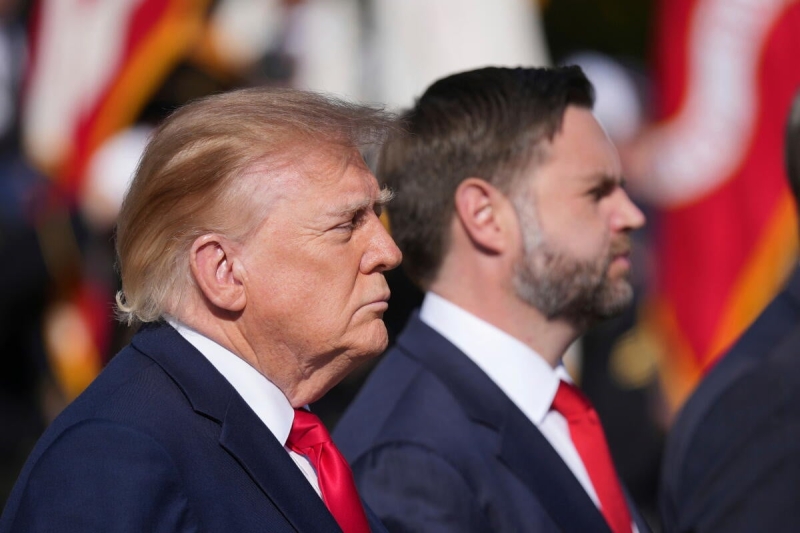
US President Donald Trump has said Washington no longer needs a deal with Iran and directed Vice President JD Vance to shift his focus away from diplomatic efforts and towards tackling alleged crime and corruption in Democratic-run cities and states.
The announcement came on Thursday, as Vance had reportedly been exploring the possibility of meeting senior Iranian officials to discuss a political settlement to the ongoing war.
Trump effectively moved Vance away from the Iran-related efforts in a social media post, writing that the United States did not need an agreement with Tehran.
“We don’t need a deal with Iran. Those days have long since passed. We’ve got their money, hundreds of billions of dollars, and we’ve got their Strait,” Trump wrote, referring to the Strait of Hormuz.
Trump's latest remarks marked a shift from his position earlier in the week, when he had suggested that momentum was building towards a political understanding with Iran and that discussions were underway.
Instead of focusing on international diplomacy, Vance was directed to concentrate on what Trump described as widespread crime and corruption in Democratic-controlled cities and states.
“I have asked Vice President Vance to focus his complete and total attention” on the issue, Trump wrote.
Vance had been seeking to position himself as a key figure in efforts to find a political solution to the conflict. Following the Democrats' sweeping victory in the November 3 midterm elections, he had also publicly commented on the impact of the war on US politics and foreign policy.
In a post on social media platform X, Vance wrote that the war was the reason Republicans had lost the election, adding that Trump himself had acknowledged this the previous night. He also criticised the Republican Party's association with Israel, which he said had contributed to the party's poor electoral performance.
Earlier, reports citing remarks by Turkish intelligence chief Ibrahim Kalin said a meeting between Vance and Iranian national security official Mohsen Rezaei was being considered in Qatar.
Iran had officially denied that any talks were scheduled. However, reports suggested that Washington had been making efforts behind the scenes to arrange a meeting.
A report published on Wednesday said Vance had taken the initiative to contact Rezaei and request a meeting, with Trump's approval. The reported change in Vance's role has raised questions about differences within the White House over how to approach Iran.
US Secretary of State Marco Rubio, meanwhile, has said Washington is in no hurry to reach an agreement, arguing that the United States is in a favourable position in the Strait of Hormuz.
Trump's sudden rejection of the need for negotiations could raise concerns among regional allies and partners, whose economies have already been affected by uncertainty surrounding US policy.
Anwar Gargash, diplomatic adviser to the president of the United Arab Emirates, said countries should prepare for prolonged uncertainty, with no final settlement or stable regional order guaranteed.
Other US allies have also called for dialogue with Tehran. Speaking at a conference in Sulaymaniyah, Iraq, a senior Kurdish official backed the idea of negotiations between Washington and Tehran.
Bafel Talabani, leader of the Patriotic Union of Kurdistan, said there was no difficulty in talking to the Iranians.
“As an ally of Mr Trump and, strangely enough, also a friend of the Iranians, I say that a strong United States can do this,” he said.