

- 109 BGB Platoons Deployed in Dhaka, Five Other Districts |
- Bangladesh-Denmark May form Trade and Investment Committee |
- Bangladesh—Pakistan trade crosses $1 b |
- Dhaka Ranks 5th Among World's Most Polluted Cities on Friday |
- PM seeks to make Bangladesh a reliable brand in global livestock market |
UN Warns Hunger to Worsen in 16 Countries Amid Multiple Crises
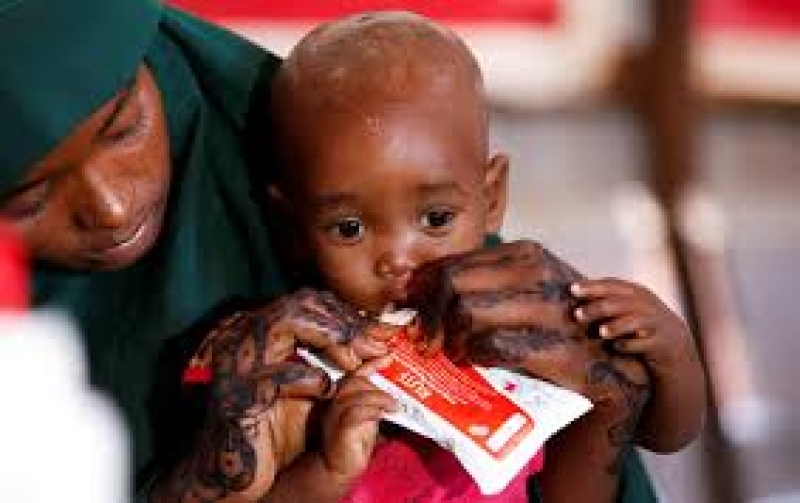
Hunger is projected to worsen in 16 countries over the next six months, with conflict-hit Sudan and Yemen among five nations facing the most severe risks, United Nations food agencies warned on Friday.
Ongoing conflicts, rising fuel prices linked to the war in the Middle East and sharp cuts in humanitarian assistance are among the key factors worsening the situation, according to the agencies.
The Food and Agriculture Organization (FAO) and the World Food Programme (WFP) presented the findings in their latest Hunger Hotspots report, covering the period from December 2025 to May 2026.
Sudan, Yemen, South Sudan, Somalia and northern Nigeria were placed at the highest level of concern. All five countries have repeatedly appeared on the list since 2022.
The Palestinian territories were moved down one level following the October 2025 ceasefire in Gaza. However, 67% of Gaza's population still faces crisis-level hunger or worse, and the report warned that the improvement remains fragile.
Famine threat continues in Sudan
The report said the risk of famine in Sudan is expected to persist through January in 13 areas of North Darfur and South Kordofan.
Nearly 19.5 million people, representing 41% of the country's population, faced crisis-level hunger or worse in the latest nationwide assessment.
In two displacement camps in Eastern Jebel Marra in South Darfur, acute malnutrition levels exceeded the famine threshold.
Sorghum prices in Sudan have more than doubled over the past year amid fighting and higher fuel costs associated with the Middle East conflict.
Diesel prices have also more than doubled over the same period, the report said.
Drought associated with El Niño, a natural warming of Pacific Ocean waters that affects weather patterns worldwide, has further worsened the situation.
The phenomenon has affected up to 55% of cropland in Sennar state and 70% in Gedaref, two of Sudan's major agricultural areas.
FAO Deputy Director-General Beth Bechdol told The Associated Press that El Niño-linked drought poses a serious additional threat to Sudan, further damaging food production amid the ongoing war.
Yemen's crisis worsens amid fighting and shipping threats
Hunger in Yemen is expected to increase as fighting that resumed in July spreads across several fronts, the report said.
The country has been embroiled in conflict since 2014, when Iran-backed Houthi rebels seized the capital, Sanaa, prompting a Saudi-led coalition to intervene the following year.
The encirclement of Taiz in the southwest has created conditions resembling a siege, while more than 300,000 people have been displaced since the latest escalation began.
Most of those displaced are from Taiz, Lahj and Aden provinces.
In government-controlled areas, 1.8 million people are facing emergency levels of hunger, compared with 1.6 million in the previous assessment.
No recent assessment is available for Houthi-controlled areas, which have become increasingly difficult for aid organisations to access as the conflict intensifies.
The latest nationwide projection, covering the period through February, found that 18.3 million people, or more than half of Yemen's population, were experiencing crisis-level hunger or worse.
Bechdol said political obstacles, rather than geographical challenges, were the main barriers to reaching people in need in Yemen.
She noted that staff members of other UN agencies had been detained, while the Houthis continued to hold 73 UN staff members, including eight employees of the UN human rights office.
Yemen relies heavily on imported food and fuel, and the report warned that attacks on shipping in the Red Sea threaten this vital supply route.
Shipping has also been disrupted in the Strait of Hormuz and the Black Sea, while fertiliser shipments from the Gulf remain largely suspended.
Funding cuts put pressure on aid agencies
Humanitarian assistance has declined sharply as major donors have reduced their funding.
Food and nutrition assistance to the five countries facing the highest level of concern fell by around 62% between 2022 and 2025. In Yemen, the reduction reached 79%.
Changes in donor governments' priorities in recent years have removed billions of dollars from humanitarian and development funding, leaving aid agencies unable to reach as many people as before, Bechdol said.
She said predictable funding was as important as the overall amount, particularly because assistance to farmers must reach them during planting and harvesting seasons.
With El Niño forecasts available, agencies should arrange seeds in advance and take measures to protect livestock before disasters strike, rather than repeatedly responding after crises emerge, she said.
"When that window is lost, you don't get it back," she said. "We're funding losses and we're funding damage."