

- 32 officials involved in ‘controversial’ 2018 polls get retirement |
- Access to finance BD's weakest business pillar despite improvement |
- BAU researchers develop duck plague vaccine using local virus |
- Govt Restores Ad-Din Hospital Licence With Conditions |
- PM Urges Editors to Balance Criticism with Govt Initiatives |
UNESCO Lists Six World Heritage Sites at Risk
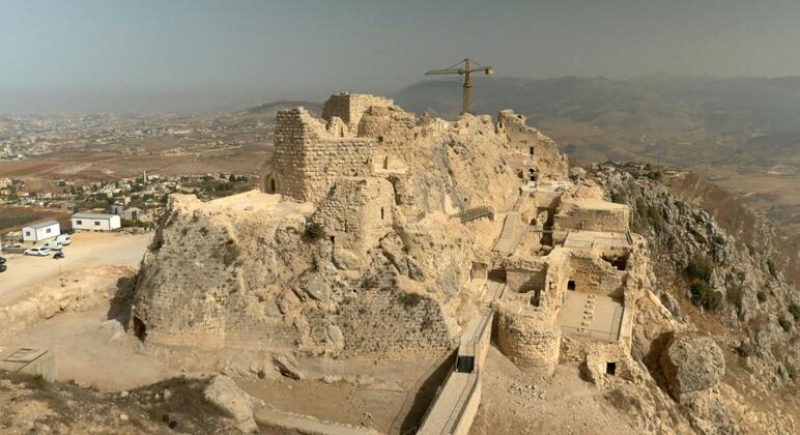
Qalaat al-Chakif castle in southern Lebanon.
Armed conflict, insecurity and environmental pressures are threatening ancient cities, historic fortresses and one of the world's largest wildlife migrations, prompting the UN cultural agency (UNESCO) to add six sites to its List of World Heritage in Danger.
Meeting in Busan, Republic of Korea, the World Heritage Committee on Sunday granted emergency protection to three newly inscribed World Heritage sites and added three previously inscribed sites to the danger list.
UNESCO said the emergency measures reflect a world increasingly shaped by armed conflict, climate change and other crises that pose "serious threats" to irreplaceable cultural and natural heritage.
Heritage Threatened by Conflict
Three sites were inscribed on the World Heritage List through an emergency procedure before being immediately added to the List of World Heritage in Danger.
One of them is the Mount Amel Castles in southern Lebanon, a group of five fortresses dating from the Crusader, Islamic and Ottoman periods.
Already under enhanced protection under international humanitarian law, the castles have suffered extensive damage during the ongoing conflict.
According to the committee, "the ongoing conflict directly jeopardises the site's conservation and requires urgent intervention."
Another emergency inscription is Sebastia in the Occupied West Bank, which preserves archaeological remains spanning more than 2,000 years of history.
UNESCO said the Palestinian site faces mounting threats from the conflict in the Middle East, as well as pressure from development projects and plans for a national park that could divide the property.
Wildlife Also Under Pressure
The third emergency inscription is South Sudan's Boma-Badingilo Migratory Landscape, home to the world's largest known terrestrial mammal migration.
According to UNESCO, the site reflects the region's rich cultural and linguistic diversity, where several ethnic communities have served as custodians of the landscape through herding, farming and fishing for centuries.
However, commercial poaching, wildlife trafficking, infrastructure development and persistent insecurity are placing increasing pressure on the ecosystem and hampering conservation efforts.
Previously Listed Sites Added
The committee also added three existing World Heritage sites to the danger list.
In Ukraine, the Ancient City of Tauric Chersonese and its Chora was listed because of deterioration during Russia's temporary occupation of Crimea.
UNESCO and the UN Satellite Centre (UNOSAT) have documented new construction and large-scale excavations that threaten the site's authenticity.
In Lebanon, the ancient city of Tyre was also added as continuing hostilities endanger one of the Mediterranean's most important archaeological sites.
Meanwhile, Suriname's Historic Inner City of Paramaribo was placed on the danger list after new construction projects significantly altered its historic urban landscape.
Protecting Shared Heritage
UNESCO said the List of World Heritage in Danger is designed to mobilise international cooperation, technical assistance and conservation efforts for sites facing exceptional threats.
The agency said this year's decisions highlight a broader challenge: armed conflict, climate change and unsustainable development are increasingly threatening not only cultural and natural heritage, but also the communities, ecosystems and histories they represent.