

- Cheap reading glasses remain key conduit to better quality of life |
- ডিপি ওয়ার্ল্ডকে বাংলাদেশে বিনিয়োগের আহ্বান প্রধানমন্ত্রীর |
- Putin offers to help end Iran war in meeting with Pezeshkian |
- Fired OpenAI Researchers Say Dismissals Chilled Safety Efforts |
- Dhaka Fifth Most Polluted City Globally on Friday Morning |
Cheap reading glasses remain key conduit to better quality of life
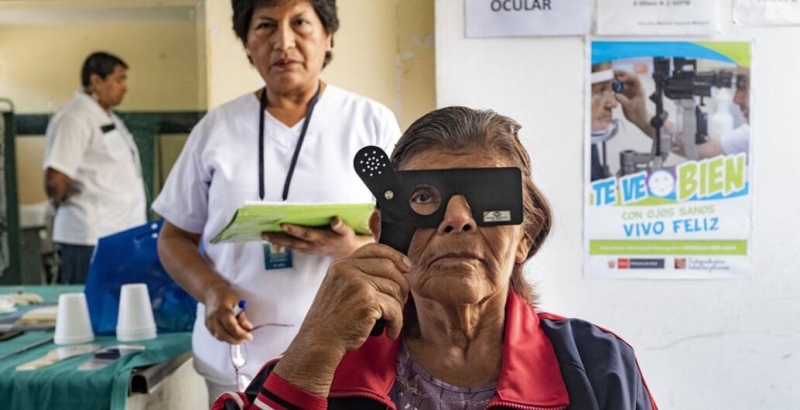
Globally, an estimated 2.2 billion people live with vision impairment. © WHO-NOOR-Sebastian Liste
Poor eyesight impacts an estimated 2.2 billion people, with nearly one in three living in the Southeast Asia.
To mark World Sight Day, the UN World Health Organization (WHO) stressed that nearly half of the global burden could be fixed with surgery or a pair of reading glasses.
It noted that young children with severe and uncorrected vision impairment can struggle at school, while adults who can’t see well are often linked to lower productivity at work, absenteeism and high rates of depression.
The agency’s free app – WHOeyes – helps people gauge how good or bad their eyesight is without having to see a specialist. But it’s not a long-term public health solution, said Dr Nilesh Buddha, Officer-in-Charge for WHO in the region.
“WHOeyes mobile app is considered a valid and reliable community-based vision screening tool…But we clearly say that the app is strictly a screening instrument and explicitly does not replace comprehensive professional eye examination.”
Far-sighted targets
Across the region, cataracts are the overwhelming cause of blindness and sight problems, along with uncorrected vision impairment and damage to the retina caused by diabetes.
Under global targets supported by WHO, governments have committed to a 40 per cent increase in helping people with so-called “refractive error” issues and a 30 per cent increase in cataract surgery success by 2030.
Progress is being made towards better vision, with trachoma – a leading infectious cause of blindness – now eliminated across Southeast Asia.
But the health agency cautions that many people still struggle to access affordable eyeglasses: especially low-income families, women and older adults. – UN News