

- Study Finds Microplastics in 95% of Sugar Samples in Bangladesh |
- Japan Earthquake Kills 13, Search For Survivors Continues |
- Dhaka ranks 5th among world's most polluted cities |
- 50,000 sit for AI training selection test |
- Bangladesh, Malaysia Discuss LNG Support And Investment |
Study Finds Microplastics in 95% of Sugar Samples in Bangladesh
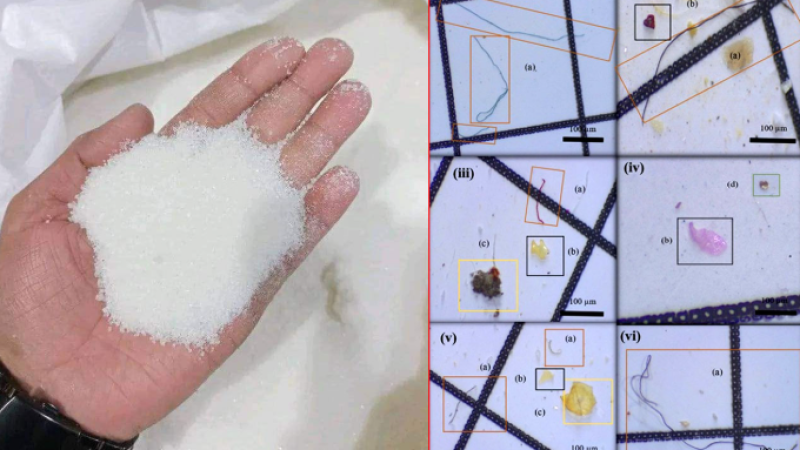
A new study has found widespread microplastic contamination in sugar sold in Bangladesh, with 95 percent of the tested samples containing microscopic plastic particles.
Researchers detected between 210 and 508 microplastic particles per kilogram of sugar, raising concerns that consumers may unknowingly ingest the particles through their daily diet.
The findings were published recently in the peer-reviewed Journal of Food Composition and Analysis. The study was conducted by Sadia Afrin, Nayan Hossain and Mostafizur Rahman.
The researchers analysed seven commercially available sugar products, including both branded and loose varieties, collected from retail markets across Dhaka.
The study found that branded sugar contained an average of 322 microplastic particles per kilogram, while loose or non-branded sugar contained an average of 403 particles per kilogram. Although contamination was generally higher in loose sugar, the difference between the two groups was not statistically significant.
The detected particles ranged in size from approximately 12 micrometres to 3.19 millimetres. Around 63 percent were fibres, 21 percent were fragments, 11 percent were films and 5 percent were spherical particles.
According to the researchers, the contamination is likely to originate from plastic packaging, food-processing equipment, transportation, storage facilities and degraded plastic materials present in the surrounding environment.
Chemical analysis identified several types of plastic polymers, including acrylonitrile butadiene styrene (ABS), polyvinyl chloride (PVC), polyethylene terephthalate (PET), polytetrafluoroethylene (PTFE), high-density polyethylene (HDPE) and nylon.
The study also assessed potential human exposure, estimating that an average adult could ingest approximately 0.2178 microplastic particles per kilogram of body weight per day from sugar consumption alone.
The researchers noted that, while sugar is not currently considered a major source of microplastic exposure, it represents a continuous pathway through which people consume these particles. They said further research is needed to better understand the long-term health effects.
The study suggested that contamination may occur during sugar production and refining because of the use of plastic filters, pipes, sacks, conveyor belts and packaging materials. Airborne microplastics may also enter sugar during processing, storage and distribution.
The researchers called for microplastic monitoring to be incorporated into Bangladesh's food safety system, stronger hygiene standards in food processing and more comprehensive research into microplastic contamination in food products.