

- Bangladesh, EU Push for FTA, Investment Pact Talks |
- Over 1.14cr workers sent to Middle East in 22 years |
- BNP finalizes 36 nominations for women’s seats in Parliament |
- Alarming trans-fat levels in food despite regulations: BFSA |
- BD, EU to sign Partnership Coop Agreement (PCA) Monday |
Eye Care Must be Part of Overall Health: Orbis CEO
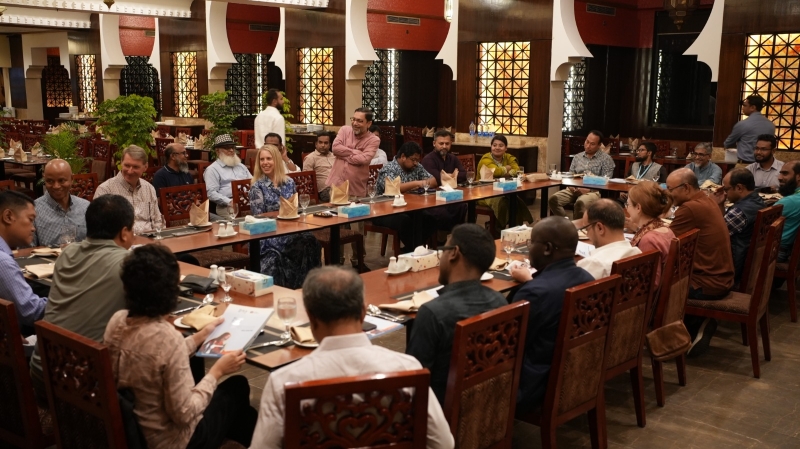
Orbis International President and CEO Kathleen A. Sherwin has stressed that eye care should not be treated as a separate medical service, but must be fully integrated into broader health systems to ensure accessible and sustainable care for all.
She made the remarks while speaking at a reception dinner organised by Orbis in Cox’s Bazar on Sunday evening, where representatives from government agencies, UN bodies, and local and international NGOs working in the Rohingya response attended.
Sherwin praised the coordinated efforts of government institutions, RRRC, and development partners in delivering eye care services to Rohingya refugees and host communities. She said the collaboration in Cox’s Bazar has created a model that could be replicated globally.
“You have not only delivered care, you have built a model the world can learn from,” she said, highlighting the importance of partnership-based healthcare delivery in humanitarian settings.
Earlier in the day, Sherwin inaugurated the relocated Court Bazar Vision Center in Ukhiya, Cox’s Bazar. The centre aims to improve access to primary eye care for both Rohingya refugees and nearby host communities.
Officials from Orbis Bangladesh and Cox’s Bazar Baitush Sharaf Hospital attended the inauguration. The organisation said the relocation will help expand outreach and strengthen early diagnosis and treatment of eye conditions in underserved areas.
Speaking at the ceremony, Sherwin emphasised the need to build strong community-based eye care systems so that vulnerable populations are not left behind. She said early intervention at community level is key to preventing avoidable blindness.
During her visit, Sherwin also observed outreach eye screening activities inside a Rohingya refugee camp, jointly conducted by partner organisations Alliance for Cooperation and Legal Aid Bangladesh (ACLAB) and Cox’s Bazar Baitush Sharaf Hospital.
She interacted with patients and their families, gaining firsthand insight into the challenges displaced communities face in accessing specialised eye care services. Many residents depend on periodic outreach camps due to limited access to permanent facilities.
Sherwin later visited the Balukhali Vision Center in Ukhiya, where she spoke with healthcare workers and patients to understand the impact of ongoing eye care programmes.
She also toured Cox’s Bazar Baitush Sharaf Hospital, meeting doctors and administrators and reviewing hospital-based eye care services supported by Orbis and its partners.
Orbis Bangladesh Country Director Dr Munir Ahmed said the organisation’s early emergency response in Cox’s Bazar was strengthened by close cooperation with the Office of the Refugee Relief and Repatriation Commissioner (RRRC).
He said this support helped identify partner hospitals and define operational areas, enabling a more structured approach to delivering eye care services in the region.
Officials from RRRC and health sector stakeholders present at the event acknowledged the importance of continued collaboration to sustain and expand eye care coverage for both refugees and host populations.
Orbis officials said the organisation’s long-term goal is to strengthen sustainable eye care systems in Bangladesh by integrating services into existing healthcare structures rather than operating parallel systems.
They emphasised that strengthening training, expanding outreach, and improving hospital capacity are key to reducing preventable blindness, particularly in vulnerable communities.
Sherwin’s visit to Cox’s Bazar is part of a broader Bangladesh tour aimed at reviewing ongoing programmes, engaging with partners, and identifying new opportunities to expand equitable eye care services across the country.
Health experts present at the event noted that Cox’s Bazar, due to its large refugee population and limited healthcare access in remote areas, remains one of the most challenging regions for delivering specialised medical services.
However, they also highlighted that coordinated efforts between government agencies, NGOs, and international organisations have significantly improved access to essential eye care in recent years.
Sherwin expressed optimism that continued collaboration and investment in community-based healthcare models will help ensure that no one is left untreated, especially in hard-to-reach and displaced populations.