

- Dhaka-Seoul Ties Set for Strategic Partnership Push: Envoy |
- BSEC vows investor protection as top priority in IPO reform drive |
- Facebook post triggers tension in Shahbagh JCD-DUCSU brawl |
- Grameen Kalyan plans 300 healthcare centres in 64 districts |
- Italy dismisses replacing Iran at the World Cup, as Trump official says |
Sport Can Build Bridges Ahead of 2026 World Cup
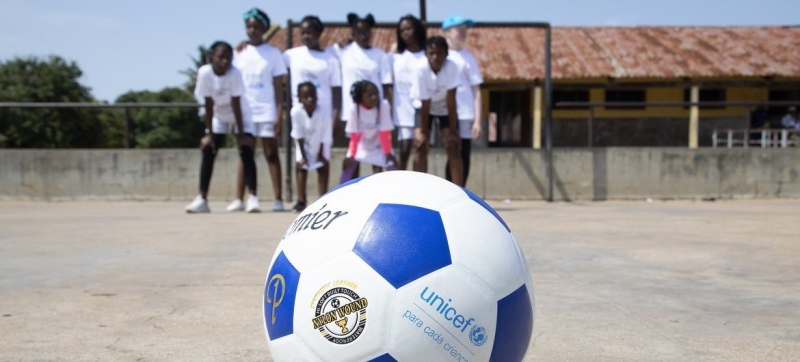
UNICEF organized an inclusive sports event in partnership with FAMOD, a civil society organization that works to support, coordinate and promote the human rights and well-being of people with disabilities in Mozambique.
As the 2026 FIFA World Cup draws closer, athletes and sports leaders gathered at UN Headquarters on Wednesday to highlight the power of football and other sports to bring people together and drive positive change.
The World Cup final is set to take place at MetLife Stadium in New Jersey, just a few miles from the United Nations, where speakers stressed that sport can help build stronger communities, foster mutual respect and create opportunities for dialogue across cultures and generations.
While elite footballers will dominate headlines this summer, participants at the event said sport has the power to transform lives at every level of society.
The world’s biggest football tournament will begin in just over two months in Mexico City, with billions of viewers expected to follow the competition worldwide.
From 11 June to 19 July, 48 national teams will compete in 104 matches across Mexico, Canada and the United States.
In host city regions across the three countries, a programme called Play Collective will provide funding and support to community sports organisations, helping create safe spaces for underserved young people.
The initiative is a joint effort by the Adidas Foundation, the Beyond Sport Foundation and Common Goal, a global non-profit organisation that supports community-based groups working with around 3.6 million young people each year.
Speaking at the Building Bridges, Breaking Barriers event, Common Goal Executive Director Mary Connor said sport offers an important lesson in cooperation and inclusion.
She drew comparisons between football and the work of the United Nations, saying both rely on people coming together across differences and making space for one another despite challenges.
The event was organised to mark the International Day of Sport for Development and Peace, observed annually on 6 April, to highlight the role of sport in promoting social change and advancing the Sustainable Development Goals (SDGs).
Also speaking at the event was Nawal El Moutawakel, the trailblazing Moroccan athlete who became the first Moroccan, African, Arab and Muslim woman to win an Olympic gold medal at the 1984 Los Angeles Games, where she won the 400-metre hurdles.
Her victory is widely seen as a milestone that inspired many women in Morocco and beyond to pursue sport in a field long dominated by men.
Now serving as Vice President of the International Olympic Committee (IOC), El Moutawakel said the hurdles she faced in sport mirrored the broader challenges of life.
She said discipline, determination and resilience had helped her overcome setbacks and remain focused on her goals.
She also pointed to recent progress in global sports leadership, noting that for the first time in more than a century, the IOC President is a woman, while women now make up 50 per cent of the organisation at all levels.
El Moutawakel and Connor were joined by several young athletes, who shared how sport had positively shaped their lives.
Among them was Ailyn Lopez, who said football helped her overcome mental health struggles and later inspired her to become a youth leader with Street Child United, an organisation that uses sport to support children living on the streets or in extreme poverty.