

- Israeli Assault Has Plunged Gaza Into Worst Economic Collapse |
- Woman sent to jail on charges of killing 8 puppies in Pabna |
- UN Assembly Urges Decisive Action to Resolve Israel-Palestine Conflict |
- Sediment-borne fertility transforms northern Bangladesh |
- 3 Armed Forces Chiefs, Jamaat Ameer visit Khaleda Zia at Hospital |
South faces rising costs as global food import bill hits record high
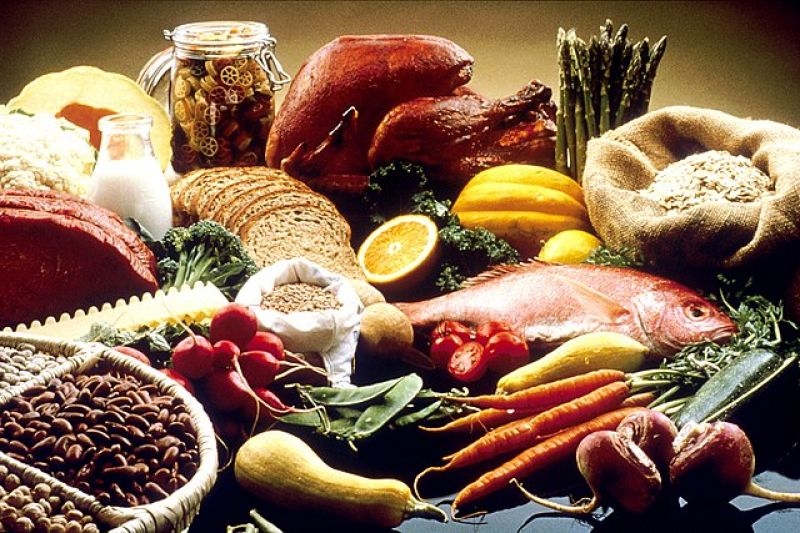
Food - good food on display
Penang, 1 Dec (Kanaga Raja) — The global food import bill (FIB) is estimated to reach USD 2.22 trillion in 2025, up nearly 8 percent from 2024, marking a new record high and the second consecutive annual increase following a brief decline in 2023, according to the Food and Agriculture Organization of the United Nations (FAO).
In the latest edition of its biannual Food Outlook, FAO said that although international prices of staple food commodities like cereals are slightly lower, strong demand for higher-value products, despite elevated prices, is driving this anticipated increase.
“However, patterns by income groups vary significantly: in absolute terms, growth in the global FIB is largely driven by high-income countries, fuelled by soaring import costs for coffee and cocoa.”
On the other hand, the report said the sharpest year-on-year percentage increase is foreseen in least-developed countries (LDCs), where expenditures on animal and vegetable oil imports are expected to rise by as much as 58 percent compared to 2024.
Disaggregated by food commodity groups, the 2025 increase is driven by coffee, tea, cocoa, spices and related products, whose global import value is expected to surge by 34.5 percent year-on-year, or USD 65.2 billion – the largest annual increase in more than a decade, it pointed out.
This sharp rise reflects record-high nominal prices for these products, driven by tight global availabilities and unfavourable short-term global production prospects, said FAO.
“The price surges were largely triggered by weather disruptions in key producing countries – such as Brazil, Indonesia and Viet Nam for coffee, and Cote d’Ivoire and Ghana for cocoa.”
However, recent improvements in crop prospects in several regions have begun to ease global coffee and cocoa prices, said the report.
FAO also said that the value of global dairy imports is projected to rise by 16.4 percent, or USD 20.9 billion.
“Prices of dairy products increased as a result of robust demand amidst tight supplies, underpinned by erratic weather conditions in key dairy regions, high production costs, and localized outbreaks of animal diseases.”
Dairy prices – and consequently import costs – may ease slightly toward the end of the year with the recovery of output, the report suggested.
The FIB of oils and fats is expected to rise by 10.6 percent, or USD 16.7 billion, due to persistently tight global vegetable oil export supplies, particularly in view of expected subdued growth in palm oil production, it said.
“Global import bills for meat and fish are likely to grow by 8.4 and 9.6 percent, and fruits and vegetables by 7.6 percent, sustained by steady demand in high- and middle-income markets.”
On the other hand, FAO said the global import bill for cereals is anticipated to decline by around 3 percent, or USD 9.3 billion, and that of sugar by nearly 9 percent, or USD 7.3 billion, reflecting lower international prices.
The cost of oilseed imports globally is expected to remain broadly stable, despite notable divergences across country groups, it added.
The declines in the import costs of key staples have helped temper the overall foreseen rise in the 2025 global FIB, the report further said, adding that estimated import cost trends in 2025 vary significantly by income level.
It said in nominal terms, high-income countries (HICs) account for over 80 percent, or USD 135.1 billion, of the expected increase in the global FIB, driven by steady demand and higher import costs for coffee, cocoa, fruits, vegetables, and animal products.
It said the remaining rise, about USD 18.8 billion, is accounted for mainly by the lower-middle-income countries (LMICs), representing a 9 percent rise for this country group, led by higher import costs for animal and vegetable oils, fats, and fruits and vegetables.
Meanwhile, the report suggested that the import bills for other income groups should remain broadly stable.
“For upper-middle-income countries (UMICs), the forecast points to a modest 1.6 percent increase, as higher expenditures on coffee, cocoa, vegetable oils, fruits and vegetables are largely offset by lower import values for cereals, oilseeds and sugar.”
The report said the FIB of low-income countries (LICs) is projected to decline slightly (0.2 percent), reflecting their heavy reliance on imports of staples and sugar, which registered declining international prices in 2025.
However, this overall stability masks sharp year-on-year increases in the import costs for oilseeds (46 percent), animal and vegetable oils and fats (31 percent), and beverages (23 percent).
The report said among vulnerable country groups, least developed countries (LDCs) are expected to record the largest proportional increase in the FIB, rising by 15 percent, or USD 7.9 billion, followed by net food-importing developing countries (NFIDCs) with a 9 percent rise, and sub-Saharan Africa (SSA) with 4 percent.
The food import bills for these country groups broadly mirror the increase in animal and vegetable oils and fats, which more than offset the decline in staples, it stressed.
According to the report, several factors have shaped the 2025 projections.
“The lingering impact of El Nino curtailed yields of tropical crops, particularly in South and Central America, West Africa, and Southeast Asia, particularly tightening supplies of cocoa and coffee.”
Meanwhile, global freight rates have eased from earlier peaks, although continued disruptions in the Red Sea route have prolonged shipping times and kept insurance rates elevated.
Looking ahead, the report said that food import costs will remain highly sensitive to several factors, including climate variability, global economic conditions, input prices, freight rates, currency fluctuations, trade policy changes and conflicts, and geopolitical tensions that continue to affect trade patterns and flows.
While a recovery in coffee and cocoa production and further easing of logistics costs could moderate food import bills in 2026, weather volatility, geopolitical uncertainty, and tight financial conditions keep the risk of elevated import costs firmly in sight, particularly for vulnerable countries and regions, it emphasized.
MARKETS AT A GLANCE
The Food Outlook also provided updated market assessments and forecasts for the production, utilization, trade, and stocks of major food commodities, including cereals, oil crops, sugar, meat, dairy products, and fisheries.
FAO said current conditions point to broad-based increases in global food commodity production, alongside strong consumption growth and a recovery in inventories, although weather variability and a clouded trade outlook could pose risks.
Global wheat and coarse grain outputs are on track to set new records, with the same applying to rice production in Asia and the Latin America and Caribbean region. Stocks-to-use ratios for these key staples are also forecast to rise, according to the report.
“The rebound in global food production marks a positive turning point for market stability. But behind these numbers lie persistent risks, from extreme weather to fragile trade relations, that can quickly reshape global supply and access. Building resilience across the agrifood system remains our greatest challenge,” said FAO Chief Economist Maximo Torero.
Wheat, maize and rice markets are marked by abundant exportable supplies, which have exerted downward pressure on international prices, said FAO.
Meanwhile, it said utilizations of wheat and especially rice are expected to increase significantly, led by faster consumption growth in Low-Income Food Deficit Countries (LIFDCs).
According to the report, forecast at 2,990 million tonnes, world cereal production (including rice in milled equivalent) is expected to reach a record level in 2025, up 4.4 percent from 2024.
Outputs of all major cereals are anticipated to rise, with the largest year-on-year increase forecast for maize and the smallest for rice. Both maize and rice outputs are predicted to hit new record highs, it said.
World cereal utilization in 2025/26 is forecast at 2,929 million tonnes, up 51.9 million tonnes or 1.8 percent from 2024/25. The growth is expected to result mainly from ample supplies and lower prices.
Feed use of cereals is expected to rise by 2.1 percent, with major producers such as Brazil and the United States of America directing more maize to animal rations, while in Asia, strong demand from aquaculture is expected to be met though imports of feed-quality wheat, said the report.
“Other uses of cereals, particularly maize, are also set to increase. Human consumption of cereals is forecast to rise marginally, reflecting population growth and gradual dietary shifts.”
Based on the current forecasts for global cereal production in 2025, stocks could rise by 5.7 percent from their opening levels to a record high of 916.3 million tonnes, said the report.
Global maize inventories are expected to expand the most, especially in Northern America, followed by wheat and barley, while global sorghum stocks may decrease slightly.
World rice stocks at the close of the 2025/26 marketing year are forecast to rise by 2.2 percent to a new peak of 215.4 million tonnes.
Overall, the global cereal stocks-to-use ratio in 2025/26 is predicted to rise to 31.1 percent, the highest level since 2017/18, said the report.
It said that world trade in cereals in the 2025/26 season is anticipated to expand by 3.2 percent to 499.5 million tonnes.
Wheat trade (July/June) is expected to rise by 9.9 million tonnes, or 5.1 percent from the previous season, driven largely by Asian imports, which are forecast to increase by 15.6 million tonnes.
Global trade in coarse grains is anticipated to expand amid relatively low export prices and stronger demand for animal protein, though traded volumes will likely remain below the 2023/24 peak.
By contrast, global rice trade is forecast to decline by 1.2 percent to 61.1 million tonnes in 2026, said the report.
KEY TAKEAWAYS
Among the other key takeaways from the report are the following:
* Global wheat production in 2025 is forecast to rise by 2.5 percent year-on-year to a record level of 819 million tonnes. The increase is largely driven by an anticipated sharp rebound in the European Union, reflecting higher yields due to favourable weather and expanded plantings.
World wheat trade in 2025/26 (July/June) is forecast to recover from its 2024/25 subdued level, rising by 9.9 million tonnes, or 5.1 percent, to 202.5 million tonnes, a level above the past five-year average but still well below the 2023/24 peak.
Abundant exportable supplies are expected in major exporters, including Australia, Argentina, the European Union, the Russian Federation, and the United States of America.
Global wheat inventories are predicted to rise above their opening levels by 3.6 percent, reaching a record level of 328.8 million tonnes by the end of the season in 2026. Several major producers, including China and India, are expected to close the season with plentiful reserves.
As a result, the report said that the global wheat stocks-to-use ratio is forecast to rise to 40.4 percent in 2025/26, indicating a generally comfortable global supply situation.
* World meat production is forecast to reach 384 million tonnes (carcass weight equivalent) in 2025, up 1.4 percent from 2024.
The increase is mainly driven by expectations of a higher poultry meat output, along with gains in pig meat and modest growth in ovine (lamb and mutton) meat, partially offset by a decline in bovine meat production.
The report said global poultry meat production is projected to expand on the back of relatively lower feed costs and robust demand driven by its affordability, while global pig meat production is expected to grow, underpinned by improved productivity and enhanced herd management efficiency.
However, recurrent African Swine Fever (ASF) outbreaks, particularly in Asia and Europe, continue to hinder disease control efforts, it added.
Ovine meat output is also forecast to rise slightly, as declines in Oceania – due to smaller flocks, although partly offset by higher slaughter of older breeding ewes with heavier carcass weights – are expected to be balanced by increases elsewhere.
On the other hand, global bovine meat production is anticipated to contract, reflecting reduced cattle inventories, notably in Brazil and the United States of America, following several years of high slaughter levels prompted by weather-related factors and strong global demand.
* FAO’s preliminary forecast for the 2025/26 season pegs global sugar production at 185.3 million tonnes, up 9.7 million tonnes, or 5.5 percent, from 2024/25, marking a new record level.
The report said the increase mainly stems from anticipated bumper harvests in several key producing countries.
In Brazil, the world’s largest sugar producer and exporter, output is forecast to rise by around 4.0 percent year-on -year, recovering from weather-related reductions in 2024/25. While a greater share of the sugarcane harvest is expected to be directed to ethanol production, the volume allocated to sugar manufacturing is also set to expand.
“A strong rebound in production is also anticipated in India, supported by adequate cumulative monsoon rainfall and an expansion in planted area, induced by comparatively higher returns for sugar cane relative to alternative crops, such as soybean, wheat, maize and sorghum.”
In Thailand, the world’s second-largest sugar exporter, output is likewise expected to increase, underpinned by favourable growing conditions despite localized outbreaks of white leaf disease.
World sugar consumption in 2025/26 is forecast to rise by 1.3 percent, a slightly faster pace than the previous year, supported largely by lower sugar prices despite subdued global economic prospects, said FAO.
“The expansion in consumption is expected to be led by Africa, driven by continued population growth and urbanization, and in Asia, where strong demand from the food and beverage industry continues to underpin demand.”
* Global vegetable oil consumption is forecast to outpace production, influenced by reduced soybean outputs, resulting mainly from reduced planting areas in Argentina, India, Ukraine and the United States of America.
Preliminary forecasts for the 2025/26 (October/September) marketing season point to continued expansion in global oilseed production, underpinned by larger harvests of rapeseed, soybean, and sunflower seed, which are expected to more than offset likely declines in cotton seed and groundnut outputs, said the report.
Global utilization of oils/fats in 2025/26 is forecast to expand by 2.1 percent from the previous season, largely driven by expectations of higher demand from the bio-fuel sector amid supportive policies across several major consuming countries.
As global vegetable oil consumption is expected to outpace production, world carry-over inventories of oils/fats are forecast to decline for a third consecutive season in 2025/26, said the report.
* Global milk production in 2025 is forecast to expand by 1.4 percent, up from 1.1 percent growth recorded in 2024, marking a moderate recovery in global output growth.
“The increase mainly reflects continued output expansion in Asia – though at a slower pace – alongside faster growth in Central and South America.”
Global dairy trade in milk-equivalent terms is forecast to contract by 1.3 percent in 2025, mainly reflecting firm international prices, which have impacted consumer purchasing power and weighed on demand, said FAO.
It said that this contraction has been compounded by currency depreciation in several emerging markets, while improved domestic milk availability in key importing countries – particularly Algeria, Egypt and Saudi Arabia – and ongoing trade policy uncertainties have further limited global import demand.
These factors more than offset a foreseen modest growth in imports by China, the world’s largest dairy importer, where restocking and increased use in feed and nutritional applications underpinned a modest import recovery.
* As for rice, the 2025/26 season is on track to see another record global harvest of close to 556.4 million tonnes (milled basis), up 1.2 percent from 2024/25.
In Asia, production is set to surpass last season’s all-time high, underpinned by continued area expansions and, with some exceptions, generally favourable weather conditions. Similarly, Latin America and the Caribbean is poised to harvest its largest crop on record.
The report said these gains could overshadow weaker results elsewhere, as reduced producer margins are set to depress production in Europe, Northern America, and Oceania, while erratic rains curb output in Africa.
* Global fisheries and aquaculture production is forecast to reach 197 million tonnes in 2025, an increase of 3.3 million tonnes over 2024 levels (up 1.7 percent). Capture fisheries output will remain relatively stable at 92.9 million tonnes (up 0.7 percent).
Recent scientific guidance called for additional reductions in certain cod, haddock and mackerel stocks, which is expected to reduce catches of these species, said the report.
Aquaculture continues to be the driver of growth in supply, and is estimated to add 2.7 million tonnes in 2025, enabling a 2.7 percent increase from 2024, it noted.
While tilapia production growth stalled, harvests of other major aquaculture species – carp, salmon, catfish and shrimp – all saw strong increases.
Global trade in aquatic products continues to expand in 2025, up 2.1 percent in volume terms, the report said.
“Shrimp, the most valuable traded commodity in the sector, saw particularly strong demand and supply. Other major traded commodities, such as salmon and tuna, also experienced healthy growth, although trade in some categories of groundfish and pelagics was negatively affected by falling catch volumes.”
The main gains for exporters were recorded by Viet Nam, which added USD 1 billion in 2025, driven by strong shipments of frozen pangasius fillets and live lobster; Ecuador, which increased exports by USD 900 million through higher sales of frozen raw shrimp; and India, which exported USD 800 million more, primarily in both raw and processed frozen shrimp, said the report. – Third World Network