

- Bangladesh Targets $1 Billion in Fish Exports by 2030 |
- US Lifts Nationwide Flight Restrictions After Four Hours |
- Protecting the Climate Means Protecting Territorial Rights |
- Bangladesh Targets $1 Trillion Economy by 2034 |
- Dhaka ranks world's third most polluted city this morning |
Dhaka Vegetables Found Contaminated With Excess Lead
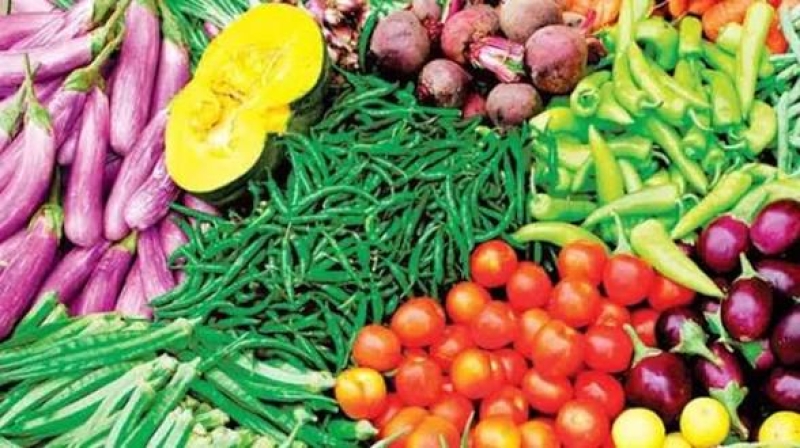
Vegetables sold in markets across Dhaka contain lead and cadmium at levels exceeding permissible limits, while tests have also detected harmful bacteria in some samples.
The alarming findings emerged from tests conducted by the Bangladesh Food Safety Authority (BFSA). Experts warn that regular consumption of food contaminated with these toxic substances can cause long-term damage to the kidneys, liver and nervous system. Lead exposure can also affect brain development in children.
An investigation has found that many farmers in vegetable-growing areas around the capital use pesticides and other crop-protection chemicals without following recommended guidelines.
In some cases, vegetables are harvested and sent to Dhaka markets just one day after chemicals are applied, raising concerns that pesticide residues may reach consumers.
A farmer who has been growing vegetables for around four decades in Bhagnibari village of Birulia Union in Savar was seen spraying pesticides on nearly two bighas of bitter gourd and cucumber fields on Wednesday.
He was not wearing any protective equipment. The chemicals were also drifting through the air towards a neighbouring field.
The farmer said he sometimes suffered headaches after applying pesticides. He usually harvested vegetables one day after spraying but sometimes collected them earlier when market prices were favourable.
He said pesticides sometimes had to be applied twice a week when pest attacks were severe.
However, the packaging of the pesticide he was using clearly stated that crops should not be harvested for seven to 14 days after the final application.
Farmers said waiting that long made it difficult to recover production costs. They often harvested and sold their produce when market prices were favourable, driven by demand for fresh vegetables.
A similar situation was found in Saturia upazila of Manikganj, where farmers are growing early-season winter vegetables, including cauliflower, eggplant, turnip and okra.
A local farmer said pesticides had to be applied once or twice a week to these crops, which were often sent to markets within one or two days of application. Some farmers supply their produce directly to Dhaka.
Beyond disregarding recommended waiting periods after pesticide application, many farmers are also turning to cheaper, low-quality crop-protection products to reduce production costs.
Another farmer in Saturia said some cheaper pesticides worked faster than better-quality products. Although agricultural officials had informed him about their potential harmful effects, financial constraints sometimes forced him to use them.
A local seller also highlighted the commercial incentives behind the practice. The seller said selling cheaper products from little-known companies generated higher profits.
According to the seller, a retailer earns around Tk20 from a Tk200 packet of a well-known brand, compared with Tk30 to Tk40 from a cheaper product costing less than Tk100. Strong demand among farmers made it difficult to stop selling such products, the seller added.
Data from the pesticide analysis laboratory of the Bangladesh Agricultural Research Institute showed that pesticide residues in 8% to 12% of vegetable samples collected from markets were found at levels reaching the maximum permissible limits.
A senior scientific officer at the institute said farmers continued to use older, toxic pesticides because they were relatively inexpensive.
Farmers were reluctant to use modern, less harmful alternatives because of their higher prices. Government subsidies for safer products could encourage wider use, the officer added.
The BFSA's 2024-25 report found lead concentrations ranging from 1.16 to 2.37 parts per million (ppm) in vegetable samples collected from different markets and areas of Dhaka. Cadmium was also detected at 0.33 ppm.
The permissible lead limit for vegetables is 0.3 ppm, meaning the highest concentration detected was nearly eight times the accepted level.
The report was prepared after testing samples collected from Dhaka and 19 other districts. It also detected harmful microorganisms, including E. coli, faecal coliform and salmonella.
Public health experts warn that prolonged accumulation of lead and cadmium in the body can damage the kidneys, liver and nervous system. Exposure may also increase the risk of high blood pressure, heart disease and cancer.
A BFSA official said the authority did not have enough manpower to regularly monitor farmers' activities at the village and upazila levels. The responsibility lies with the Department of Agricultural Extension, the official said.
However, farmers have complained about inadequate monitoring at the field level.
A professor and nutritionist at the Department of Public Health at Jahangirnagar University said the World Health Organization had guidelines on the waiting period between pesticide application and crop harvesting.
Most farmers do not follow these guidelines, the professor said, warning that consuming contaminated food could expose people to various health complications.
A separate study conducted in 2024 also detected heavy metals, including lead, chromium and cadmium, in potatoes, eggplants, okra, tomatoes, red amaranth, pointed gourds, cabbage, cucumbers and green peas. Red amaranth had the highest level of metal contamination among the vegetables examined.
In another study, the BFSA found 704.32 micrograms of cadmium per kilogram in red amaranth, far above the permissible maximum of 190 micrograms. Cadmium levels exceeding the prescribed limit were also detected in eggplants, okra and tomatoes.
A recent study found elevated levels of harmful metals, including lead, nickel and cadmium, in eggplants and agricultural soil in Islampur and Melandaha upazilas of Jamalpur.
Researchers said the uncontrolled use of chemical fertilisers and pesticides could be among the factors allowing these substances to move from soil into food crops.
They stressed that the solution was not to avoid any particular vegetable, but to ensure effective monitoring and control of contamination at every stage, from cultivation to marketing.