

- Govt Plans 34 Lakh Tonnes Food Grain Storage Capacity |
- Charges Filed Against Hasina, Aziz Over Shapla Crackdown |
- Oil Prices Fall as US-Iran Attacks Pause |
- Gas Crisis Deepens as LNG Outage Hits Supply |
- Microplastics Found in 26 of 34 Toothpaste Brands in Bangladesh |
Govt Plans 34 Lakh Tonnes Food Grain Storage Capacity
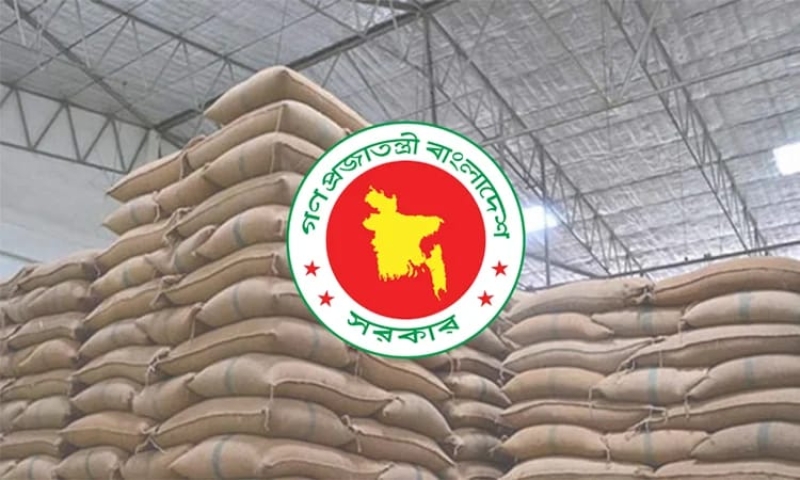
The government has set a target to increase Bangladesh's food grain storage capacity to 34 lakh metric tonnes over the next five years, even as the country currently maintains a comfortable level of official reserves.
According to the Ministry of Food, Bangladesh had a total food grain stock of 23,74,763 metric tonnes as of July 23, including floating reserves. The current stock is around 10.24 lakh tonnes above the standard safe reserve level of 13.5 lakh tonnes.
The Ministry of Food has already started taking steps to expand public storage facilities to meet the new target.
Data from the Directorate General of Food shows that public warehouses currently hold 19,60,746 metric tonnes of rice and 2,95,689 metric tonnes of wheat. In addition, 1,68,605 metric tonnes of paddy are in stock, along with 8,735 metric tonnes of floating rice reserves.
Under the domestic Boro procurement programme for the 2025-26 fiscal year, the government collected 13,65,431 metric tonnes of paddy and rice until July 23. This included 4,59,498 metric tonnes of paddy, 9,89,420 metric tonnes of parboiled rice and 76,814 metric tonnes of atap rice.
During the same period, the government also procured 523 metric tonnes of wheat.
In the first 23 days of the 2026-27 fiscal year (July 1-23), Bangladesh imported 3,20,800 metric tonnes of food grains. Public sector imports accounted for 11,65,000 metric tonnes, including rice and wheat, while private sector imports totalled 3,09,150 metric tonnes.
Food Ministry officials said food grain reserves and procurement activities are being closely monitored to ensure adequate market supply, stabilise prices and maintain smooth distribution through government programmes.
Mohammad Kamrul Islam Chowdhury, Joint Secretary of the Procurement Branch at the Ministry of Food, said the latest procurement drive had been implemented successfully with support from farmers and other stakeholders.
"Public warehouses currently maintain adequate and safe stocks of rice and wheat, providing a strong foundation to handle any situation and ensure national food security," he said.
Firoz Al Mahmud, Research Director of the Food Planning and Monitoring Unit (FPMU), said the government is working to align storage capacity and reserves with rising population needs.
Md Jamal Hossain, Additional Director General of the Directorate General of Food, said the country's food security situation remains satisfactory, with emphasis on proper storage and quality preservation.
He said the government's storage capacity, which was previously around 24 lakh metric tonnes, has now increased to 27 lakh metric tonnes, with further expansion planned to achieve the 34 lakh metric tonnes target.
The government has also decided to raise the safe food reserve benchmark from 13.5 lakh metric tonnes to 16 lakh metric tonnes considering population growth and expanded social safety net programmes.