

- Rare ‘Lynd Surgeonfish’ caught in fishing nets in Bay of Bengal |
- 51 dead in Flood, landslides; over 1,000 shelters open in 7 dists |
- JS recalls Jamiruddin Sircar's illustrious career, pays tribute |
- Rescued Royal Bengal Tigress released after 6 months of treatment |
- Former Speaker Jamir Uddin Sircar passes away |
WFP Launches Pre-Flood Aid in CHT Vulnerable Areas
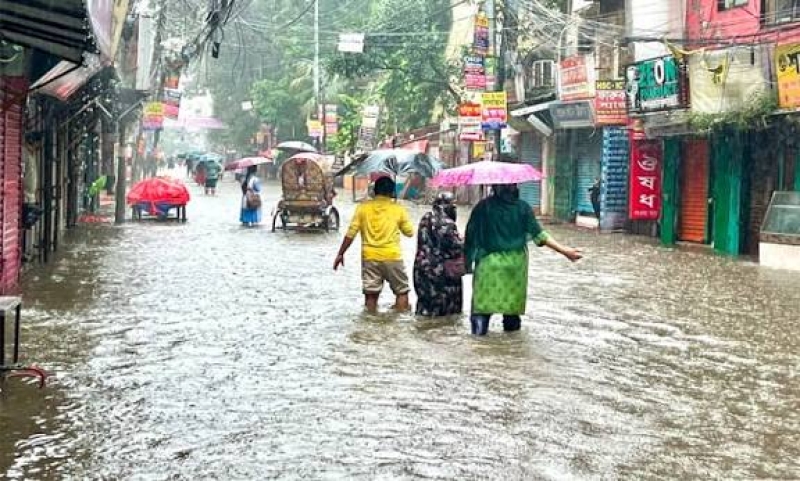
The United Nations World Food Programme (WFP) has activated anticipatory humanitarian assistance and shock-responsive social protection programmes in Bandarban ahead of the peak flood season to help vulnerable communities cope with the impacts of flooding.
Under its Anticipatory Action (AA) programme, WFP has provided Tk 5,000 in advance to each high-risk household through mobile financial services before floodwaters reach critical levels, based on weather forecasts and pre-agreed trigger indicators.
At the same time, the UN agency launched its Shock-Responsive Social Protection (SRSP) programme, providing emergency cash top-up assistance to vulnerable families already enrolled in the government's social protection schemes.
Implemented through WFP's partner, Bolipara Nari Kalyan Samity (BNKS), the combined initiative has reached more than 15,600 households, benefiting around 75,000 people in Bandarban Sadar and Lama upazilas.
The assistance comes as persistent heavy rainfall has triggered flooding across the Chattogram Hill Tracts, particularly in Bandarban, Rangamati and Khagrachhari, with forecasts warning of more heavy rain in the coming days.
"Climate-related disasters are becoming more frequent and severe in Bangladesh. This makes acting before disasters strike more important than ever," said Coco Ushiyama, WFP Representative and Country Director in Bangladesh.
"By delivering assistance before the worst impacts of flooding occur, we are helping families protect their food security, livelihoods and assets. At the same time, by strengthening and effectively using the national social protection system, we can rapidly scale up support for vulnerable people during times of crisis," she added.
Bangladesh is among the countries most vulnerable to climate change, with recurrent floods posing serious threats to lives, livelihoods and food security, particularly in the Chattogram Hill Tracts.
Since 2017, WFP has been implementing anticipatory action programmes in Bangladesh under the leadership of the government and in collaboration with humanitarian and development partners.
According to WFP, studies conducted with its partners show that every US$1 invested in anticipatory action can generate up to US$7 in avoided losses and additional benefits compared with conventional post-disaster emergency response.
The agency is also working with the government to strengthen Bangladesh's social protection system so it can respond more quickly and effectively to climate-induced disasters. Through the SRSP approach, existing government safety-net programmes can be rapidly expanded during emergencies to provide timely support to vulnerable households and reduce the risk of deeper hardship.