

- Change Initiative Calls at COP31 to Protect the Natural Right to Food |
- Call to intensify efforts to bridge differences |
- Patients run out of options as antibiotics stop working |
- Bangladesh's forex reserves stand at $36.35 billion: PM |
- Govt to Send 10,000 Workers to Malaysia at Low Cost |
Bangladesh Spends Tk43,196cr on Power Subsidies
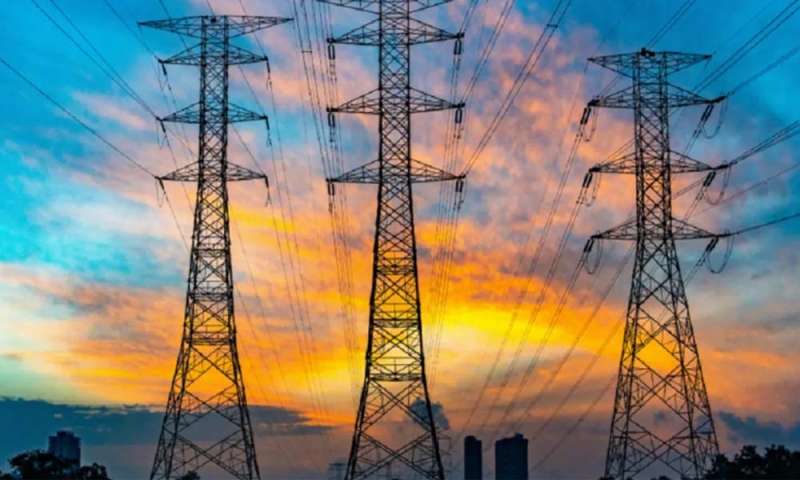
The government provided Tk43,196 crore in subsidies to the power sector in the 2025-26 fiscal year, as the cost of electricity purchases remained higher than the wholesale selling price.
The government purchased electricity from private power plants at an average rate of Tk13.20 per unit. It provides subsidies to cover the difference between the purchase price and the wholesale selling price.
Energy and Mineral Resources Minister Iqbal Hasan Mahmud disclosed the figures on Thursday while responding to questions from several lawmakers in Parliament. He also outlined the country's energy and power sector challenges, subsidies, imports, infrastructure development plans and initiatives to extract domestic mineral resources.
The minister said the government was selling fuel at subsidised rates to keep prices affordable for consumers.
The Bangladesh Petroleum Corporation (BPC) has been financing fuel imports from its own funds for the past eight months, selling petroleum products at prices lower than international market rates. As a result, the corporation incurred losses of Tk27,669.79 crore between March and October 25 this year, he said.
If international fuel prices fall further, domestic consumer prices will be revised in line with the automatic fuel pricing guidelines, the minister added.
Responding to separate questions from BNP lawmaker Jahandar Ali Mia and Jamaat-e-Islami lawmaker Amir Hamza, the minister said the state-owned BPC had begun the process of importing liquefied petroleum gas (LPG) directly from abroad through government-to-government (G2G) agreements to help stabilise the market and ease the gas shortage.
Bangladesh has signed memorandums of understanding (MoUs) with the United States and Algeria to facilitate faster LPG imports. The imported LPG will be unloaded using the jetty of the Coal Power Generation Company Bangladesh Limited at Matarbari in Maheshkhali.
The government has also taken an initiative to establish a new LPG storage and bottling plant in Sitakunda, Chattogram, with an annual production capacity of 100,000 tonnes. Preliminary work, including land acquisition, has begun.
Similar facilities are being developed or planned in Matarbari, Mongla and Elenga in Tangail, the minister said.
To meet growing household demand for bottled LPG, the government has also taken an initiative to build a storage and bottling plant in Mongla at an estimated cost of around Tk1,300 crore. Steps are also being taken to establish an LPG storage terminal in Matarbari.
The minister said authorities were conducting drives across the country to regulate LPG prices and ensure that the product was sold at government-fixed rates.
In response to a question from reserved-seat BNP lawmaker Farida Yasmin, the minister said the average cost of electricity generation in Bangladesh was Tk11.16 per unit in FY2025-26. Electricity was sold to consumers through different distribution companies at an average rate of Tk10.40 per unit.
The government purchased electricity from private power plants at an average rate of Tk13.20 per unit. The difference between the purchase price and the wholesale selling price is covered through subsidies. The total power sector subsidy stood at Tk43,196 crore in the fiscal year.
Responding to a question from BNP lawmaker Khairul Kabir Khokon, the minister said around 35 per cent of the country's total gas supply came from imported liquefied natural gas (LNG), which is regasified and supplied through pipelines.
To meet demand, the government has to import LNG at high prices and sell gas to consumers at regulated rates. Import costs have increased further amid the current global situation, but selling gas to consumers at import prices is not feasible, he said.
Gas prices are determined through a process set by the Bangladesh Energy Regulatory Commission (BERC), which takes time. The government therefore provides subsidies to cover the gap between import costs and selling prices.
The government provided Tk14,600 crore in subsidies to the LNG sector in FY2025-26, the minister said.
Responding to a question from BNP lawmaker A M Mahbub Uddin Khokon, the minister said the current electricity and gas shortages were the cumulative result of long-standing structural weaknesses, poorly planned policies and the recent global energy crisis.
He said the interim government had introduced several initiatives to develop the renewable energy sector, including the Renewable Energy Policy 2025 and the National Rooftop Solar Programme. However, unclear implementation strategies and rushed decisions had prevented these initiatives from delivering the expected results.
The cancellation of several solar power projects in haste had disappointed investors and caused the country to miss opportunities to generate solar electricity, he added.
The minister also said the cancellation of a third floating LNG storage and regasification unit (FSRU) project and delays in bringing the Single Point Mooring (SPM) system into operation had contributed to fuel and gas shortages, affecting electricity generation.
He said the outbreak of war between the United States and Iran in February 2026 had driven up fuel prices and disrupted supplies.
In addition, a fire at an Excelerate Energy floating LNG terminal in Maheshkhali, Cox's Bazar, on July 21 damaged electrical cables and other equipment, triggering a severe gas shortage across the country, he said.
Responding to a question from Jamaat lawmaker Nurul Islam Bulbul, the minister said demand charges and VAT on approved electricity loads were not special fees imposed on prepaid meter users. The same charges also applied to monthly bills for conventional postpaid meters.
However, customers using prepaid meters supplied by utility companies have to pay a monthly meter rental fee. Consumers can avoid the rental charge by purchasing and installing their own prepaid meters from the open market, he added.