

- PM calls FY27 budget 'life-friendly', promises relief |
- Govt Backs Off Package VAT After Business Outcry |
- Power Outages Continue to Disrupt Life in Sylhet |
- PM Tarique Makes Surprise Visit to SPARRSO |
- Argentina Beat Jordan 3-1 to Top Group J |
Renewables Rise as Nations Seek Energy Stability
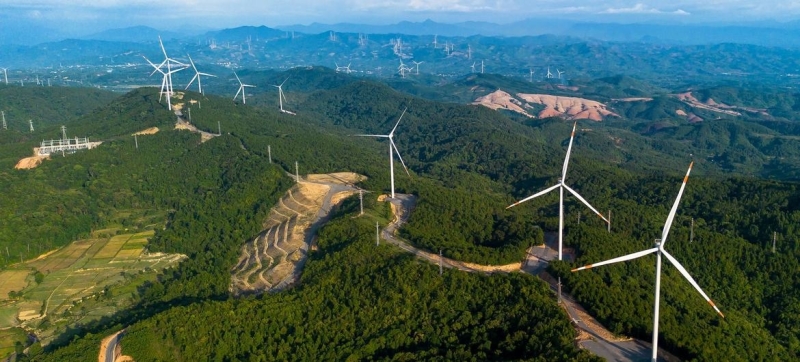
Power-generating windmills line the hills of Quang Tri Province, Viet Nam.
As global energy markets remain volatile and oil prices stay high due to instability and conflict in the Middle East, more countries are turning to renewable energy investments. The goal is to shield their economies from shocks caused by fossil fuel dependence, reduce import bills, and meet key climate targets.
Unlike oil and gas, which expose countries to price spikes and geopolitical risks, renewables offer stable, domestically produced power. They can strengthen energy security, reduce emissions of greenhouse gases, and support long-term economic growth.
In the second part of our series on how renewables are shaping the future of energy security, we look at four countries working to increase their share of cleaner energy sources.
Why it matters:
As UN Secretary-General António Guterres said in March, “The fastest path to energy security, economic security, and national security is clear: speed up a just transition away from fossil fuels and toward renewable energy.”
Germany: Accelerating the energy transition
Germany, one of the world’s largest economies, has seen steady growth in renewable energy, according to its environment agency. This is part of its long-term shift away from fossil fuels.
Renewables are helping reduce dependence on imported fuels, protect consumers from global price shocks, and address climate change.
Energy mix:
Renewables provide 55% of electricity consumption
Wind and solar dominate
Biomass and hydropower also contribute
Fossil fuels are still used in industry and transport
Key challenge:
Wind power is the largest energy source, but its output can be inconsistent. Balancing industrial demand and maintaining grid stability remains a major challenge. Fossil fuel backup is still needed during the transition.
Progress:
Expansion of offshore wind and solar
Grid modernisation and storage investment are key priorities
India: Scaling renewables for development
India, the world’s most populous country with a fast-growing economy, still relies heavily on coal for electricity. However, solar and wind energy are expanding rapidly.
Renewables are helping reduce costly fuel imports and improve energy stability.
Energy mix:
Renewables account for around 30% of installed capacity
Solar is growing quickly
Coal remains dominant
Key challenge:
Meeting rising energy demand while reducing coal dependence remains difficult, especially with affordability concerns and the need for reliable supply across a vast country.
Progress:
Expansion of solar parks and rooftop systems
Growth in wind and hybrid projects
Development of green hydrogen initiatives
Solar-powered livelihood programmes are also improving rural incomes and energy access.
Bolivia: Shifting from gas dependence
Bolivia is working to reduce reliance on natural gas, which currently dominates its energy system. Hydropower is central to its long-term energy strategy.
Energy mix:
Renewables provide 30–35% of electricity
Hydropower is the main source
Solar and wind are expanding
Natural gas remains dominant
Key challenge:
Heavy dependence on gas revenues and limited access to financing make a rapid transition difficult.
Progress:
Solar expansion in rural and high-altitude areas
Development of wind farms
National roadmap for renewable growth
Nigeria: Unlocking solar potential
Nigeria, Africa’s largest economy and most populous nation, has significant renewable potential but remains heavily dependent on fossil fuels. Frequent power shortages and reliance on diesel generators highlight the need for a stronger renewable energy system.
Energy mix:
Renewables: 20–25% of electricity
Hydropower is the main renewable source
Solar is growing but underdeveloped
Gas dominates power generation
Key challenge:
Nigeria aims to generate 50% of its electricity from renewables by 2030. Achieving this will require major investment in infrastructure, grid reliability, and reduced dependence on gas-fired plants.
Progress:
Expansion of off-grid solar and mini-grids
National electrification programmes
Growing investment in household solar systems
The bottom line
Across very different economies, from industrialised Germany to emerging India and developing Bolivia and Nigeria, a clear trend is emerging:
Renewables are strengthening energy security
They are reducing exposure to volatile fossil fuel markets
They are delivering real benefits to people and economies
However, challenges remain, including financing gaps, infrastructure needs, and balancing reliability with rapid expansion.