

- 109 BGB Platoons Deployed in Dhaka, Five Other Districts |
- Bangladesh-Denmark May form Trade and Investment Committee |
- Bangladesh—Pakistan trade crosses $1 b |
- Dhaka Ranks 5th Among World's Most Polluted Cities on Friday |
- PM seeks to make Bangladesh a reliable brand in global livestock market |
Global Maritime Trade Stalls Amid Geopolitical Uncertainty
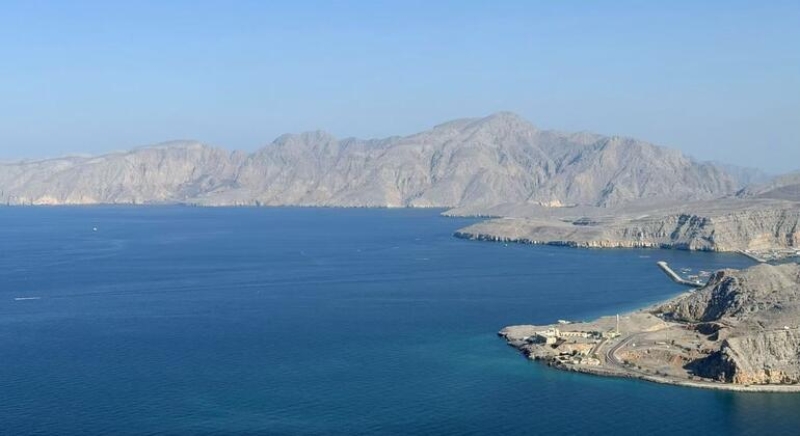
Overlooking the Strait of Hormuz from the Musandam Peninsula, Oman.
Global maritime trade is losing momentum as geopolitical tensions and climate-related disruptions affect major shipping routes, with least developed countries and small island nations bearing the heaviest burden, UN economists said on Thursday.
In an update on global maritime commerce, the UN Trade and Development (UNCTAD) said the volume of goods transported by sea reached 12.3 billion tonnes in 2025, but growth slowed to 1.9 per cent, half the rate recorded in 2024.
With at least four critical maritime chokepoints under pressure simultaneously this year — the Strait of Hormuz, the Red Sea, the Black Sea and the Panama Canal — UNCTAD projects no growth in maritime trade in 2026. It forecasts a recovery of 3.2 per cent in 2027.
Hormuz impact
“When shipping costs rise, consumers ultimately pay the price: but not everybody pays it equally,” said UNCTAD Acting Secretary-General Pedro Manuel Moreno.
Moreno highlighted how attacks on shipping linked to the Iran-US conflict disrupted the flow of oil and gas through the Strait of Hormuz, leaving some economies struggling to absorb the impact of higher fuel, transportation and production costs.
The rising costs have also pushed up food prices and inflation, particularly in countries with limited capacity to withstand economic shocks.
“Small island economies and least developed countries are particularly exposed,” he said, noting that their imports often require multiple shipping connections.
“Every additional mile means more fuel, more time, and more cost,” he added.
According to UNCTAD, war-risk premiums for a $100 million tanker reportedly surged within days of the disruption in Hormuz, rising from around $200,000 to $1 million per voyage.
Container shipping companies also introduced emergency war-risk charges and fuel surcharges to cover higher operating costs.
Sea routes under pressure
More than 80 per cent of the goods traded worldwide are transported by sea, including essential food and fuel supplies. Although rerouting ships helps keep goods moving, it extends journeys and increases costs, particularly for smaller economies.
UNCTAD data show that while maritime trade volumes are expected to remain stagnant this year, the distance travelled by ships is projected to increase by 1.5 per cent.
According to the agency's annual Review of Maritime Transport 2026, if the current fuel shock continues into 2027, higher shipping costs alone could push consumer price increases in least developed countries to almost twice the global average.
“Disruption in one critical maritime corridor can quickly become a cost-of-living crisis thousands of miles away,” Moreno said.
He explained that disruptions to maritime transport translate into higher living costs and widen inequalities between economies.
South-South trade expands
Despite the challenges, container shipping along so-called South-South routes, which connect markets, manufacturing centres and ports across Asia, Africa, the Middle East and Latin America, grew by 12.1 per cent last year.
These routes accounted for nearly one-third of the growth in containerised trade.
Over the past two decades, least developed countries, most of which are in Africa, have also improved their shipping connectivity three times faster than the rest of the world, according to the UNCTAD report.
“These gains matter, but they do not remove the underlying vulnerabilities,” Moreno said, reiterating the fragility of the world's major maritime chokepoints.
These routes provide the shortest and most efficient connections between major bodies of water and, in some cases, are the only available routes. However, they are also among the most difficult to replace.
Rerouting ships around southern Africa to avoid security risks in the Red Sea, where disruptions have persisted since late 2023, and the Persian Gulf can impose substantial additional costs.
To help vulnerable countries withstand current and future shipping disruptions, UNCTAD's Review of Maritime Transport recommends establishing shared reserves of essential food commodities and fuel, as well as pre-agreed alternative trade routes and customs procedures to keep vital goods moving.
Source: UN News