

- Extreme Global Temperatures Set to Continue Into 2027 |
- Bangladesh's Inflation Eases to 8.27% in October |
- Govt to Build Six 100-Bed Hospitals for Workers: PM |
- Oceans, our best bet vs climate change, finally at heart of COP31 |
- Hasina’s passport request is political stunt: ICT Chief Prosecutor |
Bangladesh to Launch Inclusive Instant Payment System in July
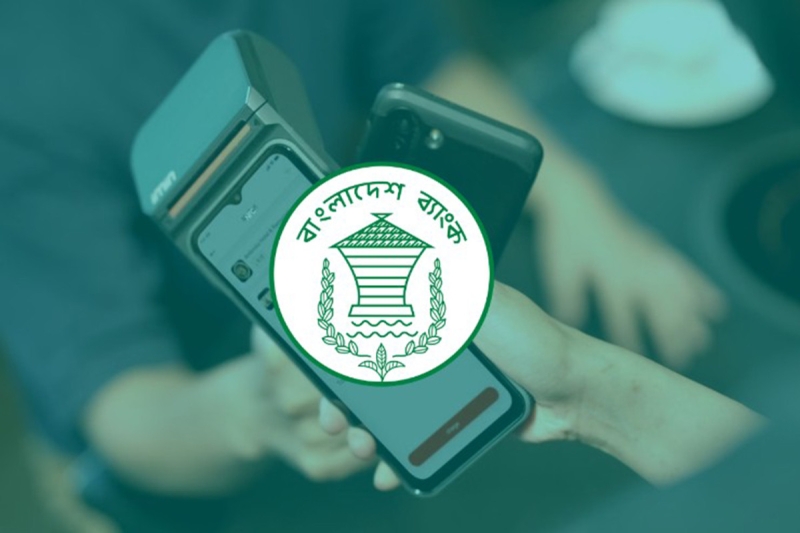
Bangladesh Bank has taken an initiative to introduce an Inclusive Instant Payment System (IIPS), bringing all banks, mobile financial service (MFS) providers and other financial institutions under a unified digital platform. The central bank has set a target to launch the system in July next year.
Under the proposed system, customers will be able to transfer money and make payments using their bank accounts or mobile wallets, regardless of which participating financial institution holds their accounts. This will reduce their dependence on separate networks for transactions between different institutions.
The initiative is expected to expand access to financial services, reduce the use of cash and make transactions faster and easier. It will also create opportunities for people outside the conventional banking system to access digital financial services.
The platform will be developed with technical support from the Gates Foundation, using open-source software developed under its Mojaloop initiative. The software is designed to facilitate interoperable digital transactions among different financial institutions.
Bangladesh Bank Executive Director Md Sirajul Islam said the main objective was to bring all financial institutions under a common system. This would gradually reduce the need for cash withdrawals and transfers between separate institutions.
He said customers would no longer be restricted to the networks of their respective banks or financial service providers. Instead, they would be able to transact directly with any participating institution.
Once introduced, IIPS will support a range of transactions, including person-to-person transfers, business payments, purchases at shops and commercial establishments, and government disbursements. With the necessary operational, settlement and security arrangements in place, the system will enable instant transfers among participating institutions.
The new platform will build on Bangladesh's existing digital payment infrastructure. Since 2012, the National Payment Switch Bangladesh (NPSB) has facilitated interbank transactions through automated teller machines (ATMs), point-of-sale (POS) terminals and internet banking among participating banks.
However, the existing system has not been able to bring all types of financial institutions under a single network. In particular, limitations remain in connecting mobile financial service providers and non-bank institutions to the same system.
Earlier, the central bank had instructed banks, MFS providers and payment service providers to introduce interoperable transactions through interconnections among them. It set maximum transaction fees, including VAT, at 0.15% for banks, 0.20% for MFS providers and 0.85% for payment service providers. It also instructed providers not to charge recipients any transaction fees.
However, the initiative failed to achieve its expected results as several major MFS providers did not join the system.
Sirajul Islam said the existing arrangement had not worked as expected, making a more coordinated technological framework necessary to bring all financial sector institutions on board.
The new IIPS is expected to overcome these limitations by establishing wider connectivity among different financial institutions.
Beyond domestic transactions, the system could also play a positive role in distributing international remittances.
In July, the Policy Research Institute of Bangladesh (PRI), with support from the Gates Foundation, launched a research initiative titled 'Analysis of Inclusive Instant Payment System in Bangladesh and Its Use in Cross-Border Remittances'.
Policymakers, central bank officials, financial sector representatives and researchers took part in the initiative. They discussed how IIPS could help expand financial inclusion, reduce remittance transfer costs and increase the flow of money through formal financial channels.
PRI Chairman Dr Zaidi Sattar highlighted the importance of remittances to Bangladesh's economy, saying they account for around 6% of the country's gross domestic product (GDP). He stressed the need to bring remittances into the country through formal financial institutions and channel the funds towards productive investment.
Researchers believe that direct transaction facilities among financial institutions could make domestic remittance distribution faster and easier. If the system is connected to authorised international remittance networks, money sent by expatriate Bangladeshis could reach beneficiaries' bank accounts or mobile wallets more quickly and at comparatively lower costs.
However, introducing cross-border transactions would require international partnerships, compliance with foreign exchange regulations, effective settlement arrangements and connectivity with authorised overseas networks.
The benefits of the new system are expected to extend beyond individual customers to businesses and government operations.
Sirajul Islam said increased digital transactions would help reduce government expenditure on printing, transporting, storing and managing paper currency.
Businesses, meanwhile, would benefit from lower cash-management costs, greater transparency in record-keeping and faster transactions. The government would also be able to distribute salaries, allowances, subsidies and social safety net payments to beneficiaries more easily through digital channels.
In recent years, Bangladesh's digital payment infrastructure has expanded with the growth of mobile financial services, internet banking, electronic fund transfers and QR code-based transactions. However, the lack of an integrated network connecting different institutions continues to create barriers to seamless transactions.
Bangladesh Bank believes a unified platform could address these limitations and help establish a more accessible, coordinated and inclusive financial system.
The successful implementation of IIPS, however, will depend on the participation of major financial institutions, the reliability and security of the technology, affordable transaction fees and public confidence in digital financial services.
If implemented effectively, IIPS could bring significant changes to the country's payment system by making transactions easier, faster and more affordable. It could also improve transparency in the financial sector and bring more people into the formal financial system.
The target to launch the platform in July next year is being viewed as an important step in the development of Bangladesh's digital financial sector.