

- President Shahabuddin Set to Resign Today: Agency |
- Trade Deficit Widens 24% Despite Record Remittances |
- Modi Invites Tarique to BRICS Summit in India |
- Govt Moves to Bring ETPs Online to Save Buriganga |
- President Shahabuddin Eyes Resignation: Sources |
Trade Deficit Widens 24% Despite Record Remittances
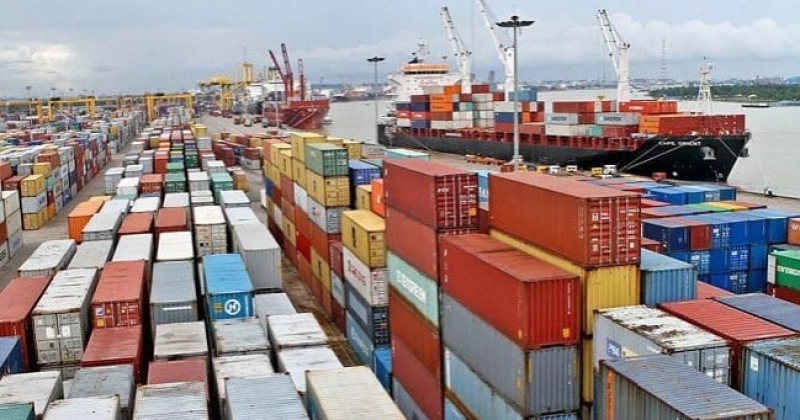
Bangladesh's trade deficit widened by nearly 24 percent to $23.98 billion in FY2025-26 as weaker exports and a sharp decline in capital machinery imports reflected slowing industrial activity, while record remittance inflows helped cushion pressure on the external sector.
According to Bangladesh Bank's Economic Indicators and Balance of Payments (BoP) reports, combined with Export Promotion Bureau (EPB) data, the country's external trade performance presented a mixed picture. Sluggish imports of industrial raw materials and capital machinery pointed to weak manufacturing activity, while exports fell short of expectations.
During the first 11 months (July-May) of FY2025-26, total imports stood at $64.02 billion, while exports reached $40.04 billion, resulting in a trade deficit of $23.98 billion. This was up 23.73 percent from the $19.38 billion deficit recorded during the same period a year earlier.
Economists warned that if export growth remains weak while import demand persists, the widening trade gap could place sustained pressure on the country's external sector.
Import settlements through Letters of Credit (LCs) totaled $70.4 billion during the fiscal year, almost unchanged from $70.3 billion in FY2024-25, indicating that industrial activity has yet to regain momentum.
Fresh LC openings, however, rose 7 percent to $74.7 billion, suggesting a potential recovery in future imports, although businesses remain cautious about making major investments.
The sharpest declines were recorded in key production inputs. Imports of industrial raw materials fell 3.33 percent to $23.18 billion, while capital machinery imports dropped 10.68 percent to $1.80 billion, highlighting weak long-term investment. Imports of consumer and intermediate goods also declined by around 7 percent each.
Petroleum imports were the exception, increasing 6.42 percent to $10.68 billion.
Bankers and industry leaders said factory operations at several major business groups have remained suspended or significantly reduced following recent political changes, while high interest rates and rising borrowing costs have discouraged fresh investment.
Bangladesh's merchandise exports totaled around $48 billion in FY2025-26, down 0.58 percent from the previous fiscal year and well below the government's $55 billion target.
The ready-made garment (RMG) sector, which accounts for nearly 80 percent of total exports, earned approximately $38.7 billion. Exporters attributed the weaker performance to US tariffs, intense competition in European markets, slowing global demand, higher logistics costs, persistent energy shortages and elevated financing costs.
Although exports jumped 26 percent in June, analysts said the increase was largely driven by a higher number of working days rather than stronger international demand.
Amid the challenging trade environment, remittances emerged as the economy's strongest support.
Bangladesh received a record $35.5 billion in remittances during FY2025-26, a 17.3 percent increase from the previous year. The strong inflows helped narrow the current account deficit, strengthen foreign exchange reserves and generate a $4.16 billion surplus in the financial account.
To improve trade competitiveness, the government has initiated steps to establish the country's first Free Trade Zone (FTZ). Bangladesh Bank has issued guidelines allowing duty-free import, storage, processing, repackaging, relabeling and re-export of raw materials without conventional Letters of Credit, aiming to reduce lead times and improve supply chain efficiency.
Industry leaders said the decline in raw material and capital machinery imports signals weaker future production unless investment conditions improve.
Bangladesh Apparel Voice Founder and CEO Mohiuddin Rubel said exports depend not only on global demand but also on domestic production capacity, energy supply, logistics and the investment climate. He warned that lower investment today could result in weaker production and exports in the coming months.
BKMEA President Mohammad Hatem stressed the need to reduce the cost of doing business, improve port efficiency, ensure uninterrupted energy supplies and accelerate trade facilitation reforms as Bangladesh prepares for graduation from the least developed country (LDC) category.
CPD Distinguished Fellow Professor Mustafizur Rahman said Bangladesh must strengthen its competitiveness through lower business costs, better logistics, faster implementation of the National Single Window, export diversification and the timely conclusion of free trade agreements.
Policy Exchange Bangladesh Chairman Dr M Masrur Reaz also underscored the importance of diversifying exports beyond the RMG sector and investing in advanced technologies and skilled human resources to sustain long-term export growth and economic stability.