

- First cruise ship crosses Strait of Hormuz since war began |
- MDBs stress co-op support global stability amid uncertainty |
- PM opens first Hajj flight, visits Ashkona camp |
- River ports asked to hoist cautionary signal No 1 |
- Oil prices drop 9% & Wall Street rallies to a record after Iran reopens Hormuz |
Developing Nations Unite as War Strains Global Economy
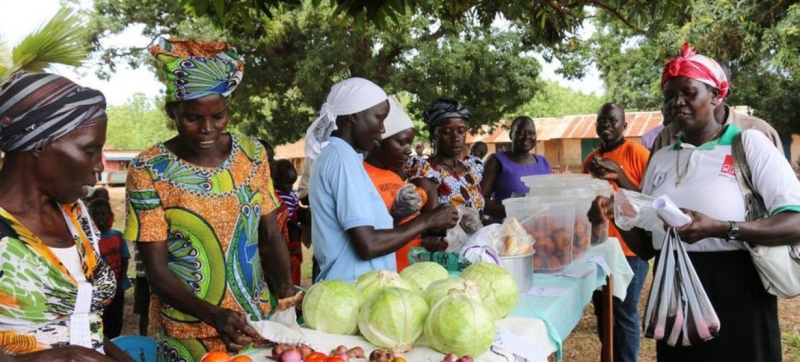
High food prices and hyperinflation are contributing to a spike in hunger in South Sudan.
Developing countries are seeking a stronger voice in debt negotiations following the launch of a new country-led borrowing initiative on Wednesday on the sidelines of the annual IMF–World Bank Spring Meetings.
The economic impact of the Middle East conflict is spreading beyond the region, affecting import-dependent Caribbean and Pacific island nations, where rising oil prices are driving up the cost of food and essential goods, placing additional pressure on low-income households.
According to UN analysis, the escalation could push more than 30 million people into poverty worldwide, potentially reversing years of development progress.
The newly launched Borrowers’ Platform, supported by the UN trade agency (UNCTAD), aims to address long-standing concerns over rising debt burdens in developing economies.
Over the past decade, debt servicing costs have increased sharply. Least developed countries now spend nearly a quarter of their revenue on external debt repayments. In total, 54 countries—home to around 3.4 billion people—spend more on debt servicing than on health or education. In 2024, the combined external debt of developing countries reached $11.7 trillion.
The platform is open to countries at all stages of development and indebtedness, allowing members to share expertise, coordinate approaches, and strengthen their collective position in debt discussions.
At the launch event in Washington, UN Secretary-General António Guterres described the initiative as a “breakthrough in global financing,” comparing it to long-established creditor groups such as the Paris Club and the London Club.
He noted that developing countries often face borrowing costs more than twice as high as those of advanced economies, limiting their ability to access affordable financing.
Guterres said this imbalance reflects deeper inequalities in the global financial system, where developing countries have historically been underrepresented in debt decision-making.
He also highlighted the growing economic pressure caused by the Middle East conflict, including rising commodity prices, slower growth, supply chain disruptions, and higher fuel costs.
The Borrowers’ Platform, he said, will help countries share technical knowledge on debt restructuring, improve coordination with creditors, and strengthen their negotiating position, potentially reducing borrowing costs.
“Developing countries are rising economic actors, and global governance must adapt accordingly,” he added.