

- Bangladesh on The Verge of a Solar Energy Revolution |
- Bangladesh Bank Injects $100 Million Into Forex Market |
- Iran Says Bangladesh Ships Must Follow Hormuz Directives |
- Bangladesh Draft Law Seeks Court Approval Before Arresting Journalists |
- ECNEC Approves 13 Projects, Defers Decisions on Four |
External Hands Behind Social Unrest in EU Countries: Miller
Bangladesh should stress regular migration: he says
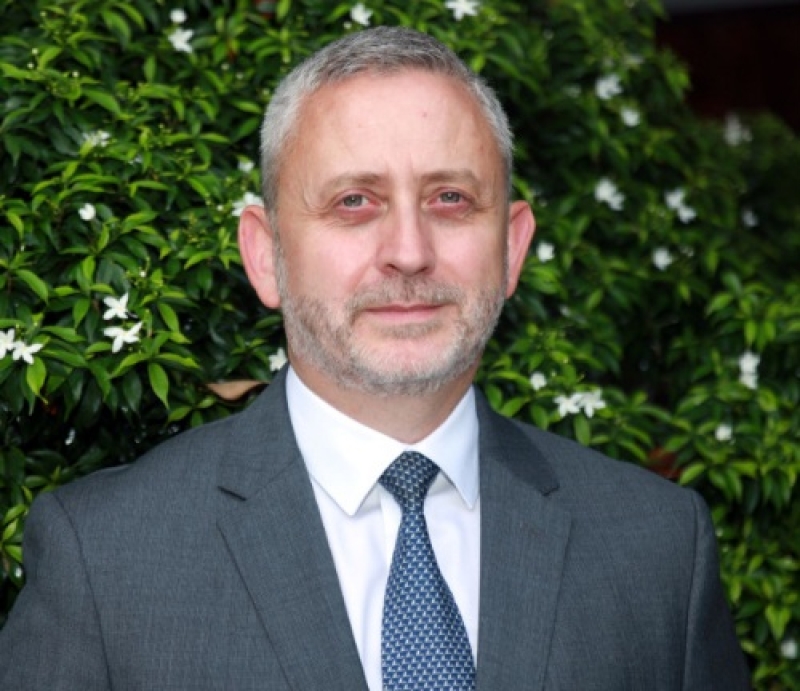
H. E. Michael Miller, EU Ambassador, and Head of the Delegation of Europe in Bangladesh. Photo collected.
By Special Correspondent
Ambassador Head of Delegation of the European Union in Dhaka Michael Miller has laid emphasis on regular and skills-based migration as one of the important pillars of Bangladesh’s engagement with the EU.
He was speaking as the special guest at a seminar titled "Language, Civic and Professional Training for Skilled Migration to Italy" at a city hotel here.
He said that the ageing population is a reality in the EU countries and to contain the momentum and speed of the economies, the continent needs skilled manpower.
He said that Bangladesh can meet demands of the EU countries by exporting skilled-based manpower .
Ambassador Head of Delegation Michael MILLE said that some 350,000 expat Bangladeshis are living in different EU countries and contributing to the economies of the respective countries.
To a question of social unrest that gripped some countries like Germany, France, Italy, Spain and Greece, he pointed out at external hands behind this event
Meanwhile, European countries have been hit by a wave of student protests sweeping the continent.
Hundreds of thousands of Europeans have taken to the streets in separate, uncoordinated demonstrations to protest against the rising cost of living in their countries.
The wave of unrest in Belgium, France, Italy and Portugal has put pressure on governments across the European Union.
France experienced one of its most turbulent days of protests in decades, with more than 550,000 people joining demonstrations, according to the Ministry of Interior, and police facing off with protesters across the country.
Thousands of people have rallied in Berlin and more than 30 other German cities as the nation becomes the latest.
The German ‘Gen Z railed against the high cost of living, underfunding in education, environmental concerns and a potential reintroduction of mandatory military service. It follows a wave of similar protests which have swept Europe, including significant unrest in France, which saw a third straight weekend of rallies.
Speaking to German tabloid Bild, Germany’s interior minister, Alexander Dobrindt said that “violent left-wing groups and troublemakers from migrant communities” hijacked the peaceful protests, without elaborating further.
The European Union has commended Bangladesh’s proactive stance and collaborative efforts in addressing irregular migration and laid emphasis on sustaining the ongoing implementation of the Returnee Case Management System.
Meanwhile, Prime Minister's Adviser Mahdi Amin said a new initiative would soon enable skilled Bangladeshi workers to migrate to Italy at zero cost after completing Italian language, civic orientation and vocational training.
"The process will begin on a limited scale very soon," he said while addressing a seminar titled "Language, Civic and Professional Training for Skilled Migration to Italy" at a city hotel here
Mahdi Amin, Adviser to the Prime Minister on Expatriates' Welfare and Overseas Employment and Labour and Employment, said the initiative would create a structured and transparent pathway for Bangladeshis seeking legal employment in Italy.
The seminar, organised by the Italian Embassy in collaboration with international partners, highlighted opportunities for skilled migration under Article 23 of Italy's immigration legislation.
Under the provision, pre-departure training programmes approved and certified by Italy's Ministry of Labour and Social Policies allow qualified foreign workers to enter Italy legally outside the annual quotas established under the country's Decreto Flussi, or Flow Decree.
According to the Italian Embassy, the programmes require basic Italian language proficiency, knowledge of Italian society and civic responsibilities, and vocational qualifications relevant to specific employment sectors.
The embassy said prospective migrant workers would not have to bear any cost under the approved training programmes.
Addressing the seminar as chief guest, Mahdi Amin said the government's priority was to ensure skilled, regular and low-cost overseas employment while reducing migration expenses to zero wherever possible.
He described the Italian initiative as a model that could be expanded nationwide through cooperation among government agencies, international development partners and private-sector organisations.
The adviser said the government intended to incorporate similar training arrangements into national skills development programmes and extend them to other overseas employment destinations.
He emphasised the importance of preparing Bangladesh's young workforce with internationally recognised professional skills, foreign language proficiency and workplace competencies.
"Our young people have no shortage of talent or ability. The real challenge is to provide proper guidance, develop their skills and create international opportunities for them," he said.
Mahdi Amin said Bangladesh could better utilise its demographic dividend by creating transparent and affordable migration pathways that protect workers from excessive recruitment costs and exploitation.
He also assured representatives of the Ministry of Expatriates' Welfare and Overseas Employment and Bangladesh Overseas Employment and Services Limited (BOESL) of necessary policy support to integrate successful international training models into Bangladesh's migration framework.
The adviser said the government was prioritising third-language education alongside Bangla and English and planned to incorporate Italian and other foreign languages into technical and vocational education curricula.
Referring to the contribution of more than 250,000 Bangladeshis living in Italy, he said migrant workers were strengthening the Italian economy while supporting Bangladesh through remittances.
He also highlighted the government's initiative to introduce a "Probashi Card" to strengthen social and financial protection for expatriate Bangladeshis.
Mahdi Amin expressed optimism that the initiative would open new opportunities for Bangladeshi workers to secure dignified employment in Italy while providing a model for expanding zero-cost skilled migration to other countries.
The seminar featured presentations on Italy's Article 23 migration framework and ongoing pre-departure training projects in Bangladesh.
Among the initiatives discussed were the TASTE project in the restaurant and hospitality sectors, implemented by Frontiere Skills, and textile-sector training projects undertaken by Format.
Participants included prospective migrant workers currently receiving training under the programmes.
Italian Ambassador to Bangladesh Antonio Alessandro, European Union Deputy Head of Delegation Baiba Zarina, Italian Embassy Deputy Head of Mission Federico Zamparelli and Migration Adviser Giuseppe Di Giovanni addressed the seminar.
Representatives of Frontiere Skills, Format and UP Recruitment Agency also presented their respective training and employment initiatives.
International Labour Organization (ILO) Head of Programme Gunjan Dallakoti and International Organization for Migration (IOM) Chief of Mission in Bangladesh Dr Laura Nicole Tomm-Bond‚ also spoke.
The discussions highlighted the importance of collaboration among governments, employers and international organisations in developing safe, orderly and skills-based migration pathways.
The event entailed a public presentation of the rules and procedures for the new pre-departure training projects for work migrants to Italy outlined in the Italian Migration Law, also known as “Article 23” projects.
Meanwhile, a high-level delegation of the European Union (EU) last month met Mahdi Amin, Adviser to the Prime Minister and discussed sending workers from Bangladesh to EU countries in a regular, safe and legal manner.
During the meeting, the delegation also focused on preventing irregular migration and human trafficking, and expanding employment opportunities for skilled workers in the European labour market, said a press release.
The EU delegation was led by Commissioner for Home Affairs and Migration Magnus Brunner at the meeting held this noon at the Prime Minister's Office in Tejgaon.
During the meeting, emphasis was placed on ensuring maximum transparency in the visa process. Discussions were also held on incorporating QR codes into educational certificates, bank statements and other financial documents to prevent forgery and increase acceptability.
Besides, discussions were held on how expatriates living in Europe can easily send remittances to the country through legal channels, and how new employment opportunities can be created in the European labour market by sending quality-trained skilled workers from Bangladesh.
The meeting also touched upon strengthening people-to-people ties through migration, simplifying the process of higher education for Bangladeshi students in various European countries, and transforming brain drain into brain circulation.
Magnus Brunner said currently about five lakh Bangladeshis are legally residing in various countries of the European Union. He also said the EU is ready to provide all kinds of assistance in ensuring legal migration alongside suppressing illegal migration and human trafficking.
Mahdi Amin, also Spokesperson of the Prime Minister’s Office, said after a long time, the country has returned to the democratic track through the assumption of office by a government elected by the direct votes of the people. Under the leadership of Prime Minister Tarique Rahman, the current government is committed to ensuring regular, safe and legal migration, he added.
He briefed the EU delegation on the current government's various policy reforms and development initiatives, and the introduction of the Family Card, Farmer Card and Expatriate Card.
The EU delegation also included Director Henrik Nielsen and Cabinet Member Grigorios Delavekouras. EU Ambassador to Bangladesh Michael Miller, Deputy Head of Delegation Baiba Zarina, and a First Counsellor were also present at the meeting.