

- Mount Everest season opens late, despite huge ice block, high travel costs |
- 2 more children die with measles-like symptoms in Sylhet |
- Dhaka again ranks world’s most polluted city Friday morning |
- Speed up nationality verification for ‘illegal’ migrants: Delhi |
- Rosatom Launches Bangladesh's First Nuclear Power Plant |
Will BJP’s Bengal Win Affect Dhaka-Delhi Ties?
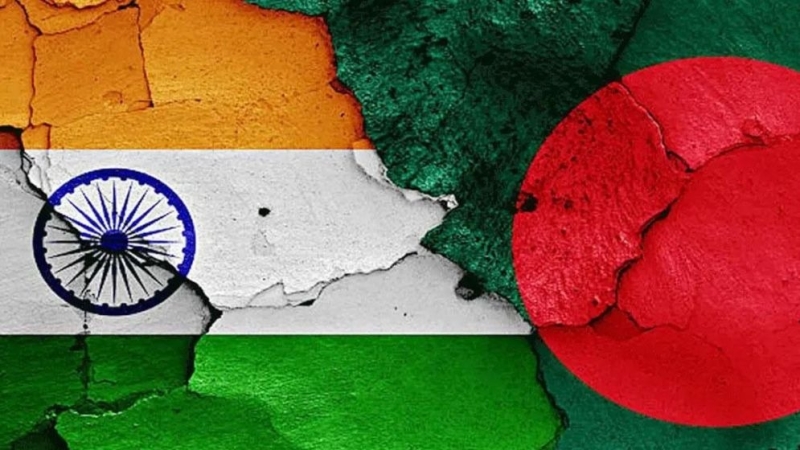
The Bharatiya Janata Party’s (BJP) sweeping victory in West Bengal with more than a two-thirds majority has reignited debate over the future of Bangladesh-India relations and regional diplomacy.
The development has drawn attention in Bangladesh because several BJP leaders had previously made controversial remarks about pushing undocumented Muslims into Bangladesh, raising concerns over border security and bilateral relations.
Following the election result, discussions have intensified over whether the BJP’s rise to power in West Bengal could affect diplomatic ties between Dhaka and New Delhi.
Diplomatic analysts in Bangladesh believe foreign policy does not change overnight and is generally shaped by long-term strategic interests rather than election rhetoric.
However, they also warn that communal tensions or political polarisation inside one country can have consequences for neighbouring states, particularly in sensitive border regions.
Lailufar Yasmin said communal incidents may sometimes receive indirect political backing, but she believes India’s foreign policy remains largely controlled by the central government.
“I do not think there will be any qualitative change in Bangladesh-India relations,” she said, adding that strong understanding between top leaders in both countries reduces the likelihood of major policy shifts.
Former diplomat Munshi Faiz Ahmad, however, said relations between Bangladesh’s new government and India have not yet reached a fully stable stage despite positive signals from both sides.
He noted that meaningful progress in bilateral ties would become clearer through high-level visits and concrete cooperation initiatives between the two countries.
Teesta Issue Back in Focus
The election outcome has also revived discussions over the long-pending Teesta River water-sharing agreement, one of the most sensitive unresolved issues between Bangladesh and India.
For years, India’s central government under Prime Minister Narendra Modi maintained that opposition from the West Bengal state government under Mamata Banerjee had prevented the agreement from moving forward.
Now, with the BJP reportedly controlling both the central government and the West Bengal administration, analysts are divided on whether the political change could accelerate negotiations on the Teesta deal.
Professor Yasmin argued that no international agreement can be finalised without the approval of India’s central government and said responsibility for the delay cannot be placed solely on Mamata Banerjee.
She said the issue involved broader political and strategic considerations within India’s overall policy framework.
Former diplomat Faiz Ahmad expressed more optimism, saying the political alignment between New Delhi and West Bengal could reduce earlier obstacles surrounding the agreement.
“With similar governments at the centre and in the state, the complications may lessen compared to before,” he said, adding that positive progress on the Teesta issue is now more likely.
Still, he stressed that any breakthrough would ultimately depend on the broader state of Bangladesh-India relations.
Border Security Concerns
Relations between India and Bangladesh experienced tensions following the mass uprising in Bangladesh in 2024, which affected border management and several areas of bilateral cooperation.
Analysts believe Bangladesh’s newly elected BNP-led government remains interested in maintaining constructive engagement with India on border security and other key issues.
Experts also note that the outcome of a state election alone does not determine a country’s foreign policy direction.
Professor Yasmin said every country follows a larger strategic design in shaping foreign policy. If stronger border measures are considered beneficial, governments may pursue them regardless of local political changes.
However, she believes that despite temporary tensions and political debate, the BJP’s rise in West Bengal is unlikely to trigger any major long-term instability along the Bangladesh-India border.