

- US-Iran Talks Continue Amid Nuclear Inspection Dispute |
- BSF attempt to push 9 people into Bangladesh foiled: BGB |
- IMF seeks removal of Bank Company Act’s Section 18(A) for loan package |
- High fuel prices fuel surge in Chinese EV sales; charging points lag behind |
- Dhaka ranks 9th among world’s most polluted cities on Wednesday |
US-Iran Talks Continue Amid Nuclear Inspection Dispute
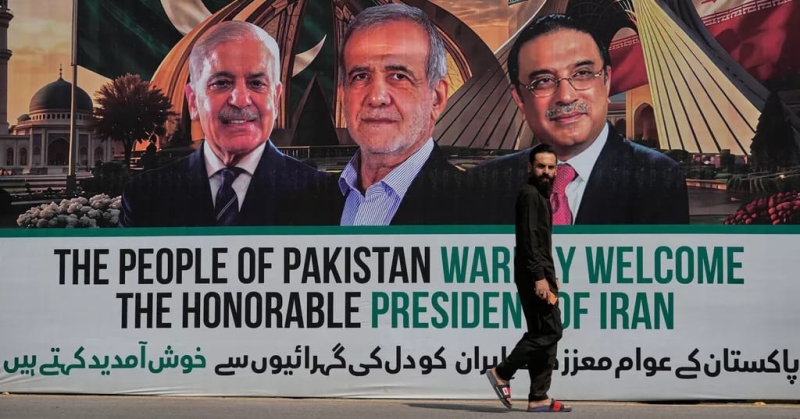
The United States and Iran appeared divided on Tuesday over whether Tehran had agreed to allow U.N. inspections of its nuclear facilities, as both sides continued negotiations aimed at reaching a permanent agreement to end the war in Iran. At the same time, efforts were underway to ease a shipping crisis in the Strait of Hormuz.
The disagreement surfaced as Iranian President Masoud Pezeshkian met Pakistani leaders in Islamabad and technical teams from the U.S. and Iran held discussions in Switzerland.
A United Nations agency said a plan is being implemented to help move stranded vessels and thousands of crew members through the Strait of Hormuz, a crucial route for global energy supplies that Iran blocked after the U.S. and Israel launched military action against Iran on Feb. 28.
Earlier Tuesday, Iranian Foreign Ministry spokesperson Esmail Baghaei told reporters in Tehran that U.N. inspectors were not scheduled to visit nuclear sites targeted by U.S. strikes last year. His remarks contradicted comments made a day earlier by U.S. Vice President JD Vance.
Speaking to reporters, President Donald Trump warned that if Iran had not agreed to inspections, Washington would immediately end the talks. However, he said there was no urgency for inspections to begin.
The International Atomic Energy Agency (IAEA) has not commented on whether it would play a role in any inspection process. The agency has operated intermittently in Iran since the 12-day war with Israel in 2025 but has not been allowed to inspect uranium enrichment facilities hit by U.S. strikes.
Iran continues to insist that its nuclear programme is peaceful. However, the IAEA has said Iran possesses highly enriched uranium that could potentially be used to develop nuclear weapons if Tehran chose to do so.
The U.S. and Iran reached an agreement last week under which Tehran would dilute its stockpile of enriched uranium. The deal also includes the lifting of U.S.-backed sanctions, while both sides have 60 days to negotiate broader arrangements.
Efforts are also underway to evacuate around 11,000 crew members stranded aboard ships in the Strait of Hormuz.
According to International Maritime Organization Secretary-General Arsenio Dominguez, the operation is being coordinated with Iran, Oman, other regional coastal states, the United States and the maritime industry.
“We have secured the necessary safety guarantees and have thoroughly verified the conditions for safe navigation to support these operations,” Dominguez said.
The organization said ship movements would be carried out gradually to minimize the risk of collisions.
Marcus Baker, global head of marine, cargo and logistics at Marsh in London, welcomed the development, saying it would benefit all parties involved.
However, concerns remain over the fragile ceasefire, as Iran said it had once again closed the strait due to renewed fighting between Israel and the Iran-backed Hezbollah group in Lebanon. Violence flared again in Lebanon on Tuesday.
The U.S. has said negotiators are discussing ways to ensure the strait remains open. While shipping traffic has started to recover, uncertainty remains over who will ultimately control access to the waterway.
Data and analytics firm Kpler reported that 39 ships passed through the strait on Monday, compared with about 92 crossings recorded between Friday and Sunday. Before the war, roughly 100 vessels used the route each day.
The U.S. military's Central Command said two American aircraft carriers remain deployed in the Middle East.
During his first visit to Pakistan since the war began, Iranian President Pezeshkian held talks with Pakistani President Asif Ali Zardari on regional peace and economic cooperation, according to a statement from the Pakistani presidency.
At a joint news conference, Pezeshkian said Iran’s missile programme was not included in the memorandum of understanding signed with the United States.
“If it was not for Iran’s missile capabilities, our country would have been plundered and destroyed,” he said, adding that Tehran would never negotiate away its missile programme.
Pakistani Prime Minister Shehbaz Sharif later announced that he would attend the funeral in Tehran of Supreme Leader Ayatollah Ali Khamenei, who was killed in the opening airstrikes of the war.
Meanwhile, Iran said negotiations in Switzerland had produced working groups focused on sanctions relief, nuclear issues, reconstruction and monitoring.
According to Iran’s state-run IRNA news agency, Deputy Foreign Minister Kazem Gharibabadi, who is leading the talks, said the two countries also established a mechanism to discuss shipping through the Strait of Hormuz.
At the beginning of the 60-day negotiation period, Iran and the U.S. also agreed to create a “de-confliction cell” to address tensions involving Israel and Hezbollah.
In southern Lebanon, Israeli troops shot and killed two people on Tuesday, ending two days of relative calm following a ceasefire brokered on Saturday.
The Israeli military said its forces opened fire after four Hezbollah members entered a security zone on a bulldozer and motorcycle and ignored warning shots. Lebanon’s state-run National News Agency said the two men were killed while clearing a road with a bulldozer.
No Israeli airstrikes or shelling have been reported since Sunday, and Hezbollah has not claimed any attacks, marking the longest pause in hostilities since the latest Israel-Hezbollah conflict began in March.
Israeli Prime Minister Benjamin Netanyahu said Monday that Israel retained “full freedom of action” in Lebanon to counter any threats.
Neither Israel nor Hezbollah is a party to the U.S.-Iran agreement. Netanyahu has vowed to keep Israeli troops in southern Lebanon until all threats are removed, while Hezbollah says it will not stop attacks unless Israel agrees to withdraw.
Asked about Netanyahu’s remarks, Trump said, “We’re going to take a look at it,” adding that the issue would eventually be resolved.
On Tuesday, the main highway from Beirut to southern Lebanon was crowded with displaced residents returning home.
Among them was Hawraa Nour El-Din from Khirbet Selm village.
“We don’t want the negotiations done by the government,” she said. “We want Iran to negotiate on our behalf, and we are returning victorious, whether everyone likes it or not.”
In Washington, the U.S. State Department said a new round of Israel-Lebanon talks began Tuesday, covering both political and security issues, repprts UNB.