

- Finance Minister Presents Tk 9.38 Lakh Crore Budget |
- Dhaka for Stronger UNDP Support on Climate Finance, Smooth LDC Graduation |
- Divergences over climate finance work programme at Bonn Talks |
- Iran Closes Strait of Hormuz Amid US Strikes |
- US Launches New Iran Strikes Amid Stalled Talks |
US Launches New Iran Strikes Amid Stalled Talks
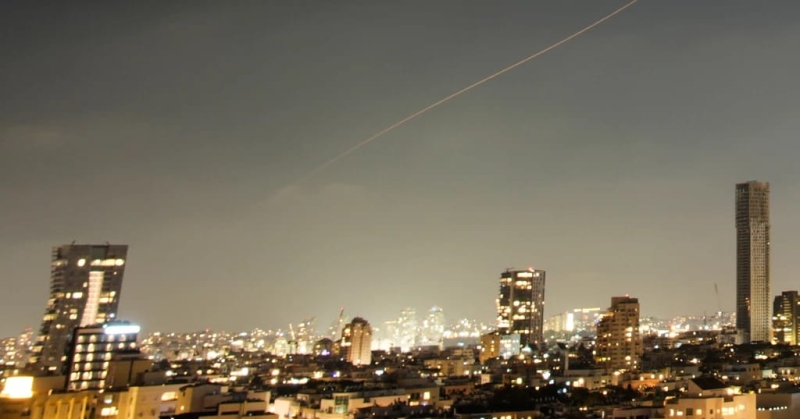
The United States carried out a new wave of airstrikes on Iran early Thursday, intensifying hostilities after President Donald Trump warned Tehran of consequences over stalled negotiations.
The latest attacks targeted multiple locations across Iran as diplomatic efforts to end the conflict remained deadlocked. Iran continued to maintain pressure on shipping through the Strait of Hormuz, a key global energy route, contributing to rising oil prices and concerns over energy supplies.
Following the strikes, Iran threatened retaliation. Air raid sirens sounded in Bahrain, which hosts the headquarters of the U.S. Navy's Fifth Fleet, while Kuwait reported that its air defense systems were activated. Iran had earlier launched missiles toward Bahrain, Kuwait and Jordan after a previous round of American strikes.
The U.S. Central Command said the operation was completed shortly before sunrise and targeted Iranian military surveillance networks, communications infrastructure and air defense facilities. The military described the action as a response to what it called Iran's continued aggression.
Explosions were reported in Tehran, the southern port city of Bandar Abbas and other areas near the Strait of Hormuz.
The renewed exchange marked the third major escalation this week, testing a fragile two-month ceasefire. Wednesday had already seen missile exchanges involving Iran and several Gulf countries hosting American forces.
Trump has repeatedly urged Iran to agree to a deal that would end the conflict, suggesting earlier this week that a breakthrough could come within days.
However, Iran's Ambassador to the United Nations, Amir Saeid Iravani, told the UN Security Council that Tehran would not negotiate under pressure or threats.
Despite the rhetoric, observers believe both sides are looking for a way to end the conflict while preserving political gains at home.
Iran appears to be relying on its ability to disrupt shipping through the Strait of Hormuz as leverage in negotiations. The strategic waterway is one of the world's most important routes for oil and natural gas exports.
Meanwhile, Israeli Prime Minister Benjamin Netanyahu has continued to pursue broader objectives, including dismantling Iran's nuclear programme, weakening its regional allies and pressuring the country's ruling establishment. Iran and Israel also exchanged attacks earlier this week.
The conflict, which began with US and Israeli attacks on Iran on February 28, has rattled global markets and driven up energy prices. International benchmark crude oil prices climbed above $93 per barrel on Wednesday, more than 25 percent higher than before the conflict began.
Trump claimed the U.S. military has been helping commercial oil shipments move through the Strait of Hormuz despite Iranian attempts to restrict traffic. He said more than 100 million barrels of oil had passed through the area since last month, though no independent confirmation of the figure was immediately available.
The U.S. military also denied Iranian claims that the Strait had been fully closed, saying commercial shipping continued to operate.
Earlier Wednesday, the U.S. military reported disabling a tanker carrying Iranian oil that allegedly attempted to breach a naval blockade. The vessel, sailing under the Palau flag, was struck in its engine room using precision-guided munitions.
India later said three of its sailors aboard the vessel were missing, while 21 others were rescued.
Iran condemned the American strikes, with Foreign Minister Abbas Araghchi describing them as violations of Iranian sovereignty.
Diplomatic efforts continued alongside the fighting. A Qatari delegation arrived in Tehran for discussions after consultations with Washington, according to officials familiar with the talks.
The latest military exchanges followed the crash of a U.S. Army helicopter near the Strait of Hormuz earlier this week. A U.S. official said the aircraft collided with an Iranian drone, though it remains unclear whether the collision was deliberate. Both crew members were rescued and were not injured, according to Trump.
Major disagreements continue to hinder any quick peace agreement. Washington wants Iran to surrender its stockpile of highly enriched uranium, arguing it could be used for nuclear weapons development.
Iran rejects that demand, insisting its nuclear programme is peaceful. Tehran is also seeking sanctions relief and the release of frozen assets before any final agreement is reached.
Another obstacle is Iran's insistence that any settlement must include an end to hostilities between Israel and Hezbollah. Israel, however, has intensified military operations against the Lebanon-based group, further complicating prospects for a broader peace deal, reports UNB.