

- Dhaka-Seoul Ties Set for Strategic Partnership Push: Envoy |
- BSEC vows investor protection as top priority in IPO reform drive |
- Facebook post triggers tension in Shahbagh JCD-DUCSU brawl |
- Grameen Kalyan plans 300 healthcare centres in 64 districts |
- Italy dismisses replacing Iran at the World Cup, as Trump official says |
Trump Agrees Two-Week Iran Ceasefire Deal
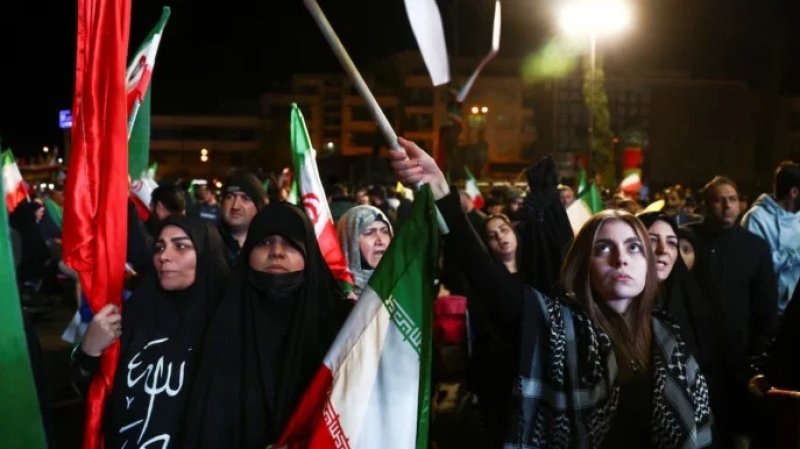
People gather after a two-week ceasefire in the Iran war was announced, in Tehran, Iran, April 8, 2026.
US President Donald Trump on Tuesday agreed to a two-week ceasefire with Iran, stepping back from earlier threats of devastating attacks if Tehran failed to reopen the Strait of Hormuz.
The surprise announcement came less than two hours before a deadline set by Trump, marking a dramatic shift after he had earlier warned that Iran could face destruction of major civilian infrastructure.
Trump said the ceasefire would depend on Iran easing its blockade in the Strait of Hormuz, a vital shipping route that carries nearly one-fifth of the world’s oil supplies. Iran later said it would halt counter-attacks and ensure safe passage through the strait.
“This will be a double-sided ceasefire,” Trump said in a post on Truth Social, adding that military objectives had already been achieved and that both sides were moving closer to a broader agreement aimed at long-term peace.
Iran said formal talks with the United States would begin on Friday in Islamabad, with Pakistan helping mediate the truce. Iranian state television described Trump’s move as a retreat and claimed Washington had accepted Tehran’s conditions for ending the conflict.
The war, now in its sixth week, has left more than 5,000 people dead across nearly a dozen countries, including over 1,600 civilians in Iran, according to official figures and rights groups.
Two White House officials said Israel had also agreed to the two-week ceasefire and would suspend airstrikes once the Strait of Hormuz was reopened. However, Israeli media reported that military action could continue until Iran fully restored shipping access.
Shortly after Trump’s announcement, the Israeli military said missiles had been launched from Iran towards Israel, underlining the fragility of the proposed truce.
Trump said progress in backchannel diplomacy had encouraged the ceasefire decision. He also said Iran had submitted a 10-point proposal that could form the basis for a final agreement during the two-week pause.
Financial markets reacted positively to the news. US stock futures rose, while oil prices fell sharply, with US crude dropping more than 17% to just above $92 a barrel.
Earlier in the day, Trump’s threats had alarmed world leaders, shaken global energy markets and triggered criticism from international figures, including the United Nations and Pope Leo.
The closure of the Strait of Hormuz has raised fears of a wider economic shock, with energy analysts warning that fuel prices could remain elevated even after shipping resumes.
Before the ceasefire announcement, US and Israeli strikes had intensified, with attacks reported on bridges, transport links, an airport, a petrochemical facility and targets on Kharg Island, Iran’s main oil export terminal.