

- Six closed jute mills to reopen under pvt management in 6 months |
- Uncertainty over possible US-Iran talks as Trump extends ceasefire |
- Bangladesh eyes broader bilateral engagements with African nations |
- Trump Extends Iran Ceasefire, Seeks Time for Talks |
- SSC and Equivalent Exams Begin Nationwide |
Strikes persist across ME region amid rising humanitarian needs
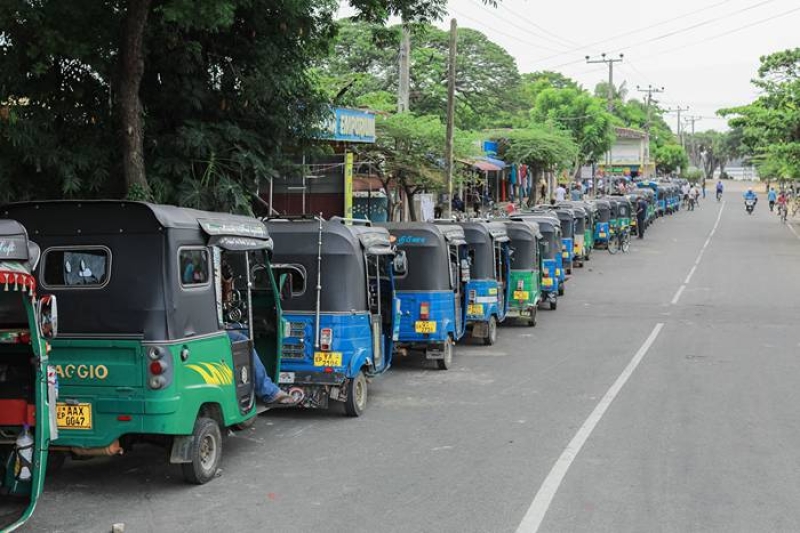
Auto-rickshaws (tuk-tuks) queue for fuel at a petrol station in Sri Lanka. UNICEF (file photo)
Production team: Vibhu Mishra in Kathmandu, Matt Wells and Ana Carmo in New York
6 April 6 - Strikes and counter-strikes continue across the Middle East, with dozens of casualties reported over the weekend in Lebanon following Israeli strikes targeting the south and the capital, Beirut. Meanwhile, humanitarian needs are rising, critical infrastructure remains under strain, and the wider economic and global impacts of the crisis continue to mount.
HIGHLIGHTS
• Hostilities persist, civilian risks grow: Strikes and counter-strikes continue across the region, with rising casualties and mounting risks to critical infrastructure, including health facilities.
• Economic pressures deepen: Oil prices remain elevated and supply disruptions are driving inflation, currency pressure and fuel shortages, particularly across Asia.
• Humanitarian situation worsens: Displacement remains high, access constraints continue, and aid operations face rising costs and logistical challenges, with vulnerable populations increasingly at risk.
IAEA confirms strike near Iran nuclear plant, reiterates safety warning
In a follow-up to developments over the weekend, the International Atomic Energy Agency (IAEA) has confirmed that recent military strikes occurred close to Bushehr Nuclear Power Plant, including one impact just 75 metres from the site perimeter.
Analysis of satellite imagery from 5 April shows that the facility itself has not been damaged.
IAEA Director General Rafael Mariano Grossi warned that continued military activity near the site poses serious risks.
“Continued military activity near the BNPP…could cause a severe radiological accident with harmful consequences for people and the environment in Iran and beyond,” he said.
He stressed that such incidents highlight the very real danger to nuclear safety and reiterated that nuclear facilities and surrounding areas must never be struck.
Lebanon: Attacks on healthcare ‘cannot become the new norm’ says Tedros
At least four people were killed and a further 39 injured in a strike on Sunday near Rafik Hariri University Hospital – Lebanon’s largest public health facility.
The hospital itself was not damaged, but the incident adds to growing concern over the proximity of hostilities to critical health infrastructure, the World Health Organization (WHO) warns.
The UN health agency has verified a sustained pattern of attacks on health care. Between 28 and 31 March alone, 11 incidents were recorded – an average of two per day – affecting multiple facilities across southern Lebanon and Beirut.
Since the escalation began on 28 February, a total of 92 attacks on health facilities, medical transport, personnel and warehouses have been verified, resulting in 53 deaths and 137 injuries.
“These acts cannot become the new norm,” said WHO Director-General Tedros Adhanom Ghebreyesus, stressing that “the protection of health care is not optional, but a universal obligation.”
“As Israel expands its military operations, I call on all parties to uphold their responsibility under international humanitarian law and ensure health facilities, health workers and patients are proactively protected.”
And staying with the economic fallout of the crisis...
In Nepal, fuel prices have surged again, with petrol now exceeding Rs. 200 per litre – the highest level on record – and aviation fuel nearly doubling, adding to inflationary pressures.
Authorities have introduced measures to curb fuel consumption, including extending the weekend with the closure of schools and public offices on Sunday. Office hours on working days have been extended to compensate.
The state-controlled fuel company had begun selling partially filled cooking gas cylinders last month to discourage hoarding and panic buying.
Until now, Saturday had been the only day off in the landlocked nation, which relies on imports from India for nearly all its fuel supply.
Emergency responses intensify across Asian economies
The sharp rise in fuel and commodity prices has prompted several governments to introduce emergency response measures:
Viet Nam has reduced import tariffs on petroleum products and warned of possible jet fuel shortages. Thailand has instructed government agencies to adopt work-from-home arrangements and suspended non-essential overseas travel to reduce energy demand.
The Philippines has introduced a temporary four-day workweek for government offices and declared a state of emergency on 25 March. India has invoked emergency powers to redirect LPG supplies from industrial users to households.
Cambodia has required real-time reporting of fuel stocks at distribution points, while Lao People’s Democratic Republic has banned fuel sales in containers exceeding five liters to prevent hoarding.
Asian countries tighten measures as crisis impact deepens
Countries across Asia are introducing emergency measures as rising fuel and food costs linked to the Middle East crisis begin to take hold.
In Bangladesh, fuel-sale limits and power cuts have been imposed, while in Sri Lanka and Myanmar, rationing and mobility restrictions are affecting daily life and economic activity.
Pakistan is seeing sharp price increases, with petrol up 24 per cent and wheat flour rising 28 per cent, adding to inflationary pressures. Afghanistan is facing rising food prices, increased displacement and mounting strain on already limited services.
Middle East crisis drives ripple effects across Asia-Pacific
The escalation in the Middle East is having growing humanitarian and economic impacts across Asia and the Pacific, the UN relief coordination office OCHA said on Friday.
Rising oil prices – linked to reduced traffic through the Strait of Hormuz – are increasing transport, electricity and agricultural costs in import-dependent countries including Pakistan, Sri Lanka, Bangladesh and the Philippines.
Brent crude rose to nearly $110 a barrel before retreating slightly during morning trade in Asia on Monday.
Shipping disruptions and higher war-risk insurance are further straining supply chains, while fertilizer shortages are raising concerns over food production.
Aid operations are also being affected, with higher fuel and transport costs increasing the price of humanitarian response. UN agencies warn that if the crisis persists, up to nine million more people in the region could face acute food insecurity. – UN News