

Wednesday, November 18, 2026
News update
- Bangladesh's forex reserves stand at $36.35 billion: PM |
- Govt to Send 10,000 Workers to Malaysia at Low Cost |
- HC Bars University Admission Tests Before HSC Review Results |
- Police Vehicle Torched as 39 Gazipur Factories Shut |
- Parties clash over adaptation finance in global goal on adaptation |
COP31 Pushes to Put Ocean Protection on Climate Agenda
By Laura Quinones
Climate
2026-11-18, 11:00am
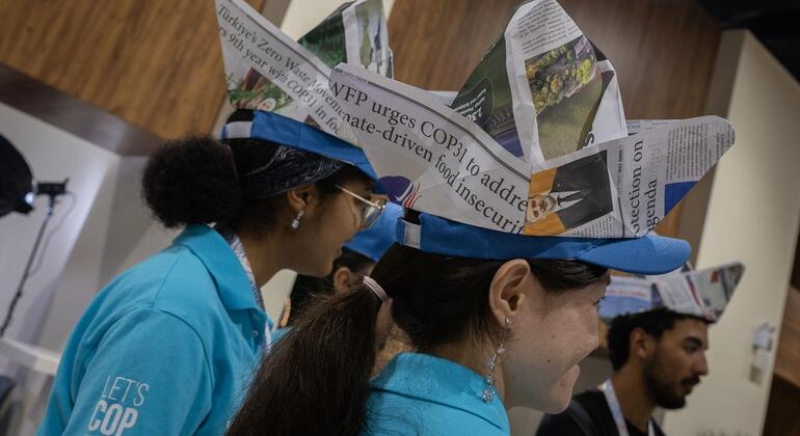
UN Climate Conference in Antalya, Türkiye.
Scientists and communities showcased innovative and traditional approaches to protecting nature at COP31 on Tuesday, from identifying marine species through seawater samples to using Indigenous knowledge to prevent wildfires.
However, turning these initiatives into concrete action remains a challenge, with funding shortages continuing and ministers struggling to bridge divisions over fossil fuels and climate finance as negotiations enter their final days.
Today at COP31
Oceans: New research shows that more than 95 per cent of coastal and island nations include ocean-related measures in their climate plans.
Nature: Twenty-three countries endorsed a wildfire prevention plan combining Indigenous knowledge and scientific expertise.
Climate impacts: Dominica, Myanmar and Honduras ranked among the countries hardest hit by extreme weather over the past 30 years.
Negotiations: A draft agreement leaves ministers with major differences to resolve before Friday's deadline. COP31 is scheduled to close on November 20.
Protesters urged ministers to fight for climate justice as they arrived at COP31 in Antalya on Tuesday, with Bob Marley's song Get Up, Stand Up greeting delegates.
While calls for action were clear, reaching an agreement proved more difficult.
An 18-page draft cover decision circulated on Monday contains competing proposals, as ministers take turns outlining their national priorities in plenary sessions.
Away from the negotiations, oceans and forests — two of nature's most important climate defenders — took centre stage, as both face growing pressure from the climate crisis they help mitigate.
Will ocean protection make the final agreement?
Despite their crucial role in regulating the global climate, oceans have often received limited attention in international climate negotiations. They now feature prominently in the first draft of a possible COP31 agreement, reflecting efforts by co-hosts Australia and Türkiye to strengthen ocean-related climate action.
However, it remains uncertain whether those provisions will survive the final round of negotiations.
For Marine Lecerf, head of international policy at the Ocean and Climate Platform, the priority is not securing new commitments but ensuring existing ones are implemented.
“We’re not asking for a new mandate, we're asking for acceleration,” she told journalists on Tuesday.
A new analysis presented at COP31 highlights the scale of the challenge. More than 95 per cent of coastal and island nations have included ocean-related measures in their national climate plans, but around 60 per cent of those commitments depend on additional financing or technical support.
Pacific youth climate envoy Brianna Fruean said communities taking adaptation measures into their own hands were already feeling the effects of the funding gap.
In Fiji, for example, residents of Naidiri village have financed their own marine protected area, helping restore coral reefs and fish stocks to safeguard the waters on which they depend.
“They shouldn't be taking money out of their own pockets to pay for these adaptation measures,” she said.
What a cup of seawater can reveal
The ocean has played a crucial role in slowing climate change by absorbing around 90 per cent of the excess heat generated by global warming. However, this comes at a cost, as rising ocean temperatures threaten coral reefs, fisheries and coastal communities.
Much of the ocean also remains unexplored.
“Satellites cannot see beyond the surface of the ocean,” said Joanna Post, head of ocean observations at UNESCO's Intergovernmental Oceanographic Commission.
Only around 28 per cent of the seafloor has been mapped, she noted, adding that many marine species have yet to be discovered.
To address these knowledge gaps, UNESCO and its partners are using environmental DNA, or eDNA, to identify species through genetic traces they leave in seawater.
UNESCO's eDNA Expeditions programme is applying the technology at 25 marine sites worldwide, with local communities and schoolchildren helping collect samples every three months.
As warming waters push species into new habitats, the findings could help governments identify marine areas that require greater protection.
However, researchers say much more data is needed. At COP31, Canada and the European Union sought additional support for the OceanEye International Alliance, a partnership with UNESCO aimed at strengthening global ocean monitoring.
Post said ocean observations and data had long informed decision-making but often remained unrecognised despite their importance.
She called for sustained investment in ocean monitoring rather than continued reliance on short-term research projects.
Türkiye also unveiled its Marine Litter Action Platform on Tuesday, bringing together pollution-prevention initiatives, expertise and financing. The platform includes efforts to tackle abandoned fishing nets that trap turtles, seabirds and other marine wildlife.
Indigenous knowledge offers lessons in wildfire prevention
In Chad, Indigenous communities have long relied on the stars, clouds and movements of animals to anticipate rainfall, droughts and other environmental changes.
“They are our best school and our best technology,” said Indigenous climate advocate Hindou Oumarou Ibrahim, describing knowledge passed down through generations.
Such traditional knowledge is also helping countries rethink how they prepare for increasingly destructive wildfires.
At COP31, 23 countries endorsed the Antalya Action Plan on Integrated Fire Management, backed by the UN Food and Agriculture Organization (FAO). The plan shifts the focus from fighting fires to preventing them.
FAO forestry expert Amy Duchelle said traditional Indigenous practices and the use of fire could help communities learn how to manage landscapes more effectively.
The approach includes carefully controlled burning to maintain healthier landscapes, reduce accumulated vegetation and lower the risk of devastating wildfires.
Other nature initiatives at COP31
Forests: Ghana became the first African country to receive forest carbon credits under the ART TREES standard, recognising efforts to curb deforestation across 2.5 million hectares.
Peatlands: A new initiative aims to restore 30 million hectares of degraded peatlands and mobilise $100 billion for conservation and climate action.
Coral reefs: More than $30 million was announced for reef conservation projects in 22 developing countries.
Indigenous rights: More than 50 Indigenous and community organisations urged governments to honour commitments to protect their lands, calling for stronger rights and direct conservation funding.
Oceans: The European Union joined the Blue NDC Challenge, an initiative led by France and Brazil to help countries implement ocean-related commitments in their climate plans.
New ranking highlights countries hardest hit by extreme weather
As countries showcased new approaches to protecting nature, a report released at COP31 highlighted the growing human cost of climate change.
Dominica, Myanmar and Honduras were the countries hardest hit by extreme weather over the past three decades, according to Germanwatch's Climate Risk Index 2027.
“Behind these figures are families who lost their homes, children unable to attend school, farmers who lost their crops, and communities isolated for weeks,” Honduras's Vice Minister of Finance, Roberto Chang López, told journalists, recalling the devastation caused by Hurricane Mitch.
The index assesses economic losses, deaths and the number of people affected by disasters, including those injured or displaced, across 178 countries.
According to the report, extreme weather events claimed more than 916,000 lives and affected over 5.5 billion people worldwide between 1996 and 2025.
Heatwaves accounted for 40 per cent of deaths, while floods affected the largest number of people.
In 2025 alone, Jamaica topped the ranking following Hurricane Melissa, followed by Sri Lanka and Spain.