

- Extreme Global Temperatures Set to Continue Into 2027 |
- Bangladesh's Inflation Eases to 8.27% in October |
- Govt to Build Six 100-Bed Hospitals for Workers: PM |
- Oceans, our best bet vs climate change, finally at heart of COP31 |
- Hasina’s passport request is political stunt: ICT Chief Prosecutor |
Extreme Global Temperatures Set to Continue Into 2027
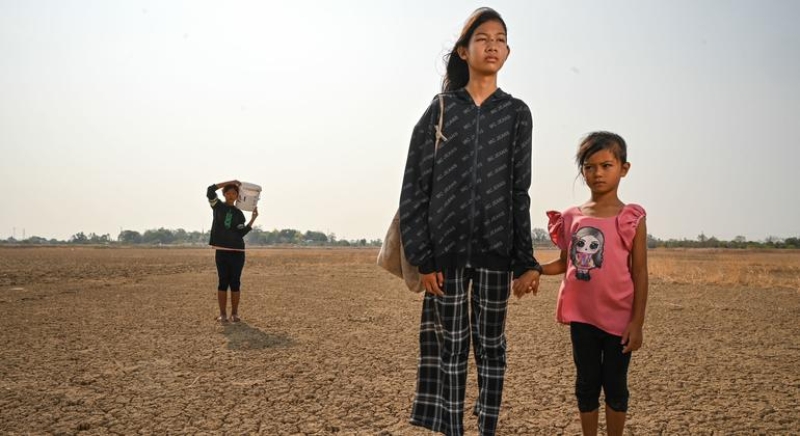
Children stand on drought-affected land in Thailand.
In April this year, around 146.5 million people in India were exposed to an extreme heatwave, with temperatures reaching a scorching 47°C.
In Europe, provisional estimates indicate that more than 30,000 excess deaths occurred over the summer, including approximately 16,000 during the heatwave from June 22 to 28.
A few months later, a Himalayan glacier collapse triggered catastrophic flash floods downstream in Nepal in late August, killing more than 1,300 people.
The streak of exceptional global temperatures, melting ice and rising sea levels is set to continue, while a very strong El Niño is expected to trigger further extreme weather well into 2027, according to a report by the World Meteorological Organization (WMO).
The warning came ahead of the COP31 climate summit in Türkiye.
The WMO State of the Climate Update 2026 found that each of the past 12 years has been among the warmest on record, with the four most recent years topping the list.
The global average surface temperature from January to September 2026 was approximately 1.47°C above the pre-industrial average. It is expected to rise further towards the end of the year because of El Niño's warming influence, which has been developing since August.
The event is expected to become the strongest on record by December.
Warming Oceans
Around 90 per cent of the excess heat trapped by greenhouse gases is absorbed by the oceans. According to the report, 2026 is on track to become the tenth consecutive year of record ocean warmth.
“El Niño doesn't add new heat to the planet. It releases heat from the ocean, which is the warmest ever measured. There is simply more heat available to release,” said WMO Secretary-General Celeste Saulo.
Meanwhile, sea levels are at record highs, while sea-surface temperatures have also reached monthly records during 2026.
Glaciers continue to retreat. The ice lost in 2025 would have been enough to fill five Olympic-sized swimming pools every second throughout the year.
A New Era of Climate Extremes
“We have entered a new age of climate extremes. A supersized El Niño is colliding with a planet already superheated by manmade climate change,” UN Secretary-General António Guterres said.
“Climate records keep falling. The human costs keep rising. And those least responsible are suffering first and worst.”
He urged world leaders to accelerate emissions reductions, speed up the transition away from fossil fuels and provide vulnerable countries with the funding and protection they need.
A Multiplier of Climate Risks
Saulo described El Niño as a risk multiplier, warning that heatwaves, tropical cyclones and rainstorms could intensify beyond what historical trends had prepared communities to expect.
“Hundreds of millions of people this year have been exposed to unbearable extreme heat, whilst the catastrophic ice and rock collapse and flash floods in Nepal highlighted the compound risks facing communities in fragile, warming high-mountain terrain,” she said.
The final State of the Global Climate 2026 report is scheduled for release in March 2027.
Key Findings of the Report
Greenhouse gases: Concentrations reached new records in 2025 and continued rising in 2026. Carbon dioxide levels are 53 per cent higher than in 1750, while methane has increased by 167 per cent and nitrous oxide by 26 per cent.
Oceans: Ocean heat reached a record high in 2025 and continued increasing in 2026. This warming is projected to persist for hundreds to thousands of years.
Sea levels: Global average sea level reached a record high in 2026, with the rate of rise accelerating.
Sea ice: Antarctic sea ice recorded its third-lowest winter peak, while Arctic sea ice reached its lowest or second-lowest level on record.
Glaciers: Glaciers lost more than 400 gigatonnes of ice in 2025, contributing around 1 millimetre to global sea-level rise.
Freshwater: Water stored on land has declined globally since 2014. In 2025, 42 per cent of the assessed area had below-normal water levels.
Health: For the first time, the World Health Organization (WHO) classified the expected health impacts of El Niño as a health emergency.
Food: El Niño is already increasing risks to agriculture, particularly in regions with high food insecurity and heavy dependence on rainfall.