

- People positive on Padma Barrage, experts urge caution over fallout |
- Parties convey their expectations at Bonn climate talks |
- ECNEC Approves 8 Projects Worth Tk 2,266 Crore |
- No Plan to Drop Bangla, History from Honours: Milon |
- Global turmoil shadows Bonn climate talks |
Finance minister to unveil national budget FY27 in JS Thursday
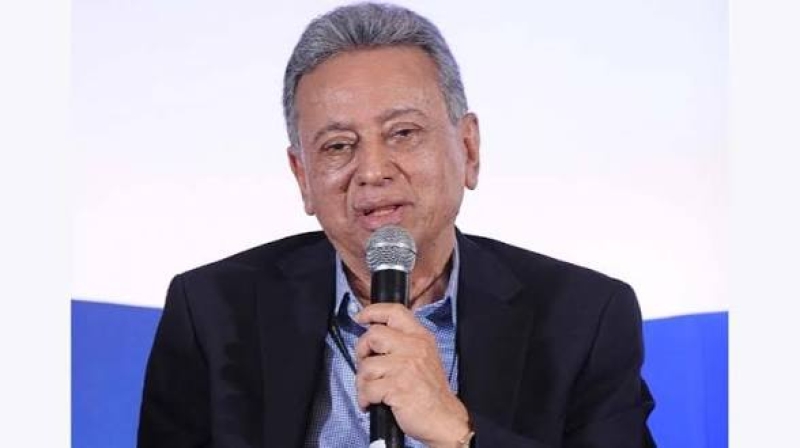
Finance Minister Amir Khosru Mahmud Chowdhury is set to place his maiden national budget for fiscal year 2026-27 (FY27) in the Jatiya Sangsad on Thursday, outlining an ambitious roadmap aimed at accelerating Bangladesh’s transition towards a more investment-driven economy through regulatory reforms, higher growth targets and expanded social spending.
With a proposed outlay of Tk9.38 lakh crore, the FY27 budget is expected to be the largest in the country’s history.
The budget will be the first presented by the BNP government since its landslide victory in the February 12 parliamentary election. The last BNP-led administration presented a national budget in FY2006-07 under then finance minister M Saifur Rahman.
According to Finance Division officials, the budget has been prepared under the theme “Economic Democratization and Deregulation: Bangladesh’s Journey Towards a Trillion-Dollar Economy”, reflecting the government’s commitment to fostering investment, expanding employment and strengthening human capital.
A key feature of the budget is a shift in focus from large-scale physical infrastructure towards investment in people, with education and health expected to receive the highest sectoral allocations. Officials say the budget aligns with the government’s “Bangladesh First” vision, prioritising education, healthcare, employment generation, social protection and entrepreneurship development to build a modern, knowledge-based and inclusive economy.
Among the major initiatives under consideration are a Tk225 crore entrepreneurship development fund, a Tk2,000 crore SME entrepreneurship fund, partial implementation of a new public-sector pay scale, and the introduction of an e-Health Card programme covering 2.5 million citizens to expand digital healthcare services and strengthen universal health coverage.
The budget is also expected to increase allocations for social safety net programmes, including farmer cards and family cards, while setting a target to facilitate overseas employment opportunities for 10 million people.
In an effort to engage youth in productive activities and discourage involvement in drugs, extremism and terrorism, the government is likely to earmark Tk300 crore for creative economic initiatives.
Officials say the budget reflects both the government's electoral commitments and the evolving needs of the economy, marking a strategic shift towards human capital-driven growth and expanded employment opportunities at home and abroad.
Record Outlay and Fiscal Targets
The FY27 budget is expected to propose total expenditure of Tk9.38 lakh crore, with Tk6.95 lakh crore projected to come from domestic revenue sources. The remainder will be financed through domestic and foreign borrowing.
The fiscal deficit is likely to be set at Tk2.51 lakh crore, equivalent to 3.6 percent of GDP, a level officials consider manageable by international standards.
The government has projected the size of the economy at Tk68.30 lakh crore for FY27, with GDP growth targeted at 6.5 percent and inflation at 7.5 percent.
Economists, however, caution that achieving these targets will require stronger revenue mobilisation, improved investment flows and sustained efforts to bring inflation under control.
Push for Deregulation and Investment
A central pillar of the upcoming budget is a broad deregulation agenda aimed at improving the ease of doing business and attracting domestic and foreign investment.
The government is expected to announce measures to simplify licensing procedures, accelerate business approvals and modernise tax administration. The budget speech is likely to include a dedicated chapter on improving the business climate through deregulation and administrative reform.
Officials said a digital application platform and a unified one-stop service system, branded as “Banglabiz”, may be launched to centralise licensing, certification and approval processes, reducing bureaucratic delays and face-to-face interactions between businesses and regulatory authorities.
Speaking to BSS, Planning Commission General Economics Division Member (Secretary) Dr Monzur Hossain said the budget is closely aligned with the government’s election manifesto and focuses on inflation control, investment promotion, employment generation and expanded social protection.
He said the budget prioritises inclusive development, revenue mobilisation and rural economic revitalisation while maintaining macroeconomic stability.
“The priorities are aligned with the government’s manifesto. The issues emphasized there are being given top priority in this budget,” he said.
Tax Administration Reforms
The budget is also expected to introduce extensive automation measures at the National Board of Revenue (NBR), including full online corporate tax return filing, year-round submission facilities and direct electronic tax refunds to taxpayers’ bank accounts.
Officials said incentives may be offered to early tax filers, while late submissions could face higher tax rates. A mobile application for e-return filing is also expected to be introduced.
In addition, the government plans to streamline tax dispute resolution through faster tribunal proceedings, appellate mechanisms and alternative dispute resolution systems.
Deficit Financing
To finance the projected deficit of Tk2.51 lakh crore, the government plans to mobilise Tk1.16 lakh crore from foreign sources and Tk1.35 lakh crore from domestic borrowing.
Domestic financing is expected to include Tk1.20 lakh crore from the banking sector and Tk15,000 crore from savings instruments.
Inflation and Implementation Challenges
Inflation remains one of the government's biggest challenges ahead of the new fiscal year. Point-to-point inflation stood at 9.42 percent in May, well above the FY27 target of 7.5 percent.
Analysts say achieving the inflation target will require coordinated fiscal and monetary measures, stronger market monitoring and improved supply chain management.
While the budget seeks to stimulate investment and growth through structural reforms, experts note that implementation capacity, revenue performance and global economic conditions will ultimately determine its success.
Despite the challenges, policymakers remain optimistic that ongoing reforms, improved governance and a more investment-friendly environment will help unlock new growth opportunities and support Bangladesh’s long-term economic ambitions.
As the finance minister prepares to place the budget before parliament on Thursday, attention will focus on how the government balances its development priorities with fiscal discipline and inflation management in an increasingly challenging economic environment.