

- BSEC vows investor protection as top priority in IPO reform drive |
- Facebook post triggers tension in Shahbagh JCD-DUCSU brawl |
- Grameen Kalyan plans 300 healthcare centres in 64 districts |
- Italy dismisses replacing Iran at the World Cup, as Trump official says |
- Pentagon dismisses reports on six-month Hormuz closure, slams media |
Top 20 Loan Defaulters Listed as Bad Loans Hit Tk5.44 Lakh Crore
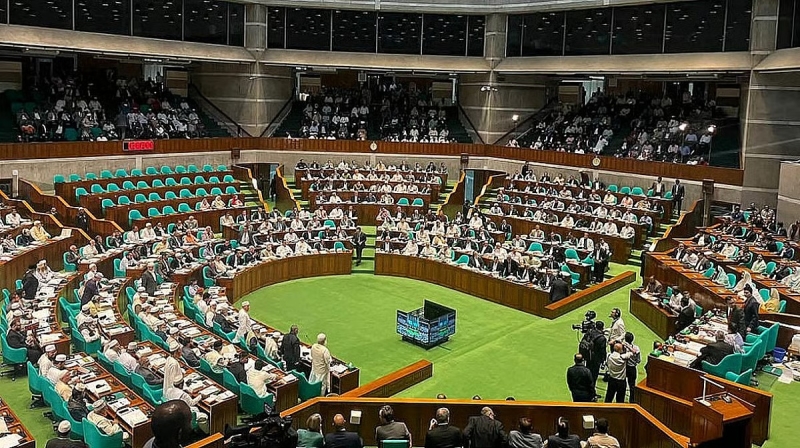
The government revealed the names of the top 20 loan defaulters in parliament today (6 April) amid growing concern over rising defaulted loans, which reached Tk5,44,831.88 crore by the end of December 2025.
Finance Minister Amir Khosru Mahmud Chowdhury submitted the list and outlined steps to recover the funds in response to a question from Cumilla-4 MP Md Abul Hasnat.
The list includes S Alam Super Edible Oil Limited, S Alam Vegetable Oil Mills Limited, S Alam Refined Sugar Industries Limited, S Alam Cold Rolled Steels Limited, Sonali Traders, Bangladesh Export-Import Company Ltd, Global Trading Corporation Limited, Chemon Ispat Limited, S Alam Trading Company (Pvt) Ltd, and Infinite CR Strips Industries Limited.
Other companies named are Keya Cosmetics Limited, Deshbandhu Sugar Mills Limited, Power Pac Mutiara Keraniganj Power Plant Ltd, PowerPac Mutiara Jamalpur Power Plant Ltd, Pacific Bangladesh Telecom Limited, Karnafuly Food Products Ltd, Murad Enterprise, CLC Power Company Limited, Beximco Communications Limited, and Rongdhanu Builders (Pvt) Ltd.
Nine of the top 20 defaulters belong to the S Alam Group.
The minister detailed measures to tackle the problem, including quarterly meetings with banks holding more than 10% classified loans to track recovery and identify obstacles. Progress on recovering loans from major defaulters is also reviewed regularly by Bangladesh Bank.
Guidelines have been issued to help banks resolve classified loans, while policies have been strengthened to identify wilful defaulters and enhance legal teams. Banks are also tasked with recovering at least 1% of defaulted loans by 30 June through alternative dispute resolution.
Additional reforms include updating credit risk management, improving collateral evaluation with independent firms, and aligning loan management with international standards such as expected credit loss provisioning.
Bangladesh Bank is reviewing legal reforms, including amendments to the Bank Company Act, 1991, Negotiable Instrument Act, 1881, Artha Rin Adalat Act, 2003, and Bankruptcy Act, 1997. Policies on rescheduling agricultural loans and publishing lists of wilful defaulters are also under consideration.
The government is exploring private sector asset management companies to help resolve non-performing loans and is reviewing incentives for regular borrowers while limiting excessive borrowing by single entities.