

- China's submarine-launched ballistic missile test sparks concern across Pacific |
- Jamuna bank erosion worsens in Sirajganj; devours homes, cropland |
- Belgium beats US 4-1 to reach World Cup quarterfinals |
- Merino Sends Spain Through, Ends Ronaldo's World Cup |
- নিম্নচাপ: কলাপাড়া উপকূলে বৃষ্টিপাত, পায়রা বন্দরে ০৩ নম্বর সতর্ক সংকেত |
China's submarine-launched ballistic missile test sparks concern across Pacific
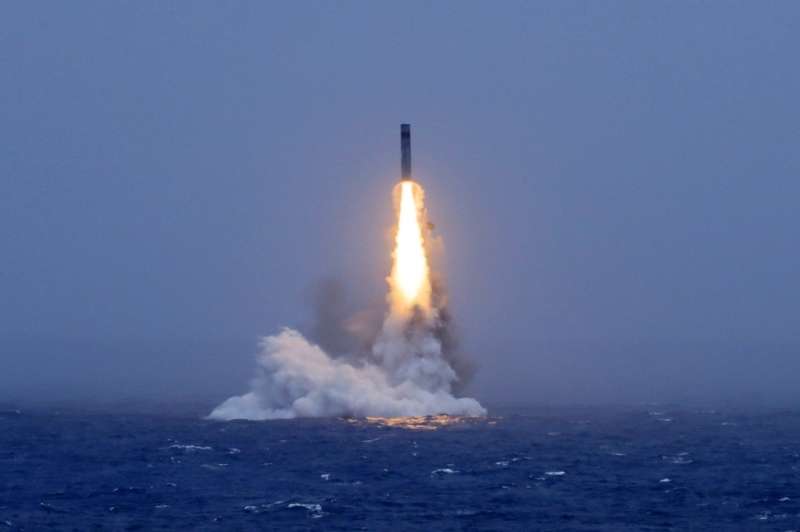
A long-range ballistic missile bursts out of the sea during a test launched from a Chinese nuclear-powered submarines in the South Pacific on Monday, July 6, 2026. (Li Xiangchao-Xinhua via AP)
Bangkok (AP/UNB) – China on Monday test-fired a long-range ballistic missile from one of its nuclear-powered submarines into the South Pacific, prompting criticism from regional countries and renewed concern from the United States over Beijing's expanding military capabilities.
According to China's state-run Xinhua News Agency, the missile, carrying a dummy warhead, was launched at 12:01 pm local time as part of the country's routine annual military training. Chinese authorities said the test complied with international law and was not aimed at any specific country or target.
The launch marked China's second publicly acknowledged missile test in the Pacific in two years, following its 2024 test of an intercontinental ballistic missile carrying a dummy warhead.
The test drew swift reactions from Australia, Japan and New Zealand, all of which expressed concern over the launch.
New Zealand said it had received advance notification only hours before the missile was fired into the South Pacific Nuclear Free Zone, established under the 1986 Treaty of Rarotonga, which prohibits nuclear weapons in the region.
New Zealand Foreign Minister Winston Peters said China had proceeded with the test despite long-standing concerns raised by regional countries over such military activities.
Australia also condemned the launch, with Foreign Minister Penny Wong describing it as destabilising for the Pacific region. The test coincided with the signing of a new defence cooperation treaty between Australia and Fiji aimed at strengthening regional security.
Japan voiced concern over China's growing military activities and urged Beijing to avoid missile tests that could threaten regional security or overfly Japanese territory. Japanese officials also criticised the lack of transparency surrounding China's military expansion.
Beijing rejected the criticism, calling on countries to avoid "overinterpretation" of the missile launch.
The United States also expressed concern, saying China's rapid expansion of its nuclear arsenal and limited transparency were troubling developments. Washington urged Beijing to engage in meaningful arms control dialogue and establish regular notification mechanisms for missile and space launches.
Security analysts said the submarine-launched missile test underscored China's advancing sea-based nuclear deterrent and reflected its efforts to modernise its armed forces.
Experts also noted that while Japan, Australia and New Zealand were notified ahead of the launch, there was no indication that the United States received prior notice.
According to the latest US Defense Department assessment, China possessed an estimated 600 nuclear warheads in 2024 and is expected to expand its stockpile to more than 1,000 by 2030 as part of its military modernisation programme.