

- Global turmoil shadows Bonn climate talks |
- Dhaka's air quality recorded ‘moderate’ Tuesday morning |
- Court seeks Interpol red notices for 2 fugitives in Tonu killing |
- Bangladesh wastes 3.5mn tons of food a year: State minister |
- Xi, Kim pledge closer China-North Korea ties |
Dhaka's air quality recorded ‘moderate’ Tuesday morning
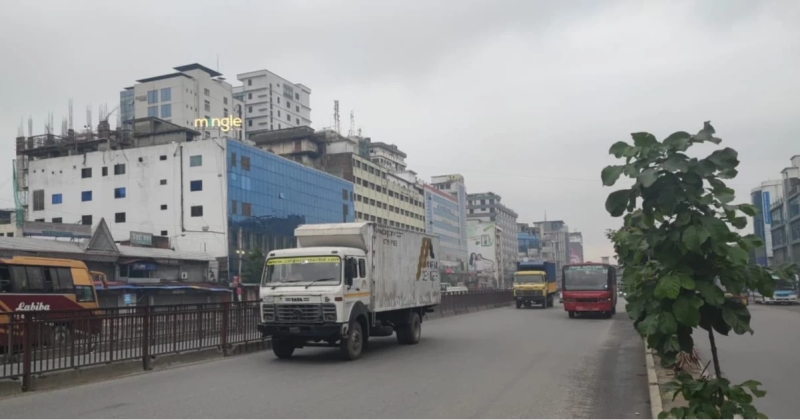
Air quality of Dhaka recorded moderate on Tuesday morning.
Dhaka, June 9 - Bangladesh's capital Dhaka ranked 18th among cities with the worst air quality in the world on Monday morning, recording an Air Quality Index (AQI) score of 86 at 9:00 am, indicating a 'moderate' level of air pollution.
According to the AQI ranking, Pakistan’s Lahore topped the list with a score of 211, categorised as 'very unhealthy.' Iraq’s capital Baghdad ranked second with an AQI score of 165, while Kinshasa, the capital of the Democratic Republic of the Congo, was third with a score of 163.
An AQI score between 51 and 100 is considered moderate, meaning air quality is acceptable for most people, although unusually sensitive individuals may experience some health concerns.
An AQI reading between 101 and 150 is considered ‘unhealthy for sensitive groups’, while 151–200 is categorised as ‘unhealthy’. Readings between 201 and 300 are regarded as ‘very unhealthy’, and levels above 301 are considered ‘hazardous’, posing serious health risks to the population.
Dhaka’s air quality has improved significantly compared to many previous days when the city frequently ranked among the world's most polluted urban centres.
The AQI is a daily indicator that measures air quality and its potential impact on human health. In Bangladesh, the AQI is calculated based on five major pollutants: particulate matter (PM2.5 and PM10), nitrogen dioxide (NO₂), carbon monoxide (CO), sulfur dioxide (SO₂) and ground-level ozone.
Experts say prolonged exposure to polluted air can cause respiratory illnesses, cardiovascular diseases and other health complications, particularly among children, older adults and people with existing health conditions. - UNB