

- UN, partners appeal for USD 710.5 mn for Rohingya response in BD |
- Govt to Build Ganga, Teesta Barrages for Water Security |
- Bangladesh Warned Repeatedly Over Measles Vaccine Gap |
- 163 Olive Ridley turtle hatchlings found on Kuakata beach |
Dhaka ranks world’s 9th most polluted city on Thursday
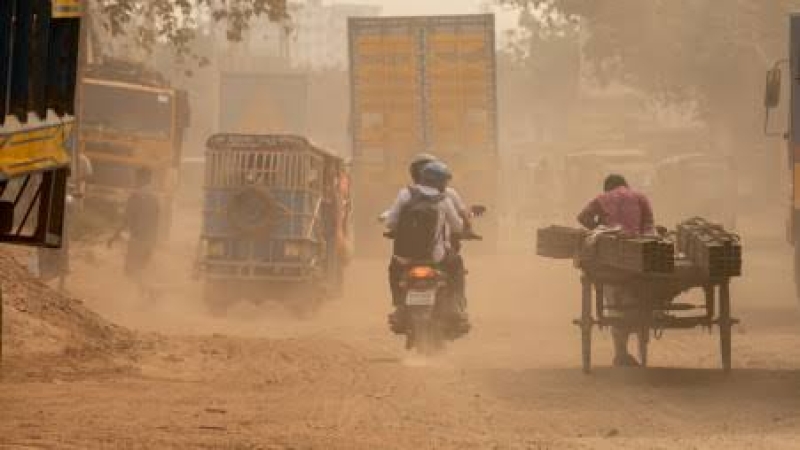
Dhaka ranked 9h among the world’s most polluted cities on Thursday morning, recording an Air Quality Index (AQI) of 112 at 08:38 am.
The air quality was classified as ‘unhealthy for sensitive group’, that poses health risks to vulnerable populations, even though the general public is unlikely to be affected, according to the AQI scale.
Delhi in India, Jakarta in Indonesia and Kathmandu in Nepal occupied the first second, and third spot, with AQI scores of 154, 151 and 148 respectively.
According to AQI standards, a reading between 101 and 150 is considered ‘unhealthy for sensitive groups’, 151 to 200 ‘unhealthy’, 201 to 300 ‘very unhealthy’, while levels above 301 are deemed ‘hazardous’, posing serious health risks.
The AQI, which provides daily updates on air quality, indicates how clean or polluted the air is and highlights potential health impacts.
In Bangladesh, the AQI is calculated based on five major pollutants: particulate matter (PM10 and PM2.5), nitrogen dioxide (NO2), carbon monoxide (CO), sulfur dioxide (SO2), and ozone.
Dhaka has long struggled with air pollution, with air quality typically worsening in winter and improving during the monsoon season.
The World Health Organization estimates that air pollution causes around seven million deaths globally each year, mainly due to stroke, heart disease, chronic obstructive pulmonary disease, lung cancer and acute respiratory infections, reports UNB.